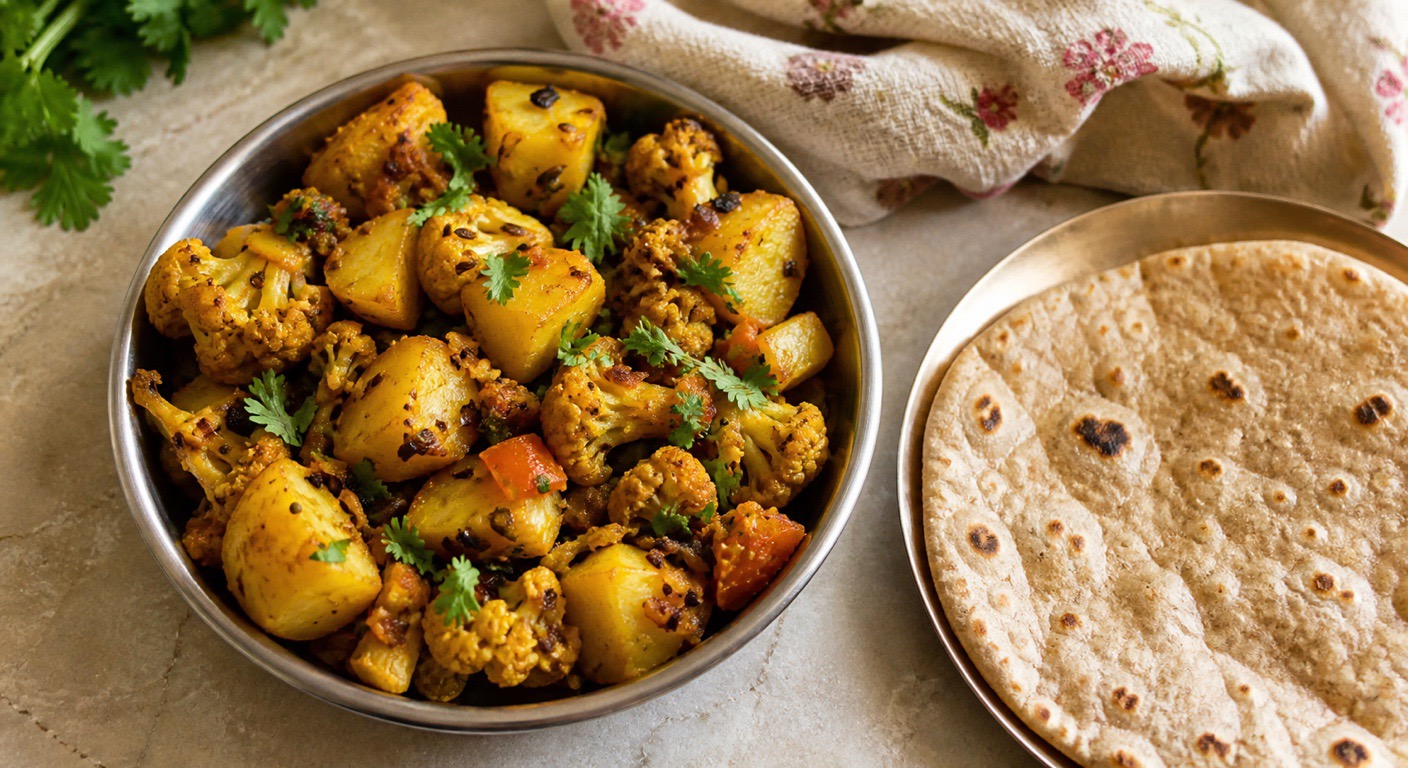
Dry aloo gobi - lighter than you think?
A katori of dry aloo gobi can be a light, friendly dish - the cauliflower and potato are almost free, and a small spoon of oil keeps one serving near 115 kcal. The quiet calorie thief is the oil, which can push the same katori past 270 kcal in a dhaba-style cook.
Dry aloo gobi is mostly two vegetables cooked dry with spices. The cauliflower and potato are light on their own. So where do the calories come from? Mostly from the oil in the kadai. A small spoon of oil keeps it friendly. A heavy hand can quietly double it.
Aloo gobi is fattening because of the potato.
mostly falseMostly false. Cauliflower is only about 25 kcal per 100 g, and boiled potato is about 86 kcal per 100 g - so a katori of the vegetables is roughly 60-70 kcal. The thing that swings the dish is the oil, at about 884 kcal per 100 g. A single extra tablespoon of oil adds about 125 kcal to the pan. The potato is not the villain here; the oil is.
Your typical home katori of aloo gobi
A normal Punjabi-style home cook of aloo gobi lands around 208 kcal per serving. That is a real recipe figure, not a guess. Of that, roughly 100 kcal is just the cooking oil. The potato and cauliflower together do far less than the oil does.
Assumptions: Tarla Dalal's Punjabi aloo gobi recipe gives 208 kcal per serving (2 servings per recipe, 11.32 g fat per serving). At 9 kcal per gram, that fat is about 100 kcal of the 208 - almost entirely cooking oil. The remaining ~108 kcal is potato, cauliflower, onion, tomato and spices.
Same katori, three oil levels
Cook it with just 1 tsp oil per serving
Use a non-stick or well-seasoned kadai, and measure the oil with a spoon instead of pouring freehand. One teaspoon per serving is enough to toast the jeera and coat the veggies. This single change takes the same katori from about 208 kcal down to about 115 kcal.
Assumptions: Light serving (~150 g): boiled potato 50 g (43 kcal at 86 kcal/100 g) + cauliflower 80 g (20 kcal at 25 kcal/100 g) + 1 tsp oil = 5 g (44 kcal at 884 kcal/100 g) + onion, tomato and spices ~20 g (~8 kcal) = ~115 kcal. Versus the typical 208 kcal baseline, that is about 93 kcal saved - most of it from the oil.
Keep it the light friend
- Measure the oil with a spoon - freehand pouring often doubles what you think you added.
- Let the cauliflower cook in its own steam with a lid, not in extra oil.
- Potato is fine in a dry sabzi - one medium boiled potato is only about 130 kcal for the whole potato.
- Skip the fried garnish - a handful of fried sev on top would add back the calories you just saved.
- Pair it with one or two rotis and a katori of dal, not a pile of white rice, for a filling light meal.
The bottom line
Dry aloo gobi is a genuinely light dish - until the oil piles on. One katori cooked with a teaspoon of oil is about 115 kcal; the same katori in a typical home cook is about 208 kcal, and a dhaba-style one can hit 277 kcal. The cauliflower and potato are not the problem. The oil is. Measure it with a spoon, and this dry sabzi becomes one of your best weight-loss friends.