Best whole grains in India: which one for which job
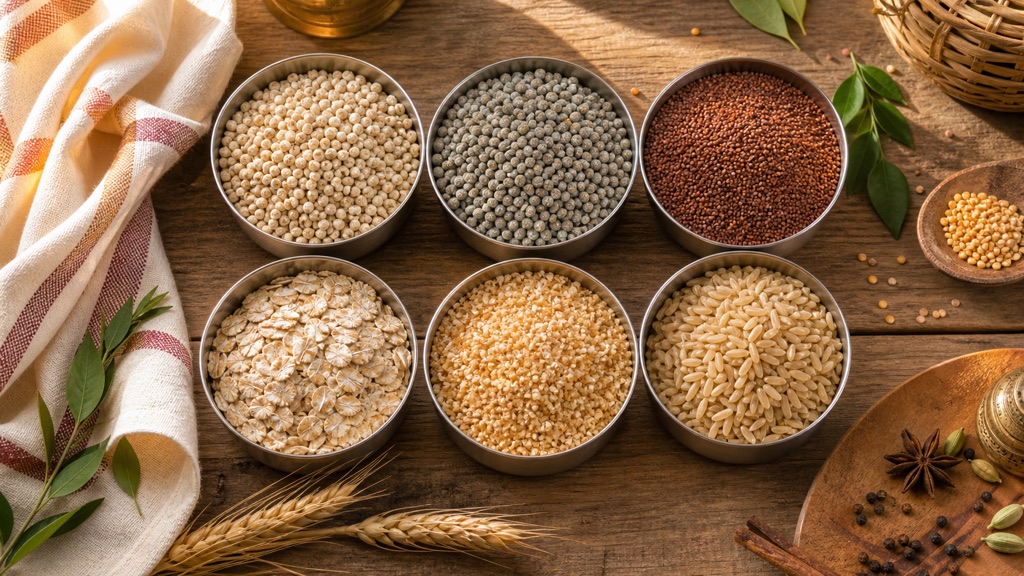
This is the shopping-list comparison of Indian whole grains - jowar, bajra, ragi, oats, dalia and brown rice - by what each is best for and how to use it. None are low-calorie, but their fibre and protein fill you up so you eat less overall.
You stand in the kirana shop. Six whole grains stare at you. Jowar, bajra, ragi, oats, dalia, brown rice. Which one do you grab? This is not the 'does multigrain atta save calories?' question. That is a different article. This is also not the deep-dive on each single grain. Those exist too. This is the comparison list. Which whole grain to grab for which job, with fibre, protein, kcal and a quick use for each.
Whole grains are not low-calorie
Here is the honest truth first. All these grains give about 336 to 382 kcal per 100g dry. That is almost the same as wheat atta. So no whole grain is a calorie-cutting food. Their real power is fibre and protein. Fibre makes you feel full sooner. Protein keeps you full longer. So you eat less of everything else. That helps your deficit, not the grain's calories themselves.
Which grain to grab for which job
Whole grains are low-calorie, so eating them makes you lose weight.
mostly falseMostly false. Whole grains give about 336 to 382 kcal per 100g dry, which is not low. Brown rice looks low at 123 kcal per 100g only because it holds water. The grain itself is not a calorie cheat. What helps is the fibre and protein. They fill you up, so you eat less overall, and that helps your deficit. Burnie figures your deficit as food_total_kcal minus (bmr + active_calories). Log the grain honestly, then let the fibre do its job.
How to use this list
The bottom line
Pick the grain for the job, not for the calories. Jowar for everyday roti, bajra for winter, ragi for calcium, oats for quick satiety, dalia for easy digestion, brown rice as the white-rice swap. They are all about 350 kcal per 100g dry - none are low-calorie. Their fibre and protein fill you up so you eat less. Log them in Burnie first, watch the ghee, and let the deficit do the rest.