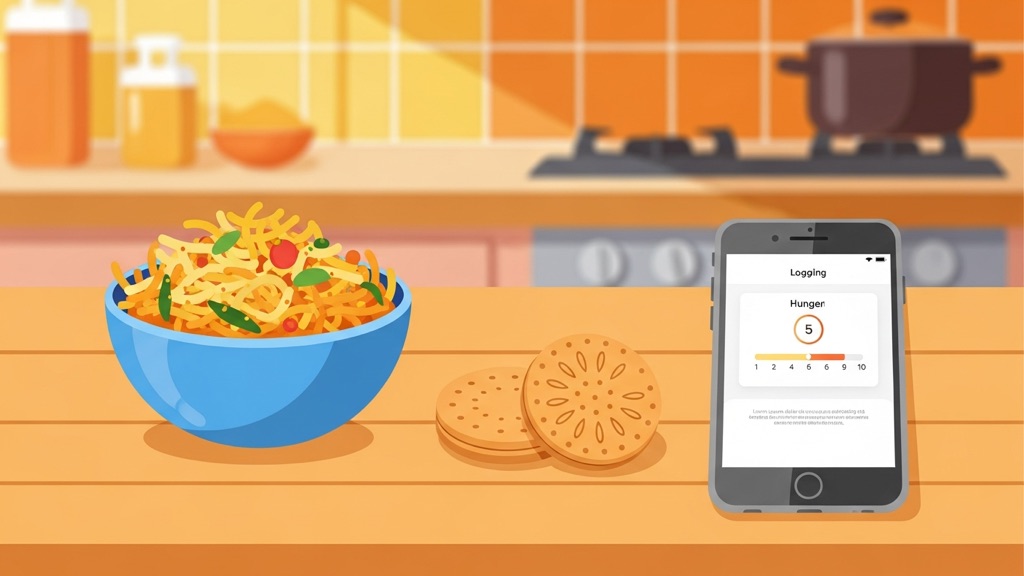
Boredom eating vs hunger eating — what the log teaches
You grab a biscuit at 4 pm, and by dinner you cannot remember if you were hungry or just bored. The Burnie log, read across a full week, shows the pattern and teaches you to tell real hunger from boredom or stress eating.
You grab two biscuits at 4 pm. Then a small namkeen bowl at 6. By dinner you cannot remember why. Were you hungry? Were you just bored? Was it the work stress? Your head will give you a tidy answer later, and that tidy answer is often wrong. This short read is about one small habit that shows the truth. When you log the food, also note the moment. The Burnie log becomes a mirror, and the mirror does the teaching.
The log is a mirror, not a judge
Most adults eat more often, and later, than they think. In one smartphone study, people logged every bite for three weeks. The results surprised them. Less than 25% of their daily calories came before noon. Over 37% came after 6 pm. They also forgot about 1 in 10 eating events — they just did not log them. They did not know any of this about themselves until the app showed them. That is the first thing the log teaches you: you cannot fix a pattern you cannot see. The log does not scold you. It just shows what your day really looks like.
I always know whether I ate from hunger or from boredom.
mostly falsemostly false
Your brain rewrites the story after the meal. Scientists call this recall bias. One big review of emotional-eating research said people often rebuild a tidy reason for overeating after it happens. They might tell themselves, “I must have been hungry.” But the real trigger could have been boredom, stress, or just seeing the biscuit on the table. The memory bends toward a simple answer. A short note made in the moment does not bend. That is why the log sees what your memory cannot.
Three ways to find out why you ate
How to teach the log to teach you
The bottom line
The log does not stop boredom eating by magic. It teaches you to see it. One review found that people often rebuild a tidy reason for overeating after the fact — the memory bends toward “I was hungry.” A short note made in the moment does not bend. A second study found that simply self-monitoring food cut daily calories by about 182 kcal. That is roughly one extra biscuit and a small bowl of namkeen, gone, just because you paid attention. Log the food. Note the moment. Read the week. The pattern does the teaching.