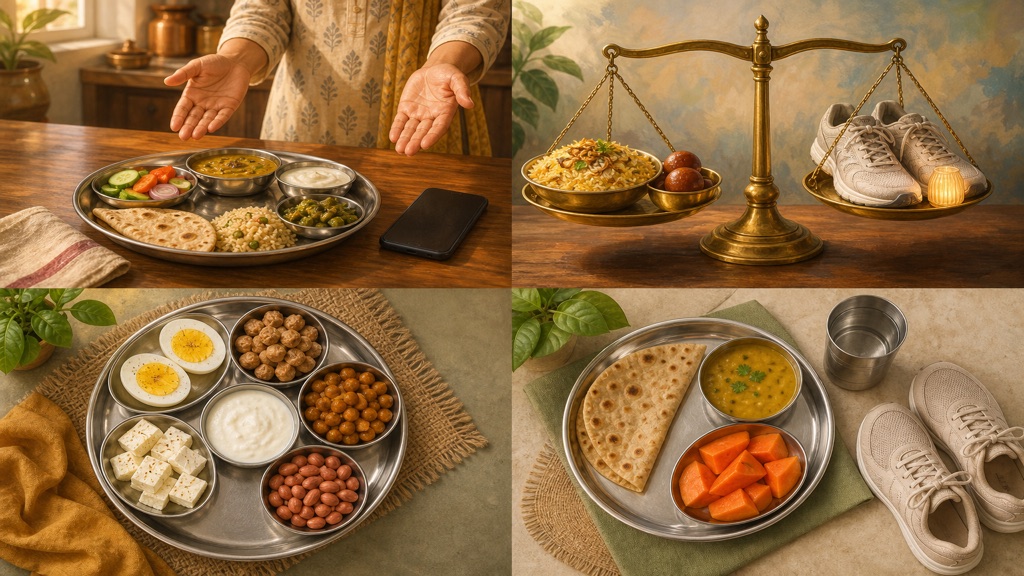
Cheap protein in an Indian diet: best sources per rupee and calorie
Protein keeps you full and protects your muscle and BMR while you cut calories. The cheapest Indian sources per calorie are soya chunks, eggs, chana, rajma and dahi; chicken leads if you eat meat. Paneer is protein-rich but calorie-dense from fat, so it is not the best protein-per-rupee or per-calorie choice.
When you eat less to lose weight, two things fight you. You feel hungry, and your body may burn muscle instead of fat. Protein fixes both. It fills you up more than carbs or fat, so you eat less without feeling miserable. And it tells your body to keep your muscle, which keeps your BMR (the calories you burn just staying alive) from falling. The good news for an Indian kitchen: the best protein for a deficit is also some of the cheapest food you can buy. Soya chunks, eggs, chana, rajma, dahi. This article shows the honest protein and calorie numbers for each, so you can pick what gives you the most protein for each rupee and each calorie.
The baseline: how much protein, and why it burns extra calories
Indian adults need about 0.83 g of protein for each kilogram of body weight per day, which is about 54 g for a 65 kg man and 46 g for a 55 kg woman (ICMR-NIN 2020). If you eat mostly cereal-based food like rice and roti, the protein quality is lower, so the safe target is closer to 1 g per kg per day. In a calorie deficit you want the higher end, to protect muscle. The second baseline is the thermic effect of food (TEF): your body burns calories just digesting what you eat. Protein has the highest TEF, about 20-30% of its own calories. Carbs cost 5-15% and fat costs 5-15% or less. So of 100 kcal of pure protein, roughly 20-30 kcal are spent digesting it, leaving a net 70-80. That is a quiet bonus on top of protein's satiety and muscle-protecting jobs.
Assumptions: ICMR-NIN 2020 protein RDA for a sedentary Indian adult (65 kg man / 55 kg woman). TEF values are standard textbook ranges for the thermic effect of each macronutrient. In a deficit, aim for the higher end of protein to preserve lean mass and BMR.
Protein per 100g, per calorie, and per rupee: the honest table
Here are the real numbers for each source, per 100g. Protein-per-calorie (g of protein for every 100 kcal you eat) is the true test for a deficit, because it tells you how much of your calorie budget is actually muscle-feeding protein. For per-rupee value, prices change by city and season, so this is qualitative: soya chunks, eggs, chana and rajma are the cheapest protein per rupee in most Indian markets; dahi and milk are cheap and easy; chicken is costlier per rupee but excellent per calorie; paneer is mid-cost and calorie-dense; peanuts are cheap per rupee but very calorie-dense, so portion control matters.
Paneer is the best high-protein food.
partly truePartly true. Paneer is genuinely protein-dense per 100g (about 15.9 g protein), so it feels like a protein champion. But about 15.5 g of its 100g is fat, and nearly half its calories come from fat, so it gives only about 5.3 g of protein per 100 kcal. Soya chunks give about 14 g per 100 kcal, eggs about 8 g, and chicken about 19 g. So for a calorie deficit, where every calorie must earn its keep, paneer is a tasty source to enjoy in measured amounts, but soya chunks, eggs, chana, rajma and chicken give you far more protein for each calorie you spend. Paneer is best treated as a flavour and calcium source, not your main protein engine.
Cheap high-protein Indian meals that fit a deficit
- Two eggs and two roti: about 25 g protein for around 350 kcal. Cheap, filling, and the protein TEF burns an extra 20-30% of the egg's calories while digesting.
- Soya pulao: 30 g dry soya chunks cooked with rice and peas gives about 15 g protein for very few rupees and moderate calories. Soya is the cheapest protein-per-calorie veg option.
- Chana chaat: 50 g dry chana soaked, boiled and mixed with onion, tomato and lemon gives about 11 g protein and lots of fibre, which keeps you full for hours.
- Rajma-chawal measured: half a cup cooked rajma with a small portion of rice gives about 8-10 g protein. Keep the rice portion modest so the meal stays a deficit meal, not a feast.
- Dahi with fruit: a big bowl of plain dahi (200 g) with a chopped apple gives about 7 g protein and gut-friendly cultures for under 200 kcal. Skip the sugar.
- If you eat meat, 100 g cooked chicken breast gives about 31 g protein for 165 kcal and almost no fat. Grill or boil, do not fry, to keep the calorie cost low.
- Portion your paneer and peanuts. 50 g paneer and 20 g peanuts are plenty as a flavour add-on. Both are delicious but calorie-dense, so a full bowl will quietly blow your deficit.
The bottom line
For a calorie deficit that protects your muscle and BMR, protein is your friend, and the Indian kitchen gives you some of the cheapest protein in the world. Per calorie, soya chunks lead for vegetarians (about 14 g protein per 100 kcal) and chicken breast leads for everyone (about 19 g per 100 kcal). Eggs, rajma, chana and dahi fill the gaps cheaply. Paneer and peanuts are tasty and protein-rich, but their fat makes them calorie-dense, so measure them. The paneer claim is only partly true: it is high protein per 100g, but soya, eggs and chicken give you much more protein for each calorie. Build your meals around soya, eggs, chana, rajma and dahi, add chicken if you eat meat, log it all in Burnie, and your deficit stays full, not hungry.