Your weekly protein grocery list by budget (India)
This is not a ranking of protein sources per rupee and calorie - it is your weekly protein grocery list by budget tier. Pick a ₹150, ₹300 or ₹500 basket, buy it loose, pre-decide your proteins, and log it fast in Burnie so your deficit stays easy.
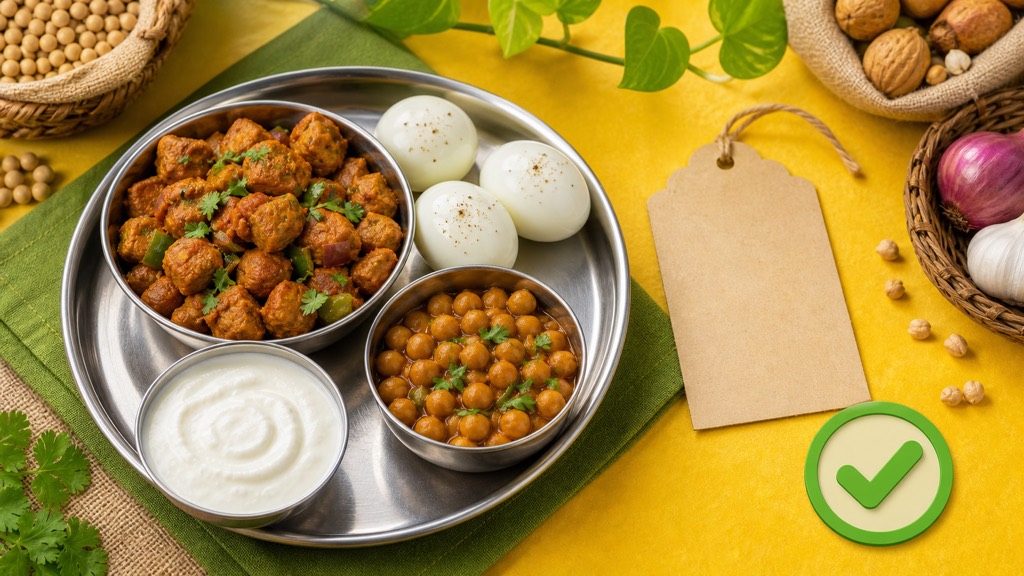
You want more protein without spending much. Most articles rank protein sources per rupee and per calorie. That is a different article. This one is your actual weekly shopping list, by budget tier. Here is what to buy this week, where to get it cheap, and the Burnie move: pre-decide your proteins so your food log stays fast and your deficit stays easy. When the protein is already in the house, you don't reach for namkeen.
The baseline: how much protein, and what it costs
Indian adults need about 0.83 g of protein for each kilogram of body weight per day. That is about 54 g for a 65 kg man and 46 g for a 55 kg woman (ICMR-NIN 2020). In a calorie deficit, aim a little higher to protect your muscle. So one person needs roughly 350 g of protein in a week. The good news: soya chunks, eggs and chana give that much for about ₹150 a week. Prices change by city, season and shop, so the rupee figures below are indicative ranges, not exact bills. Loose dal at the kirana is cheaper than branded packets. Eggs by the tray cost less per egg. Seasonal fish is cheaper than fancy cuts. The price anchor here is the government's all-India average retail price from the Price Monitoring Division, dated 13 July 2026.
Three weekly protein baskets by budget
Here are three baskets for one person for one week. Prices are indicative and change by city and season. Buy loose where you can - it is the single biggest saving.
Swap the namkeen reach for a default protein
When you are hungry between meals, you grab what is in front of you. Pre-decide a default protein snack and keep it ready in the fridge. Here is how the calories compare per snack.
Protein is too expensive for most Indians.
mostly falseMostly false - explained simply. Soya chunks give about 52 g protein per 100 g and cost about ₹55-145 per kg (loose to branded). Eggs give about 13 g protein per 100 g and cost about ₹84 a dozen. Gram dal (chana) gives about 20 g protein per 100 g at about ₹86 per kg. So one person's weekly protein, about 350 g, costs roughly ₹150 if you build it from soya, eggs and chana. Paneer and chicken are tastier and add variety, but they are not the only way to hit your protein. The expensive part is the branded packet and the fancy cut, not the protein itself.
Pre-decide your proteins: the Burnie move
The bottom line
Stop ranking protein and start buying it. Pick a ₹150, ₹300 or ₹500 weekly basket, buy it loose, and pre-decide one default protein per meal. Soya, eggs and chana carry the cheap tier; paneer, chicken and fish add taste and variety. Log each meal in Burnie with a quick text line, watch your daily remaining calories, and your deficit stays full instead of hungry.