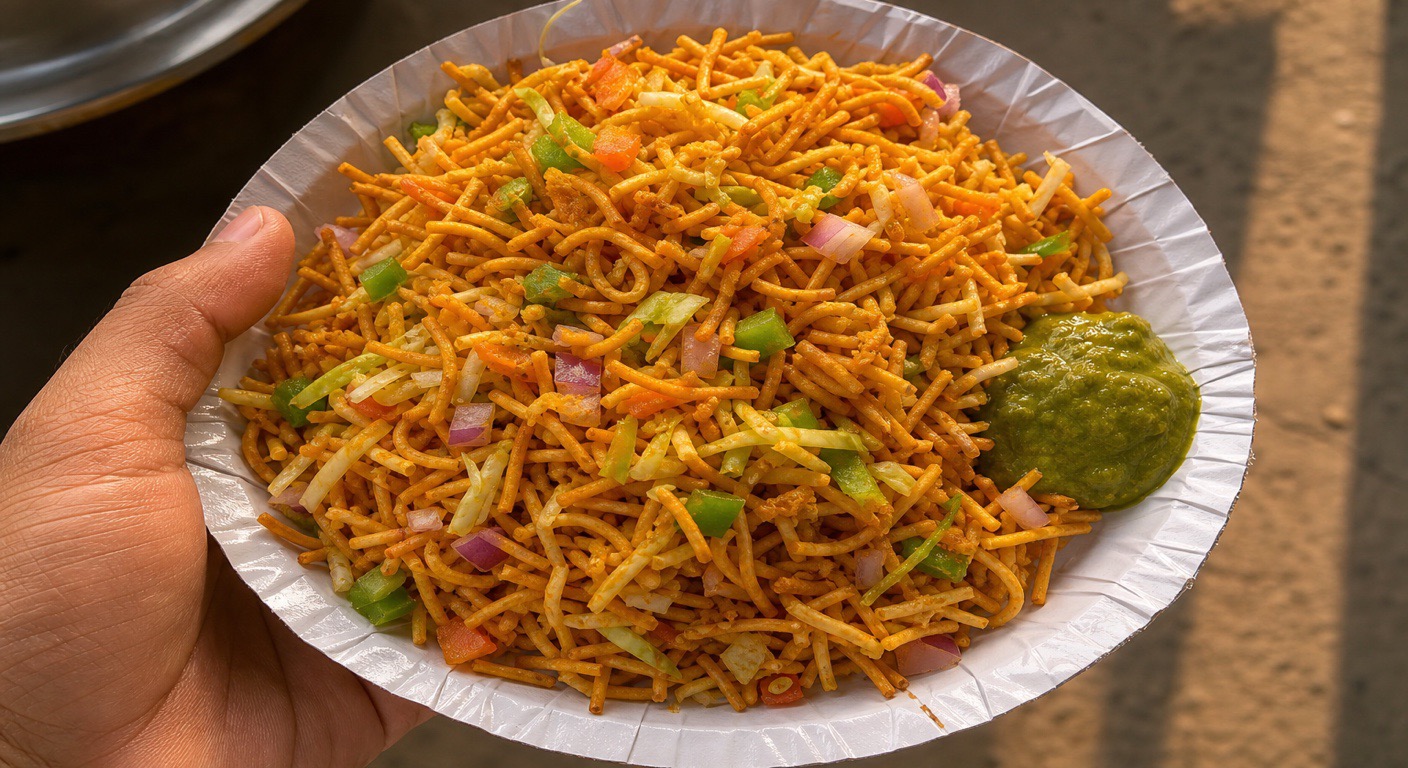
Chinese bhel - why is this street snack so heavy?
Chinese bhel is mostly deep-fried crispy noodles and oil, so one roadside plate can run 540-660 kcal. Swap it for bhel puri or share the plate, and you cut the load by more than half without skipping your evening chaat.
You stop at the Chinese stall on the way home. One plate of chinese bhel sounds light - just noodles and veggies, right? Not quite. The star of this plate is the deep-fried crispy noodle, and oil is the quiet co-star. Let's see where the calories really hide.
Chinese bhel is a light snack because it's mostly cabbage and noodles.
mostly falseMostly false. The cabbage and onion are almost free. The deep-fried crispy noodles carry about 527 kcal per 100 g - more than half of that is fat from the oil they were fried in. The stall also tosses the veggies in more oil. So one plate behaves like a heavy fried snack, not a salad.
Your typical plate: one roadside chinese bhel
A normal single plate lands around 580 kcal - and a real recipe calculator puts a full roadside portion at about 664 kcal. Almost all of it comes from the fried noodles and the oil, not the vegetables. The sauces add a little sugar and salt too.
Assumptions: ~80 g deep-fried crispy noodles at 527 kcal/100 g = ~422 kcal (with ~24.6 g fat already baked in); ~12 g oil the stall uses to toss the veggies at 884 kcal/100 g = ~106 kcal; ~60 g shredded cabbage, onion and capsicum = ~20 kcal; sauces (soy, schezwan, green chutney - schezwan carries a little oil and sugar) = ~30 kcal. Total ~578 kcal, rounded to ~580. Tarla Dalal's recipe calculator puts a full Mumbai roadside plate at 664 kcal, so the honest working range is 540-660.
Chinese bhel vs a lighter street pick
Same stall walk, very different load. Bhel puri is puffed rice with chutney and a little sev - it is still a fried-ish chaat, but puffed rice is mostly air. One plate runs about half the calories of chinese bhel.
Swap to bhel puri at the same stall
If the chaat stall does both, order bhel puri instead. You keep the evening-street-snack ritual, ask for extra green chutney and less sev, and the plate drops to about 289 kcal.
Share one chinese bhel plate between two
Love it too much to swap? Split the plate with a friend. Half the fried noodles means half the oil, and you still get the taste. Ask for the chutney on the side so you control the salty, sugary sauces.
Assumptions: Half of the ~580 kcal baseline plate = ~290 kcal. The range reflects half of the 540-660 full-plate spread.
Small moves at the Chinese stall
- The veggies are not the problem - it is the fried noodles and the oil. So shrink those first, not the cabbage.
- Schezwan and chilli-garlic sauces carry hidden oil and salt. Ask for less sauce, more lemon and fresh coriander.
- If you make chinese bhel at home, use plain boiled noodles pan-tossed with a teaspoon of oil instead of deep-fried crispy ones - that alone removes most of the fat.
- A salty plate can make you hold water for a day, so the scale may jump after a roadside chinese bhel - it is mostly water weight, not fat.
The bottom line
Chinese bhel is a fried snack in disguise. One roadside plate runs about 540-660 kcal, and the deep-fried crispy noodles plus the tossing oil own almost all of it. Order bhel puri instead (~289 kcal) or share the plate (~290 kcal), and you keep your street-snack evening without the heavy oil load.