Constipation when dieting to lose weight: the fix
You started eating less to lose weight, and now your stomach feels stuck. This is common. Less food means less waste, and if you also cut roti, rice, water and oil, your gut slows down. The good news is a small fix works fast: keep some whole grains, add fruits like papaya and guava, drink enough water, walk daily, and eat regular meals. This article explains the science in simple words and tells you when to see a doctor.
You cut your food to lose weight. The scale is moving, but your stomach is not. You feel full, bloated, and you go to the toilet once in two or three days instead of every day. First, do not worry. This is one of the most common side effects of a weight-loss diet, and it usually fixes with small changes. When you eat less, your gut has less to push. When you also drop roti and rice, drink less water, and skip oil, the leftover waste becomes small, dry and hard. Your body finds it hard to pass. The fix is not to eat more calories again. The fix is to choose the right kind of food and water so your gut keeps moving while you still lose weight. This article tells you what the science says, what works in an Indian kitchen, and when to see a doctor.
Why dieting slows your gut: less bulk, less water, less fibre
Three things make stool easy to pass: enough bulk, enough water, and a gut that moves. A weight-loss diet can hit all three. First, less food means less waste, so the stool is smaller and the gut has less to push. Second, when people diet they often drink less water, and the colon dries out the waste even more, making it hard. Third, the fibre part of food is what gives stool its soft bulk. Fibre holds water in the gut and adds size to the stool, so the gut can move it easily. When you cut roti, rice, fruits and salads to cut calories, you also cut fibre. Wikipedia notes that constipation is commonly defined as fewer than three stools per week, and that a low-fiber diet, low liquid intake, or dieting can cause or worsen constipation. A study on a very low calorie diet found that bowel movements fell from about 1.9 per day on normal food to 0.7 per day on the diet without fibre, but rose back to about 1.0 per day when fibre was added back. So the drop is real, and so is the fix. The recommended fibre intake for adults is about 25 grams per day for normal bowel function, which many Indian diet plans fall short of once grains are cut.
Dieting always causes constipation.
falseFalse. Dieting itself does not cause constipation. The low-fibre, low-water version of dieting does. When you eat less food but still keep enough fibre from whole grains, fruits, cooked vegetables and legumes, drink enough water, keep a little fat, and walk daily, your gut keeps moving even in a calorie deficit. A study showed bowel movements dropped on a very low calorie diet without fibre but improved when fibre was added back. So the problem is not eating less, it is eating less of the wrong things. A high-fibre, well-watered diet can still be a weight-loss diet.
Simple fixes from an Indian kitchen
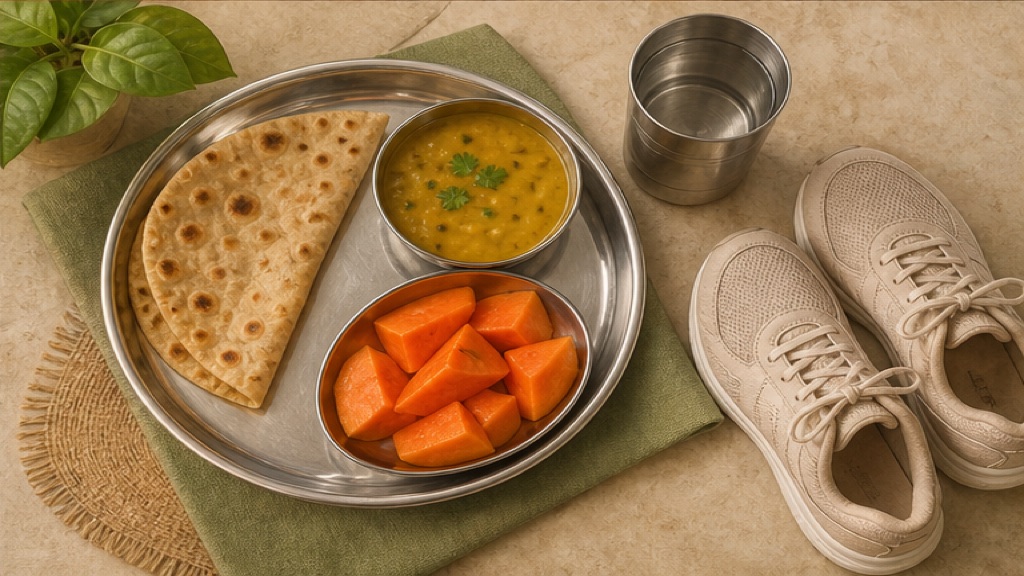
- Keep 1-2 roti a day, made from whole wheat or jowar-bajra. Do not cut all grains. Grains are your easiest fibre source.
- Add one fruit daily: ripe papaya, guava with seeds, or an apple. These are cheap, easy to find in India, and rich in fibre and water.
- Eat one bowl of cooked sabzi with the skin where possible (lauki, bhindi, palak, beans). Cooked vegetables are gentle on the gut.
- Add a bowl of dal, chana, rajma or moong most days. Legumes give fibre and protein, both helpful when dieting.
- Drink 8-10 glasses of water through the day. When you raise fibre, raise water too, otherwise fibre can make things tighter.
- Keep a small spoon of ghee or oil in your cooking. A little fat helps the gut move. A zero-fat diet is not needed for weight loss.
- Walk 20-30 minutes daily, ideally after a meal. Body movement wakes up the gut. Wikipedia lists regular exercise as helpful for chronic constipation.
- Eat three small meals at regular times. The gut learns your routine. Skipping meals means no signal to move.
- Go to the toilet when you feel the urge, do not delay. Waiting dries the stool and makes it harder to pass.
- See a doctor if you have severe stomach pain, blood in the stool, constipation that stays more than 2-3 weeks despite these fixes, or weight loss you did not intend.
The bottom line
Constipation on a weight-loss diet is common but it is not a life sentence, and it is not a reason to quit. It happens because less food means less waste, and the usual Indian diet version, cutting roti, rice, water and oil, removes exactly the fibre and fluid your gut needs. The fix is simple and it fits your calorie goal: keep a little whole grain, add a fruit like papaya or guava, eat cooked sabzi and dal, drink enough water, keep a small amount of oil or ghee, walk daily, eat regular meals, and never ignore the urge. You can still lose weight with all of this in place. If the constipation stays for more than 2-3 weeks despite these fixes, or you see blood, severe pain, or unplanned weight loss, see your doctor. That is the honest, complete picture. Log your food in Burnie, keep the fibre and water up, and let your gut and your weight both move in the right direction.