Dal and sabzi: how cooking changes the calories
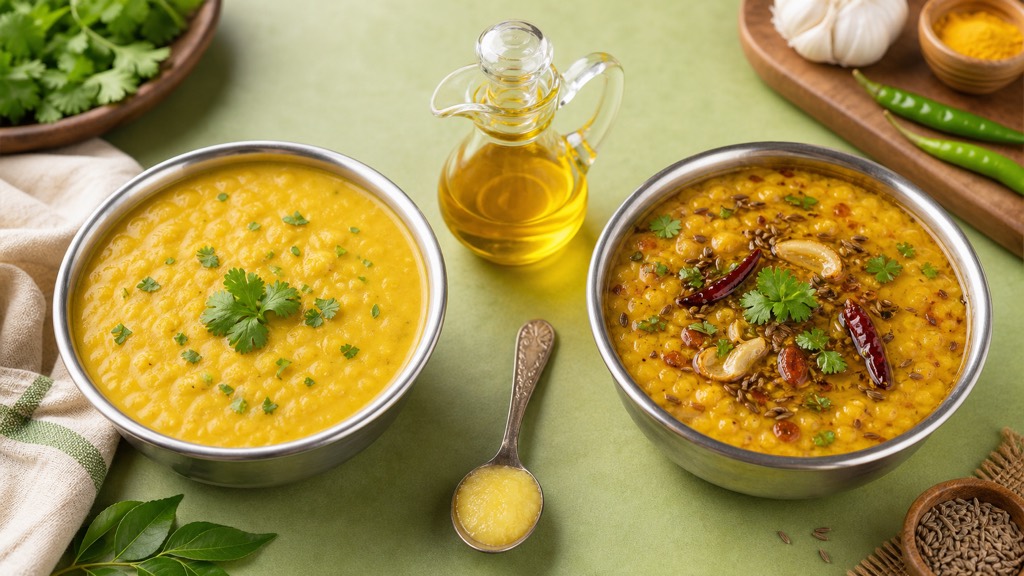
Plain cooked dal is light, about 160-180 kcal per katori, and a steamed sabzi is just 35-50 kcal. But the same dal becomes 350-420 kcal once you add 2-3 tablespoons of oil or ghee for tadka, and the same sabzi jumps by about 240 kcal when it is cooked in oil. The cooking method, not the food, changes the calories the most.
Most Indian homes eat dal and sabzi every day. They feel like the healthy part of the plate, and mostly they are. But here is the catch: the same dal and the same sabzi can carry very different calories depending on how you cook them. A bowl of plain pressure-cooked toor dal is about 180 kcal. Turn it into a dal fry with a ghee tadka and it can climb past 400 kcal. A katori of steamed bhindi is about 50 kcal. Cook the same bhindi in 2 tablespoons of oil and it is close to 290 kcal. The vegetable and the pulse barely change. The oil and the cream do. This article shows you the numbers for each version, where they come from, and the lightest way to cook the same food so your calorie deficit stays real.
The baseline: plain dal and plain sabzi are light
Start with the food before any oil or ghee touches it. Plain toor dal (pigeon peas) cooked and boiled is about 121 kcal per 100 g, so a standard 150 g katori is about 180 kcal. Plain moong dal (mung beans, cooked) is about 105 kcal per 100 g, so the same katori is about 160 kcal. These are the water-cooked, pressure-cooked versions with only salt and turmeric. Now the sabzi side. The vegetables Indians cook are naturally very low in calories. Okra (bhindi) cooked with no added fat is about 35 kcal per 100 g. Cabbage, common, cooked and boiled, is about 23 kcal per 100 g. Bottle gourd (lauki) is even lighter, about 13 kcal per 100 g cooked. So a 150 g katori of steamed or boiled sabzi is only about 35-50 kcal. The food itself is not the problem. It is almost pure water, fibre and a little protein. The calories arrive when we add fat to cook and flavour it.
Assumptions: Standard Indian steel katori of about 150 g cooked food. Dal is pressure-cooked in water with salt and turmeric, no oil or ghee. Sabzi is steamed or boiled with no added fat. Values are per 100 g from USDA FoodData Central.
Dal is always a low-calorie food.
mostly falseMostly false once it leaves the pressure cooker. Plain cooked toor or moong dal is genuinely light, about 160-180 kcal per katori. But the moment you turn it into a dal fry with a ghee or oil tadka, you add about 120-240 kcal from 1-2 tablespoons of fat, and a dal makhani with butter and cream lands at about 350 kcal per serving. Same pulse, very different calories. The low-calorie label belongs to the plain, water-cooked dal, not to its restaurant-style loaded cousins. Always log the version you actually ate.
Light dal and sabzi cooking for an Indian kitchen
- Pressure-cook dal in water with salt and turmeric. No oil goes in the cooker. A 150 g katori of plain toor dal is about 180 kcal, plain moong about 160 kcal.
- Do the tadka at the end with 1 teaspoon of oil or ghee, not 2-3 tablespoons. One teaspoon (5 g) is about 45 kcal of oil or 44 kcal of ghee, enough to bloom the spices and carry the flavour.
- Dry-roast whole spices (cumin, mustard, red chilli) in a hot pan for a few seconds before adding them. This frees their flavour without needing much fat.
- For sabzi, steam or microwave the vegetable first, then toss it with 1 teaspoon of oil and the spices. You get the taste of a cooked sabzi for about 50 kcal of vegetable plus 45 kcal of oil, not 290 kcal.
- Use a non-stick or well-seasoned iron kadai. It needs less oil to stop sticking, so a stir-cook with 1 teaspoon of oil is realistic.
- If you love dal makhani, save it for a weekend and have a smaller bowl. At about 350 kcal per serving it is a treat, not a daily dal.
- Log the version you actually ate in Burnie. Plain dal and dal fry are not the same food in your deficit. The oil and the cream are where the calories hide.
The bottom line
Plain dal and plain sabzi are among the lightest foods in an Indian kitchen, about 160-180 kcal per katori for dal and 35-50 kcal for a steamed sabzi. The calories climb when you add oil, ghee, butter or cream to cook and flavour them. Two tablespoons of oil add about 240 kcal, a ghee tadka adds about 130 kcal per tablespoon, and a dal makhani with butter and cream lands at about 350 kcal per serving. The same dish, cooked light versus loaded, can differ by 200-400 kcal. So cook your dal in water, do the tadka with one teaspoon at the end, steam or one-teaspoon-stir your sabzi, and log the version you actually ate. That is the lightest way to eat the same food and keep your deficit honest.