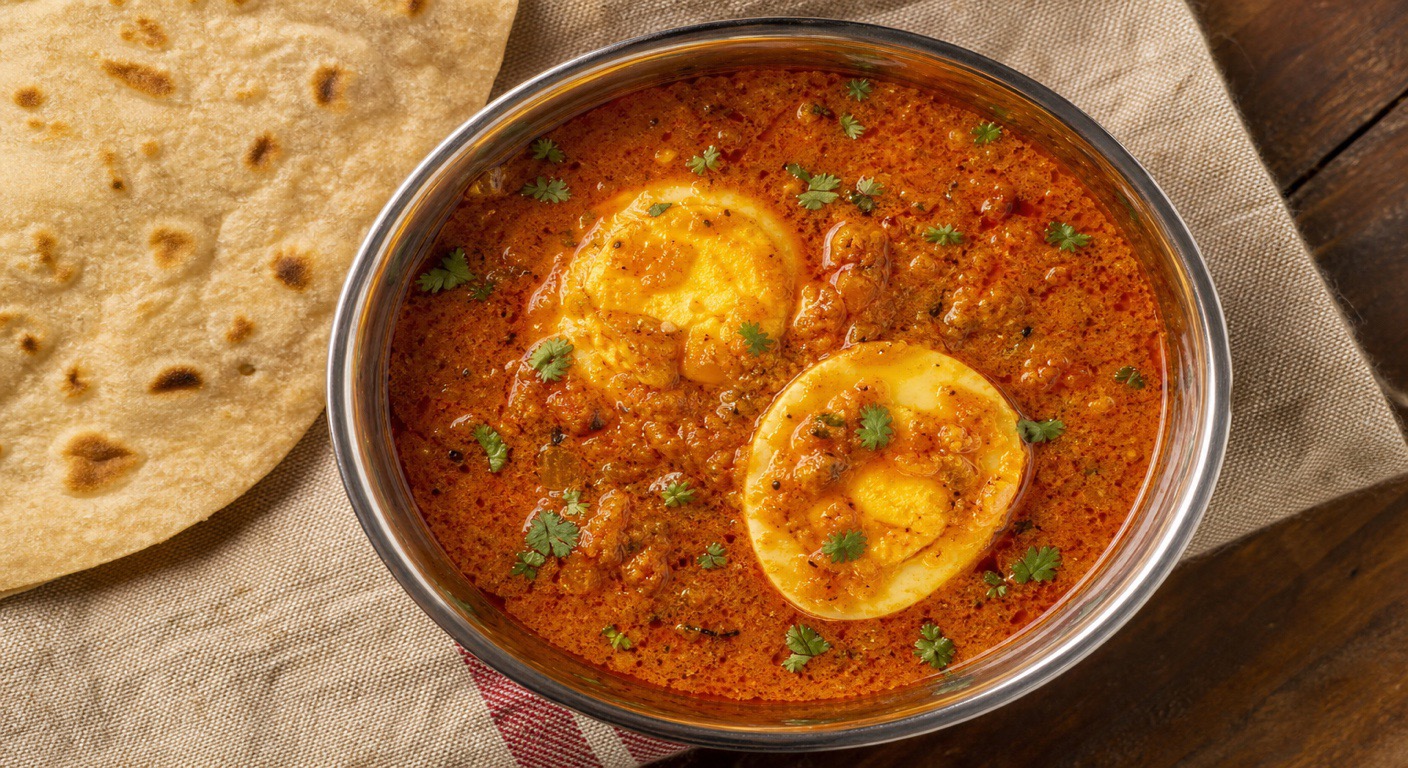
Egg curry - a smart protein dinner?
Egg curry is cheap, filling protein, but the oil in the gravy decides whether one katori is 155 kcal or 280 kcal. Two boiled eggs give you about 156 kcal of solid protein, and the spoonfuls of oil pooled on top are where the extra calories hide.
Eggs are one of the cheapest proteins you can cook. Two boiled eggs cost less than a packet of chips and fill you up for hours. The tricky part is the curry. A dhaba-style egg curry can swim in oil, and that oil - not the eggs - is what turns a light dinner into a heavy one. Let's see where the calories really sit, one katori at a time.
A typical home egg curry katori
One katori of normal home-style egg curry - about 140 g with one egg in it - lands near 210 kcal. Most of that is not the egg. The egg gives you about 78 kcal of good protein and fat. The gravy adds roughly 130 kcal, and most of that gravy kick comes from the cooking oil.
Assumptions: A real published egg-curry recipe gives 208 kcal per 140 g serving (17.3 g fat, 7.8 g protein, serves 6). Of the 208 kcal, one large boiled egg contributes ~78 kcal with ~5.3 g of its own fat; the remaining ~130 kcal is the gravy, of which ~108 kcal (~12 g oil at 884 kcal/100 g) is cooking oil. Rounded to 210 for a typical home katori.
Light vs heavy egg curry, per katori
Egg curry is fattening because of the eggs.
mostly falseMostly false. One large boiled egg is only about 78 kcal and gives you 6 g of filling protein - that is not the problem. The oil in the gravy is the problem: just one extra tablespoon (about 13 g) adds roughly 115 kcal, more than a whole egg. Blame the oil spoon, not the egg.
Use half the oil in the gravy
This is the single biggest lever. Measure the oil instead of free-pouring it, and use half your usual amount. The onions and tomatoes still give the curry its taste - you just skip the extra 50-60 kcal of pooled oil that nobody even tastes.
Assumptions: Start from the typical 210 kcal katori. Cut the gravy oil from ~12 g to ~6 g, saving ~6 g x 8.84 = ~53 kcal. New total ~208 - 53 = ~155 kcal. The egg (~78 kcal) and the non-oil part of the gravy (~24 kcal) stay the same.
Keep your egg curry light
- Two eggs in the curry is plenty for one person - that is about 156 kcal of solid protein before any oil.
- Use a non-stick kadai and just 1-2 teaspoons of oil for the tadka; the onion-tomato base carries the flavour.
- Skip the cream or butter finish - a swirl of dahi at the end gives richness for a fraction of the calories.
- Pair it with one or two home rotis, not butter naan; a butter naan can add 260+ kcal on its own.
- Watch the oil that floats on top after cooking - that is pure fat you can skim off with a spoon before serving.
The bottom line
Egg curry is a smart, cheap protein dinner - the eggs are not the problem. One katori can be as light as 155 kcal or as heavy as 280 kcal, and almost all of that difference is the oil in the gravy. Measure the oil, use half your usual pour, and you keep the flavour and the protein without the extra 100+ kcal.