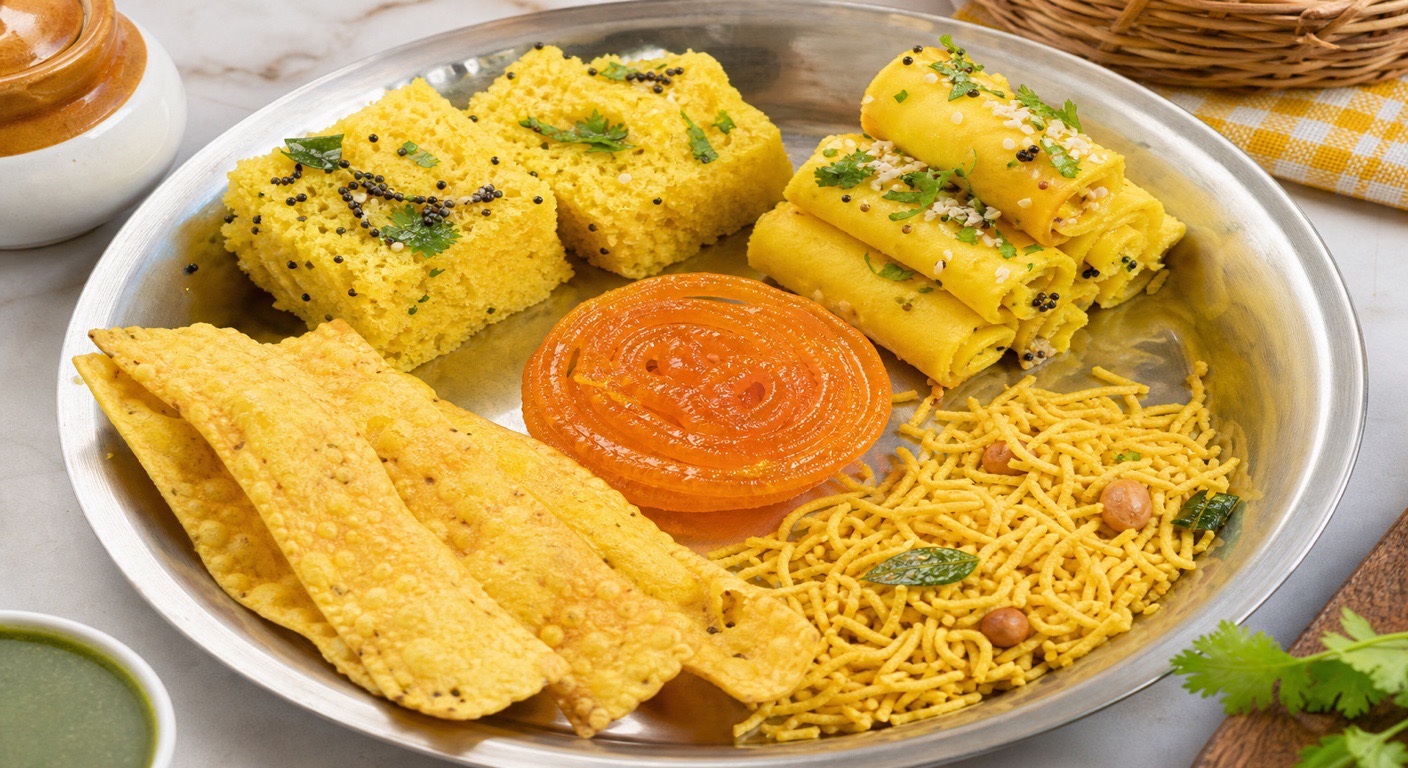
Gujarati farsan plate: a little of each adds up fast
A mixed farsan platter sounds light because each piece is small, but two khaman, a khandvi roll, some fafda, sev and a jalebi can pass 780 kcal. Lead with the steamed picks like khaman and khandvi, keep the fried bits small, and the same plate drops closer to 430 kcal.
Farsan means Gujarati snacks, and a farsan shop plate is the trickiest thing in the world. You take a little khaman, a little khandvi, a strip of fafda, a pinch of sev, one jalebi. Each one looks tiny. But a little of each becomes a lot together. Let us count what really lands on your thali.
Your usual mixed farsan plate: ~785 kcal
A normal one-person platter has two khaman pieces, one khandvi serving, a fafda serving, a sev sprinkle, and one jalebi to finish. Each part feels small. Add them up and you are near 785 kcal, before any chai. The fried fafda, the sev, and the sugar-soaked jalebi do most of the work.
Assumptions: 2 khaman dhokla pieces x 81 = 162 kcal (Tarla Dalal, 81 kcal/piece). 1 khandvi serving = 186 kcal (Tarla Dalal classic). 1 fafda serving ~60 g x 430 kcal/100 g = 258 kcal (Calorique). 15 g sev x 580 kcal/100 g = 87 kcal (Eat This Much). 1 jalebi = 92 kcal (Tarla Dalal crispy homemade). Total = 162 + 186 + 258 + 87 + 92 = 785 kcal, rounded to ~785.
One piece of each: how the items stack up
Steamed farsan like khaman and khandvi is genuinely lighter per serving. The fried ones - fafda, ganthia, sev - carry the oil. Even patra is steamed, but one full serving is heavy because it packs besan, jaggery and oil.
All steamed farsan is light, so I can eat a lot of it.
mostly falseMostly false. Khaman and khandvi are genuinely light because they are steamed with little oil. But patra is steamed too, and one serving is about 604 kcal - heavier than a full fafda serving - because it packs besan, jaggery and oil tempering. Steaming only means no deep-frying; it does not mean calorie-free. Check the serving, not the method.
Build the plate around the steamed picks
Fill most of your plate with khaman and khandvi. Have three khaman pieces and one khandvi serving, skip the fafda, sev and jalebi. You still get a full farsan plate - just the lighter half of the menu.
Assumptions: 3 khaman pieces x 81 = 243 kcal (Tarla Dalal). 1 khandvi serving = 186 kcal (Tarla Dalal). Total = 243 + 186 = 429 kcal. This drops the fafda (258), sev (87) and jalebi (92) from the baseline.
Keep a small fried taste, share the sweet, drop the sev
If you love the fried crunch, take only half a fafda serving and share the jalebi. Skip the extra sev sprinkle. You keep the flavours you crave without the full oil and sugar load.
Assumptions: 2 khaman pieces x 81 = 162 kcal. 1 khandvi serving = 186 kcal. Half fafda serving ~30 g x 430 kcal/100 g = 129 kcal. Half jalebi = 46 kcal. Sev sprinkle dropped (saves 87). Total = 162 + 186 + 129 + 46 = 523 kcal, versus 785 baseline.
Smart farsan habits
- Take small portions of many items instead of a big portion of one - that is how farsan is meant to be eaten, and it caps the total.
- At the farsan shop, ask for more khaman and khandvi and less fafda and ganthia; the steamed picks fill you for half the calories.
- Skip the extra sev sprinkle on top - 15 g is about 87 kcal of mostly fried oil.
- Share the jalebi. One piece is 92 kcal, and half is plenty for the sweet finish.
- Patra is steamed but rich - treat one serving like a mini meal, not a side, because it can run over 600 kcal.
The bottom line
A mixed farsan plate adds up fast because you take a little of everything. Two khaman, a khandvi, fafda, sev and a jalebi is near 785 kcal. Lead with the steamed picks - khaman and khandvi - keep the fried bits small, share the sweet, and the same plate lands closer to 430-520 kcal. You do not have to skip farsan, just choose which half of the shelf you fill your plate from.