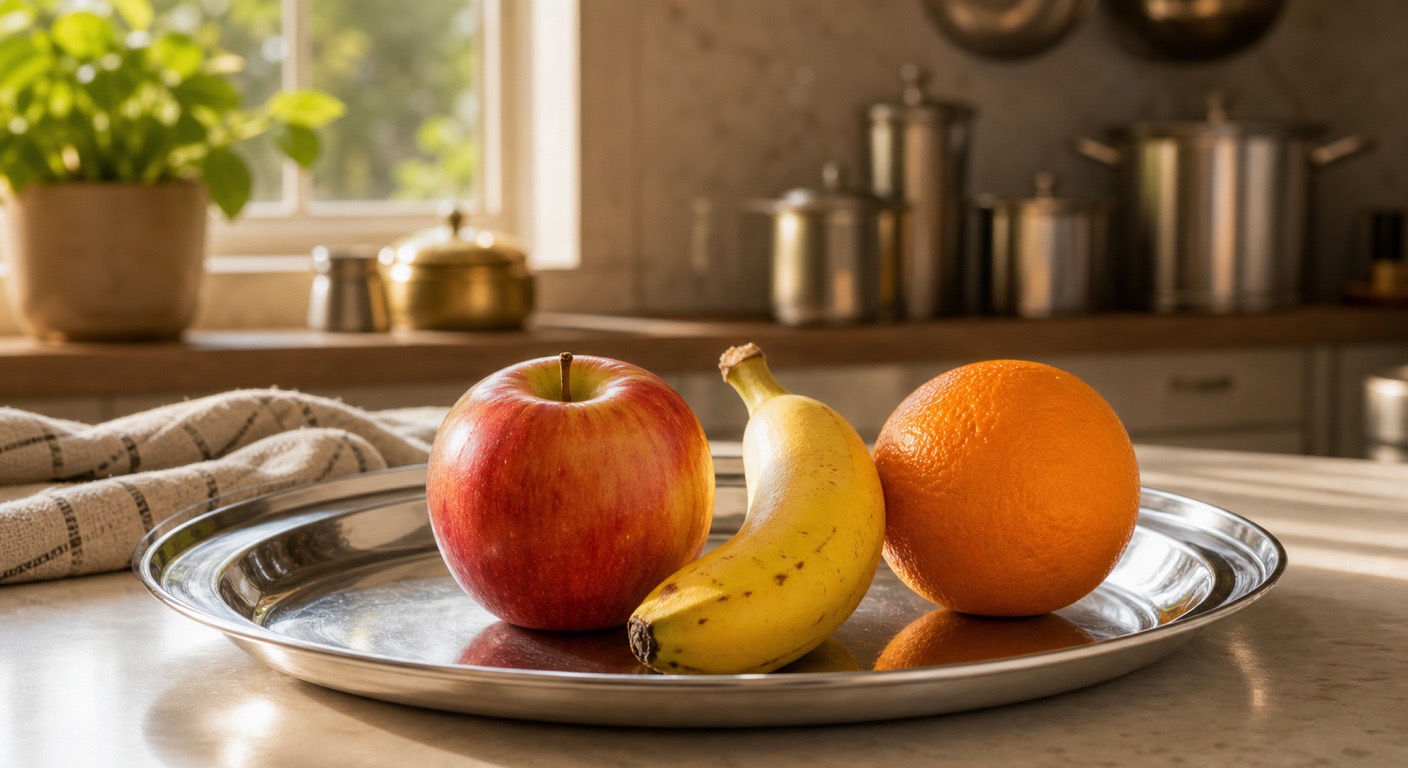
Fruit has sugar — should you be scared of it?
Whole fruit is your friend, not your enemy. The real sugar trap is fruit juice — it keeps the sugar but throws away the fibre that fills you up.
Fruit has sugar. That word scares people. So they stop eating mangoes, bananas, even apples. But here is the honest truth. Whole fruit almost never makes you fat. The real sugar trap is fruit juice. It keeps the sugar and throws away the part that fills you up.
Fruit has sugar, so eating fruit makes you fat — you should cut it out to lose weight.
mostly falseMostly false. Whole fruit has sugar, but it is wrapped in fibre and water. Fibre slows the sugar down and makes you feel full, so you stop at one fruit. Juice takes the fibre out, so you drink the sugar of several fruits and still feel hungry soon after.
Whole fruit vs a glass of juice
Your usual: one glass of orange juice with breakfast
A normal glass of orange juice — the kind you squeeze or pour at breakfast — is about 112 kcal. It carries about 21 g of sugar. And it has almost no fibre: only 0.5 g per glass. That sugar hits your blood fast, the way a soft drink does. You feel hungry again soon.
Assumptions: 1 cup (248 g) of raw orange juice = 112 kcal, 20.83 g sugar, 0.50 g fibre, per NutritionValue/USDA FDC 169098.
Eat the whole orange instead of drinking the juice
One whole orange gives you about half the sugar of the glass, but about six times the fibre. The fibre is what fills you up and slows the sugar down. Eat the fruit, skip the glass.
Assumptions: 1 medium orange (131 g) = 62 kcal, 12.25 g sugar, 3.1 g fibre, versus the glass of juice (112 kcal, 20.83 g sugar, 0.50 g fibre). Sugar: 12.25 g vs 20.83 g (about half). Fibre: 3.1 g vs 0.5 g (about 6x).
Eat fruit the smart way
- Eat the fruit, don't drink it. A whole orange beats orange juice every time.
- One fruit at a time is plenty. A glass of juice is squeezed from several fruits — but you'd never sit and eat that many.
- Watch dried fruit. Drying takes the water out, so a small handful of raisins carries the sugar of many grapes.
- Keep the skin on apples and pears. A lot of the fibre sits just under the skin.
- A banana in your tiffin is a smart snack. It has fibre and fills you up between meals.
The bottom line
Whole fruit is not your enemy. It comes with fibre and water that fill you up and slow the sugar down. The thing to fear is fruit juice — it keeps the sugar and throws the fibre away. So eat the orange. Skip the glass.