Gajar ka halwa - carrots can't save it
One katori of gajar ka halwa is about 386 kcal, and the carrots give only a tiny slice of that. The ghee, sugar and khoya do almost all the work, but a lighter home bowl can drop to about 190 kcal.
Winter comes, and the gajar ka halwa starts calling. Your granny makes a big kadai full, and one katori feels so light. But the carrots are not the star here. The ghee, sugar and khoya ride on top of them, and they bring the calories. Let's open one katori and see who is really paying the bill.
Gajar ka halwa is healthy because it is mostly carrots.
mostly falseMostly false. The carrots are there, but in one katori they give only about 37 kcal out of about 386. That is roughly one-tenth. The ghee, sugar and khoya give the other nine-tenths. So yes, it has carrots, but the dish is a sweet loaded with fat and sugar, not a vegetable bowl.
One katori of classic gajar ka halwa: about 386 kcal
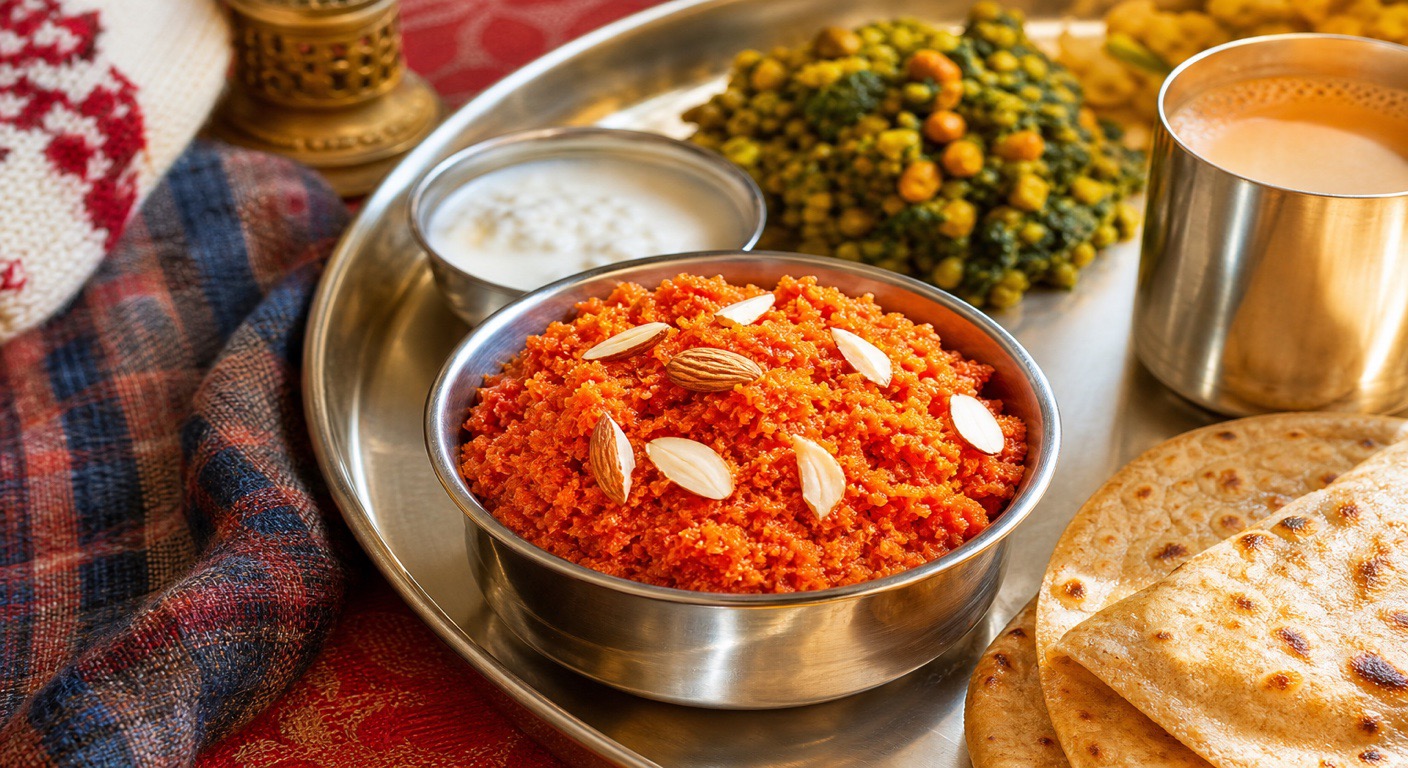
A normal home katori of gajar ka halwa, the kind made with khoya and a generous spoon of ghee, lands near 386 kcal. That is close to two full meals of dal-roti in one small bowl. And the carrots? They chip in only about 37 of those 386 kcal. The rest is ghee, sugar and khoya.
Assumptions: Anchored to a real recipe figure of 386 kcal per serving (Tarla Dalal). Per-katori ingredient split to match that figure: ~90 g carrots (90 x 0.41 = 37 kcal), ~13 g ghee (13 x 8.97 = 117 kcal), ~28 g sugar (28 x 3.86 = 108 kcal), ~30 g khoya (30 x 4.09 = 123 kcal) = ~385 kcal, rounded to 386. The carrot portion is a transparent kitchen estimate chosen to reconcile with the published serving; the per-100g values used are all from verified sources below. Whole-milk contribution (often a splash while cooking) is left out of the sum because no verified milk source was fetched; it adds little beside the four main items.
Where those 386 kcal actually come from
A lighter home bowl: about 190 kcal
Keep the carrots, cut the three rich riders. Use one teaspoon of ghee instead of a tablespoon, halve the sugar (or swap some for mashed banana), and use half the khoya with a splash of low-fat milk to keep it creamy. You still get the warm, wintery taste, with roughly half the calories.
Assumptions: Lighter per-katori estimate: ~90 g carrots (37 kcal), ~5 g ghee, one teaspoon (5 x 8.97 = 45 kcal), ~12 g sugar (12 x 3.86 = 46 kcal), ~15 g khoya (15 x 4.09 = 61 kcal) = ~189 kcal, rounded to 190. This sits close to a real published lighter recipe (Tarla Dalal Quick Gajar ka Halwa, 220 kcal per serving), so the 180-220 range is honest. The optional low-fat-milk splash and banana swap are not counted as separate sources; they only replace some sugar/khoya, so the number stays within range.
Small ways to enjoy it without the full hit
- Take a small katori, not the big festive one. Half the bowl is half the calories.
- Ask for less ghee on top. That final spoon of ghee is almost pure fat at 897 kcal/100 g.
- Share one katori with someone. Gajar halwa tastes just as good from a shared bowl.
- Eat it as a treat after a normal meal, not instead of dinner. Then one katori is enough.
- If you make it at home, sweeten partly with grated carrots cooked longer, or mashed banana, and cut the sugar by half.
The bottom line
Gajar ka halwa is a sweet, not a vegetable dish. One katori is about 386 kcal, and the carrots give only about 37 of those. The ghee, sugar and khoya own the rest. Cut those three, keep the carrots, and your home bowl can land near 190 kcal. Enjoy it this winter, just know who is really on the plate.