Gestational diabetes changed your risk — what to do now
Gestational diabetes usually goes after birth, but your future risk of type 2 diabetes stays higher. The good news is small daily moves like a walk, a logged meal, and the sugar test your doctor books can cut that risk a lot.
You had sugar trouble in your pregnancy. The doctor called it gestational diabetes. The baby is here now. Your sugars may look fine today. So you may think the story is over. It is not over. It just changed shape. This short read is about what changed, and the small moves that quietly cut your future risk. Always co-manage this with your doctor. Burnie is the notebook. Your doctor owns the plan.
Your future risk is higher now
After gestational diabetes, your chance of getting type 2 diabetes later in life goes up. One big review of 20 studies (over 1.3 million women) found that women with prior gestational diabetes had about 10 times the risk of type 2 diabetes later, compared to women with normal pregnancies. The CDC says it even more simply: about half of women with gestational diabetes go on to develop type 2 diabetes. That number can feel scary. But there is good news in the same breath. You know. Most people do not. Knowing years early is a quiet superpower.
Once the baby is born, gestational diabetes just goes away on its own.
mostly falsemostly false — explained simply
The high sugars of pregnancy usually do go back to normal after birth. That part is true. But the risk does not leave with the baby. It stays in your body's story. Think of gestational diabetes as a friendly alarm. It rang once. It will keep ringing softly for years, in the background. The job now is not to silence it. The job is to answer it, gently, with small daily moves. Your doctor sets the watch. You do the daily maths.
Small moves, big shield
Here is the hopeful part. You do not need to be perfect. A 2025 review of 24 trials (over 9,000 women with prior gestational diabetes) found that simple lifestyle support after pregnancy cut new diabetes cases by about 24%. The same review noted that the Diabetes Prevention Program found about a 50% drop in diabetes in women with prior gestational diabetes, around a decade after the pregnancy, with lifestyle help. The magic part? The average weight change was only about 0.88 kg. So you do not need to lose half your body. A small, kind, daily shift is enough to do real work. Talk to your doctor about what pace is right for you, especially while breastfeeding or recovering.
What to track in Burnie vs what your doctor owns
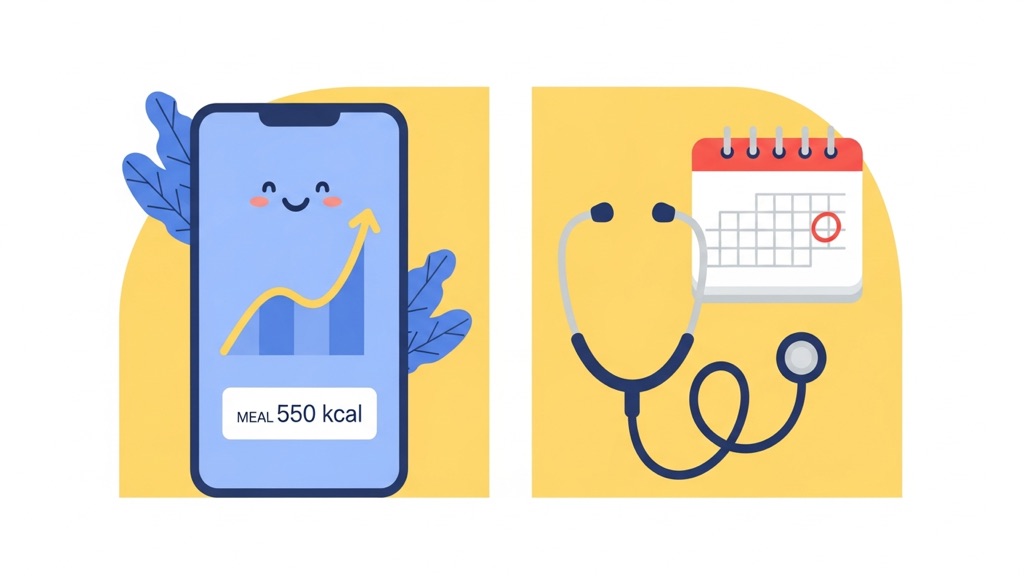
Small postpartum moves that work
The bottom line
Gestational diabetes did not break you. It gave you a head start. Most people learn they are at risk only when type 2 walks in. You learned years early. Small moves, a walk, a logged meal, a weekly weight, the sugar test your doctor books, can quietly cut that risk by about a quarter to a half. Your doctor owns the medical plan. Burnie is the friendly notebook where the daily maths lives. One walk. One log. One check-up. That is the whole answer.