GLP-1 and the Indian diet: how to adapt your plate
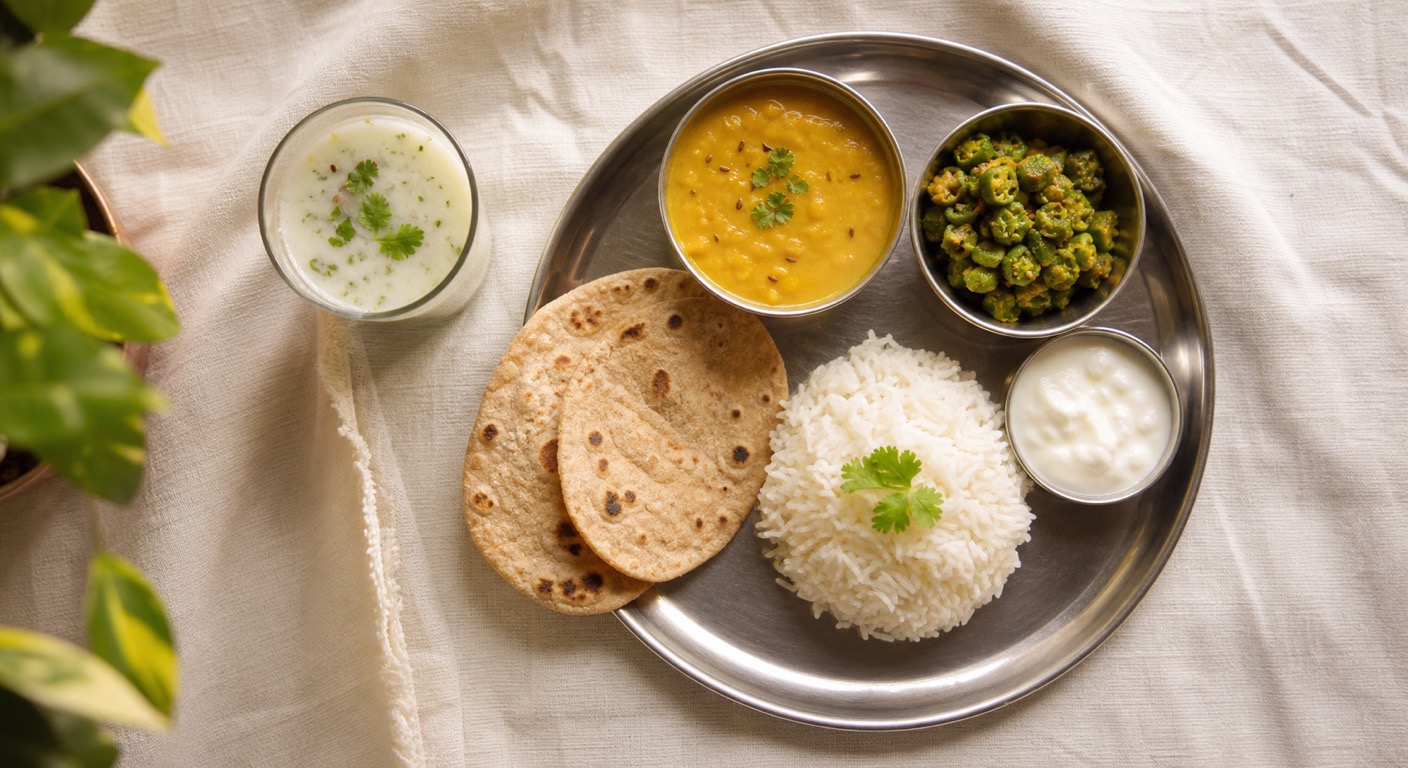
A normal Indian plate is rice or roti with dal, sabzi, some curd, and a sweet or fried snack now and then. On a GLP-1 medicine you eat less and may feel nauseous, so that same plate needs to be smaller, richer in protein and fibre, gentler on the stomach, and well watered. The medicine helps you eat less; what you eat in that less decides whether you stay nourished. Talk to your doctor and dietitian before changing your food.
You just started a GLP-1 injection (like semaglutide or liraglutide), and your stomach feels different. You are less hungry, and some days you feel a little sick, maybe a bit nauseous or full very fast. This is normal for these medicines and it is also why they help. But it changes one big thing: your old Indian plate. A normal Indian meal is rice or roti with dal, a sabzi, some curd or paneer, and often a sweet or a fried snack on the side. When you eat less and your stomach is touchy, you cannot just eat the same food in smaller amounts. You have to make each bite count more. This article is an honest, friendly guide on how to adapt a normal Indian diet on a GLP-1, what to keep, what to cut, and why. It is not a prescription. Please talk to your doctor and a dietitian before you change your food.
How the Indian plate changes on a GLP-1 (and why)
A typical Indian meal is built around staples like rice and whole-wheat roti, with split lentils (dal) and a vegetable sabzi, and dairy such as curd, paneer or ghee, plus sweets after dinner and fried snacks at evening tea time. On a GLP-1 medicine two things change. First, the medicine mimics a hormone that targets the parts of the brain that regulate appetite and food intake, so you feel less hungry and full sooner. Second, GLP-1 medicines also delay stomach emptying, which is part of why you feel full but also why nausea, vomiting, diarrhoea and constipation are very common, especially when the dose goes up. In the big Wegovy trial, nausea was reported by 44% of people on the drug versus 16% on placebo, diarrhoea 30% versus 16%, vomiting 24% versus 6%, and constipation 24% versus 11%. So on this medicine your plate has to do four new jobs at once: be smaller (you eat less), be protein-richer (every meal keeps your muscle), be fibre-richer (your gut moves better and constipation is common), and be gentler and well-watered (your stomach is touchy and dehydration can hurt your kidneys). The medicine helps you eat less, but the quality of that less is what keeps you nourished.
On the injection I can eat my usual big Indian meals, just minus a little.
VerdictNot enough, and for many people it does not work. GLP-1 medicines make you less hungry and slow your stomach, so you will naturally eat less, that part is true. But 'big plate minus a little' usually means less rice and less roti, which only cuts the carbs. You are left with too little protein, too little fibre, too little water, and the same fried and sweet extras. That is a recipe for losing muscle instead of fat, for constipation, and for worse nausea on a slow, touchy stomach. What you need is a different plate: smaller, but protein-richer (dal, curd, paneer, egg or chicken at each meal), fibre-richer (a cooked sabzi and a little salad, whole-grain roti sometimes), well-watered (sips of water, chaas, nariyal-pani or nimbu-pani through the day), and gentler when nauseous (less deep-fried and very sweet food). The medicine decides how much you eat; the food decides whether that less keeps you strong. Please build this plate with a dietitian, not alone.
Practical Indian swaps that work on a GLP-1
- Put protein in every meal: a thicker dal, a small bowl of curd, a cube of paneer, one egg, or a small piece of chicken or fish. Legumes like moong, chana, rajma and toor dal are good plant protein and part of the normal Indian plate already.
- Add a cooked sabzi and a small salad to lunch and dinner. Keeping the skin on vegetables and using whole-grain roti sometimes adds fibre, which helps the constipation that is common on GLP-1.
- Keep some roti and rice. You still need the energy and the fibre, especially from whole-grain roti. The goal is a smaller portion, not zero.
- Sip fluids through the day: water, chaas, nariyal-pani, or nimbu-pani with less sugar. Nausea, vomiting and diarrhoea can dehydrate you, and the Wegovy label warns this can affect the kidneys.
- Eat small amounts 3-4 times a day instead of one or two big meals. A big meal on a slow, touchy stomach can worsen nausea.
- On nauseous days, go gentler: less deep-fried samosa and pakora, less very sweet laddoo and halwa, and try ginger-lemon tea or a small piece of ginger with the meal. Bland dal-chawal or moong dal khichdi is often easier to keep down.
- Do not 'eat less so I will eat only tasty fried food'. When you eat little, every meal has to carry your protein, vitamins and minerals. Low-nutrient food leaves you weak and loses muscle.
- Keep your doctor and dietitian in the loop. Tell them about nausea, vomiting or diarrhoea, so they can adjust the dose and check your food and fluids. Never change the medicine on your own.
The bottom line
A GLP-1 medicine helps you eat less, but it does not decide what you eat. On a normal Indian diet that means building a new plate: smaller, but with protein in every meal (dal, curd, paneer, egg or chicken), more fibre from sabzi, salad and whole-grain roti to ease the constipation these medicines cause, steady sips of water, chaas, nariyal-pani or nimbu-pani to avoid the dehydration that can hurt your kidneys, and gentler, less fried and less sweet food on the days your stomach feels sick. Keep some roti and rice, eat small amounts through the day, and do not trade 'eating less' for 'eating only tasty fried food'. When you eat little, every meal has to nourish you, or you lose muscle instead of fat. Build this plate with your doctor and a dietitian. Tell them about any nausea, vomiting or diarrhoea so they can adjust the dose. The medicine is one tool; your daily thali is the other. They work together.