GLP-1 muscle loss: why ~25% of weight lost is lean mass
When you lose weight on a GLP-1 medicine like semaglutide or tirzepatide, about a quarter of the weight you lose is lean mass, not fat. This is true of weight loss in general, but the large and fast losses seen with GLP-1 make it matter more, especially for older adults. Losing muscle can lower your strength, your day-to-day function, and your metabolic rate. The answer is not to avoid GLP-1, but to pair it with enough protein, resistance training, and, if you can, body-composition tracking like a DEXA scan, because a bathroom scale cannot tell muscle from fat.
GLP-1 medicines like semaglutide and tirzepatide help many people lose a meaningful amount of weight. But the number on the bathroom scale only tells you total weight, not what that weight is made of. A real and important concern with GLP-1 weight loss is that some of the weight you lose is lean mass, which includes your muscle. This is not a reason to be afraid of these medicines. It is a reason to be smart about how you use them. This guide gives you the honest picture: how much of the loss is lean mass, why it matters more for older adults, why the scale alone is misleading, and how to protect your muscle with enough protein, resistance training, and body-composition tracking. Please talk to your doctor before any change in diet, exercise, or medicine.
The baseline: about a quarter of GLP-1 weight loss is lean mass
A 2024 systematic review and network meta-analysis of GLP-1 receptor agonists, published in the journal Metabolism, pooled many trials and found that lean mass loss made up about 25 percent of the total weight lost. In plain words, roughly one kg in every four kg lost is lean mass, not fat. This is similar to what is seen with weight loss in general, but GLP-1 medicines often produce large and rapid losses, so the absolute amount of lean mass lost can be bigger and more clinically important. A 2024 review in the journal Diabetes Care noted that incretin-based medicines can cause rapid and significant loss of lean mass, in the range of about 10 percent or about 6 kg, which the authors compared to a decade or more of aging. Losing muscle matters because muscle holds your strength, your balance, and your ability to do daily tasks, and it also supports your metabolic rate. The concern grows with age. Sarcopenia, defined in StatPearls as the progressive loss of muscle mass and strength, particularly in older adults, is estimated to affect 5 to 13 percent of people aged 60 and above and 11 to 50 percent of those aged 80 and above. A large, fast weight loss in an older adult can push them closer to that risk. One more honest point: liraglutide, in the same meta-analysis, was the only GLP-1 receptor agonist that achieved weight reduction without significantly reducing lean mass, so the muscle-loss picture does differ somewhat between medicines. Your doctor is the right person to weigh that.
All the weight you lose on a GLP-1 medicine is fat.
falseFalse. A 2024 systematic review and network meta-analysis of GLP-1 receptor agonists, published in the journal Metabolism, found that lean mass loss made up about 25 percent of the total weight lost. A 2024 review in Diabetes Care added that incretin-based medicines can cause rapid and significant loss of lean mass, in the range of about 10 percent or about 6 kg, comparable to a decade or more of aging. So a meaningful part of GLP-1 weight loss is lean mass, not fat. The honest counterpoint is that this is not a reason to avoid GLP-1, and it is not the same as saying GLP-1 permanently wastes your muscles. Muscle loss with weight loss is largely adaptive, and the same Diabetes Care review shows that supervised resistance exercise for more than 10 weeks can add about 3 kg of lean mass and about 25 percent strength in men and women. With enough protein and resistance training, you can lose fat while protecting your muscle. The problem is not the medicine alone, it is the medicine without the muscle plan.
Protect your muscle while losing weight on a GLP-1
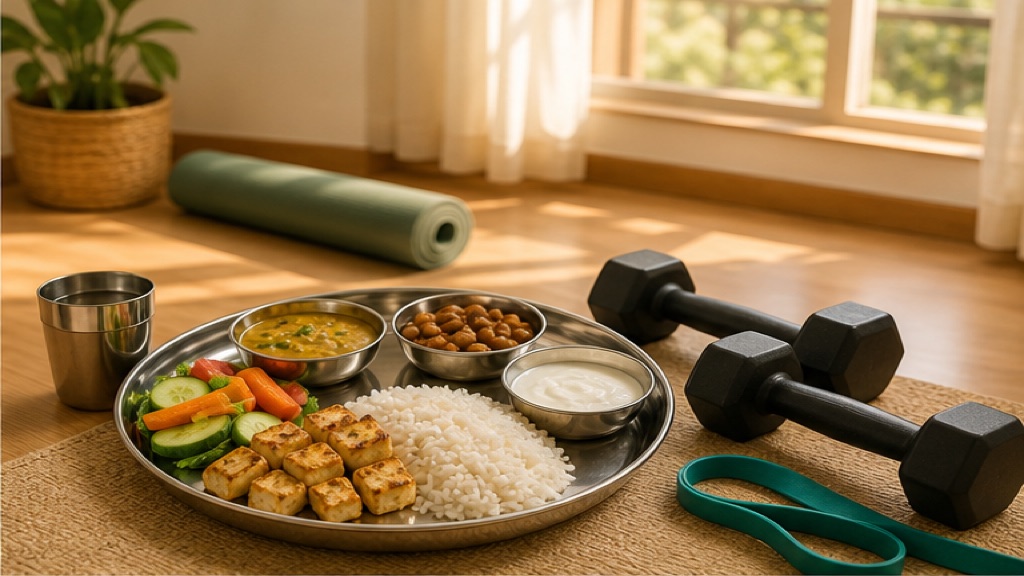
- Eat enough protein. StatPearls recommends about 1.0 to 1.2 grams per kilogram of body weight per day for people at risk of muscle loss, with 20 to 35 grams of protein per meal. Indian diets can be lower in protein, so include dal, curd, paneer, eggs, fish, chicken, soya, and nuts through the day. A dietitian can set the right amount for you.
- Do resistance or strength training about 2 to 3 times a week. A Diabetes Care review found supervised resistance exercise for more than 10 weeks can add about 3 kg of lean mass and about 25 percent strength in men and women. Body-weight moves, resistance bands, or simple weights at home all count. This matters even more for middle-aged and older Indians, and for women, who are less likely to do strength work.
- Track body composition, not just weight. A bathroom scale cannot tell muscle from fat. A DEXA scan gives precise, separate numbers for fat mass and lean mass, and BIA smart scales give a useful trend. If a DEXA scan is available and affordable at a clinic near you, it is the clearest way to see whether your loss is mostly fat.
- Take extra care if you are older. Sarcopenia affects an estimated 5 to 13 percent of people aged 60 and above, and the risk rises sharply after 80. Older adults on GLP-1 should watch protein, strength training, and balance most closely, and check in with their doctor.
- Do not crash your calories. Very low food intake can pull more of your weight loss from muscle. Aim for a steady, modest calorie deficit with enough protein, rather than a starvation diet.
- Talk to your doctor and dietitian before starting or changing anything. They can check your muscle risk, adjust your plan, and tell you if a DEXA scan or a BIA reading is useful for you. Medicine dose decisions are always theirs, not yours to change on your own.
The bottom line
About a quarter of the weight you lose on a GLP-1 medicine is lean mass, not fat, and the large, fast losses seen with these medicines make that real and clinically important, especially for older adults. The honest answer is not to fear GLP-1, but to pair it with a muscle plan: enough protein, resistance training 2 to 3 times a week, and body-composition tracking, ideally a DEXA scan if you can get one, instead of trusting only the bathroom scale. Liraglutide may preserve lean mass somewhat better than some others, but only your doctor can match the medicine to you. Burnie can help you log your food, see your daily calorie deficit, and track your protein, but your medicine, diet, and exercise plan belong with your doctor and dietitian.