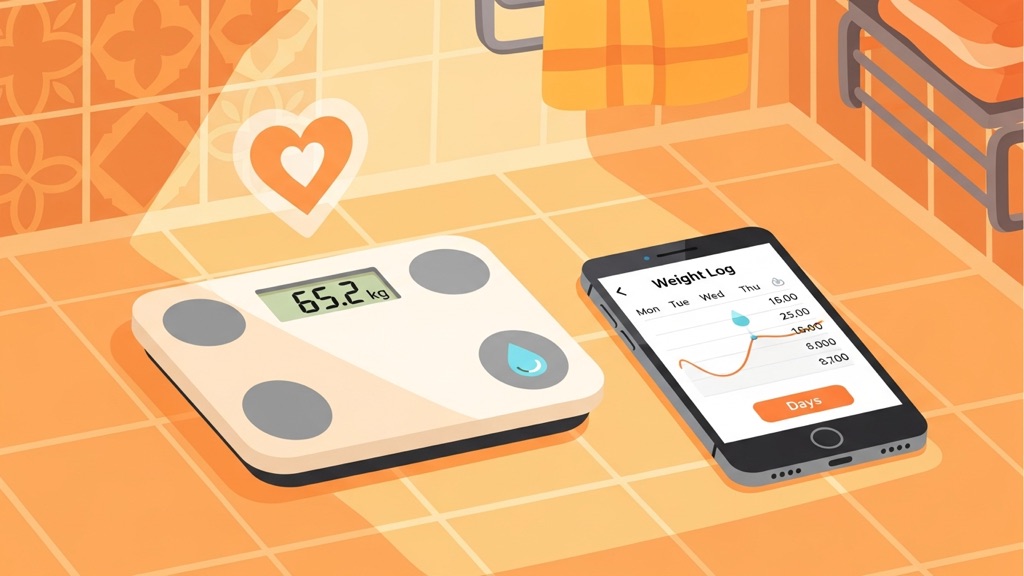
Heart failure and the fluid weight that is not fat
In heart failure, a sudden kilo jump on the scale is often water backing up, not fat from your food. Your daily weight is a safety check your cardiologist reads, not a diet grade — so the fluid log matters more than the food log.
You have heart failure. You ate a normal day of ghar ka khana. You wake up, step on the scale, and it is 2 kg higher than yesterday. Your stomach drops. Your first thought: my diet failed. Take a breath. In heart failure, that sudden jump is often water backing up, not fat. Your scale is telling on your heart, not on your rotis.
A sudden kilo jump on the scale means my diet failed.
mostly falsemostly false — explained simply
In heart failure, the heart cannot pump as strongly as it should. So water slowly builds up in your body. The American Heart Association says a gain of more than 2 to 3 pounds (about 1 kg) in one day, or more than 5 pounds (about 2 kg) in a week, is often the first sign that heart failure is getting worse. It says this gain may be due to holding fluids because the heart is not working properly. Heart doctors in Europe use a similar rule: alert your team if weight jumps more than 2 kg in 3 days. So that scale jump is usually water, not food. It is a heart message, not a diet grade.
Daily weight is a safety check, not a diet number
In heart failure, your weight is not just weight. It is a signal your doctor reads. A medical reference used by doctors (StatPearls, updated 2025) puts it plainly: weight gain is one way to check if your body is holding extra fluid, and precise daily weights are a useful monitoring tool. Your cardiologist owns the plan — your medicines, your water-pill (diuretic) dose, your salt and fluid limits. Burnie is just the notebook. Burnie logs your food and your weight, and it is free, no paid tier. But Burnie never changes your heart failure medicines. Your doctor owns every dose. Never skip, double, or change a pill to move the scale.
What your doctor watches vs what Burnie logs
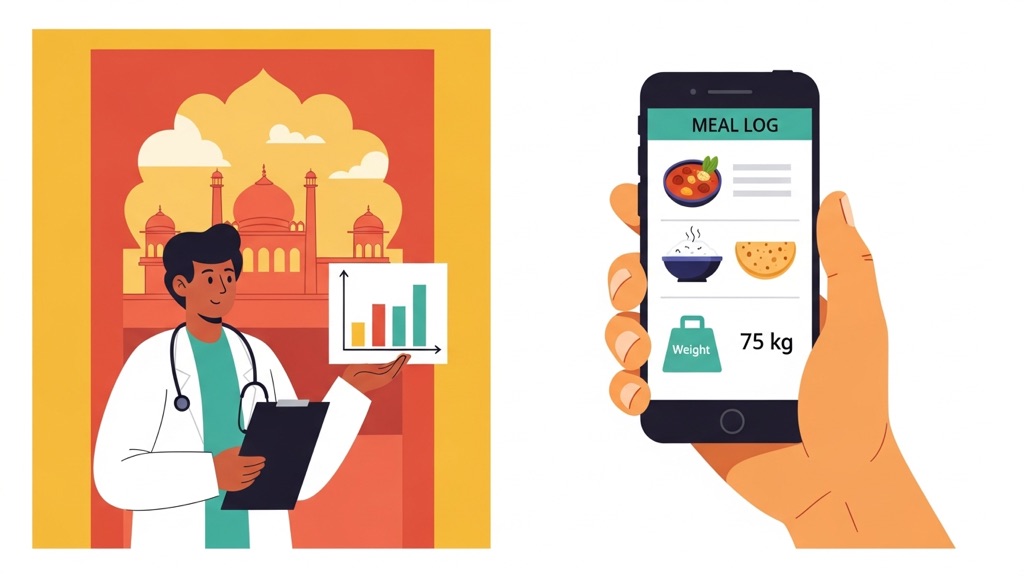
How to weigh yourself the right way in heart failure
The bottom line
In heart failure, the scale is not your diet scorecard. It is a safety check your cardiologist reads. A sudden jump of about 1 kg in a day or 2 kg in a week is often water backing up, not fat from your food. Weigh yourself every morning the same way, log the number in Burnie, and tell your doctor if it crosses the line they set for you. Your food log still matters for the maths — but your daily weight log matters more for your safety. Burnie is the notebook; your doctor owns the plan.