Home vs restaurant — same dish, different maths
A dal at home and a dal at a restaurant are two different meals. The oil and cream change the calories, so log the real one, not just the dish name.
Tuesday night, your mother makes dal makhani at home. She uses one spoon of butter. Saturday night, you order dal makhani at a dhaba. The cook pours oil. He swirls cream. He drops a butter pat on top before serving. Same name. Same bowl. Same four words you type into Burnie: 'dal makhani, one katori.' But these are two different meals. This short read is about that quiet gap, and why logging the real dish, not just the name, fixes your calorie number.
A dal makhani is a dal makhani — same calories at home and at a restaurant.
mostly falsemostly false — explained simply
The lentils are the same. The calories are not. The gap comes from what the cook adds: butter, cream, and oil. One nutrition breakdown notes that restaurant dal makhani runs about 280 to 350 calories per 200 g bowl, while the home version is 220 to 260. Same dish name on the menu. About 80 extra calories hidden in the hotel bowl. That is like eating one extra roti without knowing it.
One bowl, two maths: the dal gap
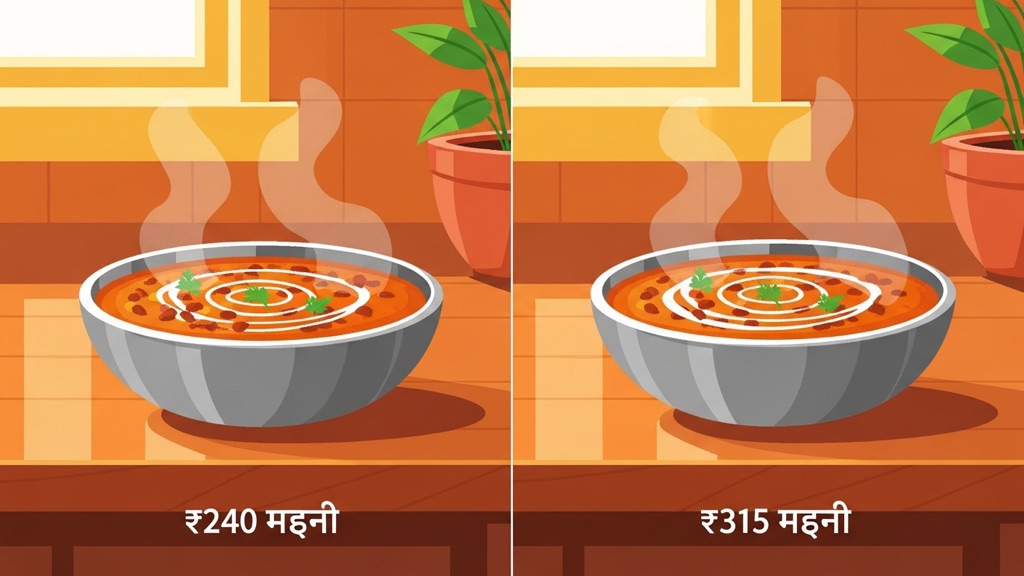
Look at the numbers side by side. A home bowl of dal makhani lands around 240 calories for a normal 200 g katori. A restaurant bowl of the same dish lands around 315. That is about 75 extra calories in one katori, just from extra butter and cream. Now picture a full thali with two such bowls, a rich sabzi, and butter naan. The home-versus-hotel gap easily crosses 300 calories for the same meal name. That is roughly one and a half extra rotis your log never told you about.
Same dish name, two calorie truths
Where the extra calories hide
The dish is not the liar. The oil and butter are. One tablespoon of cooking oil is about 119 calories. A single 5 g butter pat is about 36 calories. A restaurant cook does not measure with a spoon. He free-pours. One nutrition tool warns that a generous pour of oil while cooking can quietly add 200 to 300 calories to a meal. Now add the cream swirl on top. The home cook stops at one spoon. The restaurant cook does not. Same dish. Different maths.
How to log the real one, not the name
The bottom line
A dish name is a word. A dish is a real plate with real oil, real butter, and real cream. The home bowl and the hotel bowl share a name, not a calorie count. So when you log in Burnie, log the real one: the place, the oil, the butter pat. Your daily maths is food calories minus your BMR and active calories. Honest logging is what makes that number true. Burnie is FREE, so the number is not a bill. It is just maths, and the maths only works if you log what you actually ate.