How to work out calories per serving in any recipe
You cooked a big pot of dal for the whole family, and now you want the calories in just your one bowl. The trick is simple maths: add every ingredient's calories, then divide by the number of bowls you serve.
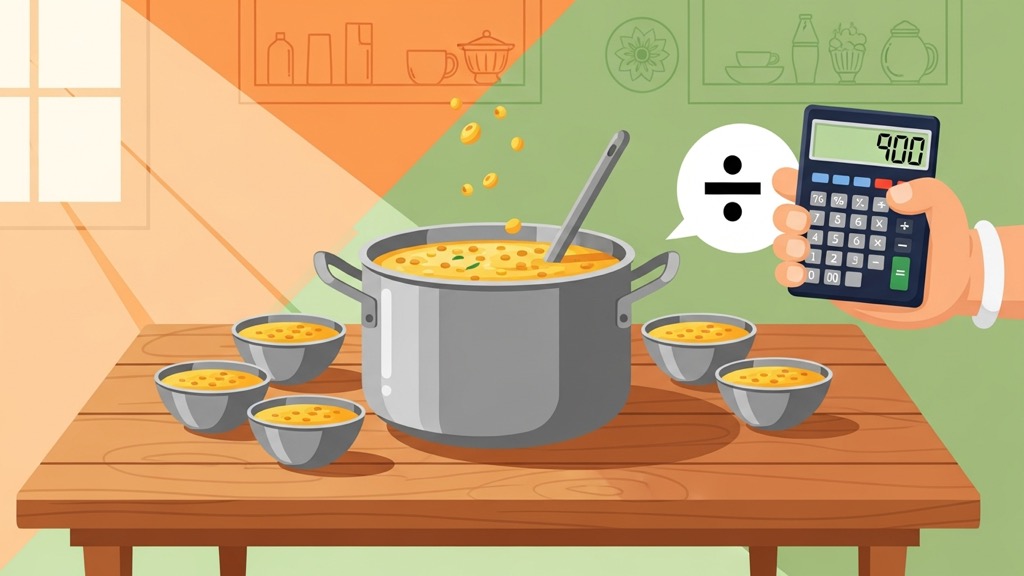
You cooked a big pot of dal for four people. The food app only knows 'one bowl of dal'. So how many calories are in your bowl? The answer is not printed on the pot. You find it with two small steps of maths. Once you learn them, any sabzi or curry becomes a number you can log.
The two-step recipe maths
Step one: list every ingredient that went into the pot. Look up each one's calories in a food database like USDA FoodData Central. Step two: add all those calories up, then divide by the number of servings. That is it. Those database numbers come from an old rule. It is called the Atwater factors. Protein gives 4 calories per gram. Carbs give 4. Fat gives 9. The energy of all the parts is added together for the meal's total. Then you just divide.
Counting the cooking oil barely changes the per-serving number.
mostly falsemostly false
It feels like just a little oil. But fat carries more than double the energy of protein or carbs. Fat gives 9 calories in every gram. Pour two spoons of oil into the pot and most of those grams are fat. In a pot split four ways, that oil still counts in every bowl. Your 'light' dal quietly stops being light. Measure the oil the same way you measure the dal.
Where home cooks go wrong
Make recipe maths easy
The bottom line
Recipe maths is just two steps. Add the calories of every ingredient, then divide by the number of real servings. The cooking oil is the part most people miss. Fat is dense energy, at 9 calories per gram. Measure the oil. Log the pot once. Reuse that number every time you eat it.