How to make a daily walk a habit you actually keep
Starting a walk is easy. Keeping it for months is hard. The trick is not more willpower. It is a simple four-piece design: a cue, a route, a buddy, and a podcast. Science says a daily habit takes about 66 days to stick, so here is the short checklist that gets you there.
You buy walking shoes on Monday. You walk three days. By Friday the shoes are by the door and you are on the sofa. This is not weak will. The walk just never became a habit. A habit is something you do without deciding, like brushing your teeth. This short read gives you a small design that turns a walk into a habit: a cue, a route, a buddy, and a podcast. No gym, no cost.
A real habit takes about 66 days
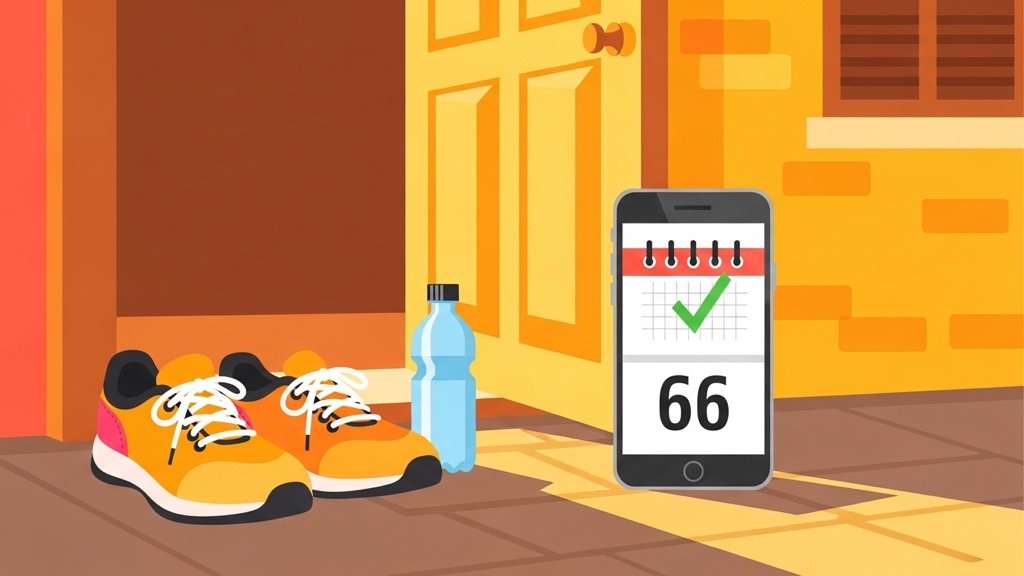
The old story says 21 days makes a habit. The science says something else. A review of habit research found a new daily habit reaches its full strength after about 66 days. That is close to ten weeks. The review said two kind things too. Simple actions, like a short walk or a glass of water, become habits faster than long routines. And missing one day does not break the process. You just walk the next day. So the goal is not to be perfect. The goal is to keep going for about ten weeks.
It takes just 21 days to build a daily walking habit.
mostly falsemostly false — explained simply
The 21-day story is popular, but it is not what the newer science shows. Habit research found the average is closer to 66 days, not 21. Twenty-one days is too short for most people. If you expect a habit in three weeks and it does not happen, you may quit early. Plan for about ten weeks instead. Then you are not upset when the habit feels hard at day 20. You just keep walking, because you knew it would take longer.
The four-piece walk-habit checklist
Two ways to set your walk cue
The bottom line
The daily walk becomes a habit after about 66 days, not 21. The trick is design, not willpower. Pick one cue, one route, one buddy, and one podcast. Write an if-then plan so the cue triggers the walk. Miss a day? Walk the next. One miss does not break the habit. Log your food in Burnie (it is free), let the walk widen your daily deficit, and let your weekly summary show the trend. Give it ten weeks. Then the shoes stop living by the door.