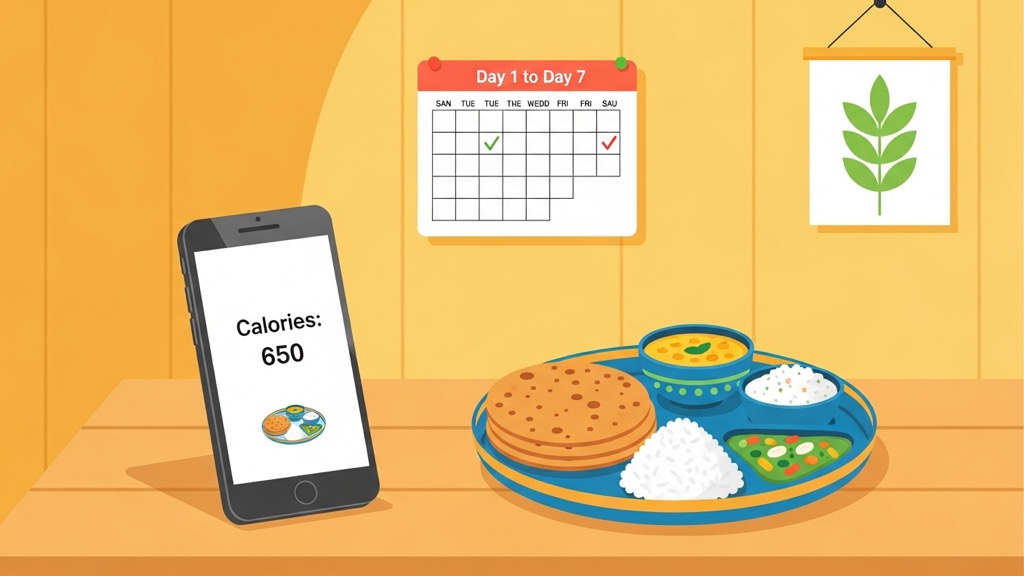
How to plan a one-week diet break and keep your progress
A diet break means eating at maintenance for 7 to 14 days. It rests your hunger and helps you stick with your cut, and it does not reset your metabolism. Keep logging in Burnie, eat at maintenance, then go back to your deficit.
You have been in a cut for six weeks. The rotis look smaller. The dal looks sad. You feel tired and a little hungry. You keep thinking, "Can I just eat normally for one week?" Yes, you can. It is called a diet break. It is a short, planned pause at your maintenance calories. Done right, it helps you keep going for months. Done wrong, it becomes a wedding feast that erases your hard work. This short read shows you the right way.
A diet break resets and boosts your metabolism.
mostly falsemostly false
People love to say a break "resets" your metabolism. Metabolism is the speed your body burns food. It sounds magical. It is mostly a myth. When you eat less for weeks, your body does burn a little less. This is called metabolic adaptation. A one-week break does not fix it. One good study tested diet breaks in trained women over six weeks. It found diet breaks did not improve body shape or their metabolic rate. The calories they burned at rest stayed almost flat, about 1,422 to 1,434 kcal a day. So do not take a break to fix your metabolism. Take it to rest your mind and your hunger.
Maintenance means your weight stays flat
Maintenance calories are the calories you burn in a day. At this exact number, your weight does not go up or down. The big fear is simple: "If I eat more for a week, I will gain all my kilos back." The science says otherwise. In the MATADOR study, men with obesity took two-week breaks at maintenance calories. Across seven such breaks, their weight changed by almost nothing, just 0.0 plus or minus 0.3 kg. Eating at true maintenance did not pile the fat back on. The same study also found the break group lost more weight overall, 14.1 kg versus 9.1 kg. That is one study in men, so do not over-hype it. The honest lesson is smaller and stronger: a true maintenance break does not erase your work.
What a one-week break does and does not do
How to plan your one-week break in Burnie
The bottom line
A diet break is a planned rest, not a magic fix. It does not reset your metabolism, and it does not need to. What it does is simple and honest: it lets you eat at maintenance for a week, rest your hunger, and keep your progress. The MATADOR study showed men held their weight almost flat, just 0.0 plus or minus 0.3 kg, across their maintenance breaks. So open Burnie, find your maintenance number, log every meal, and enjoy one extra roti. Then go back to your deficit.