How to set a goal date that does not set you up to fail
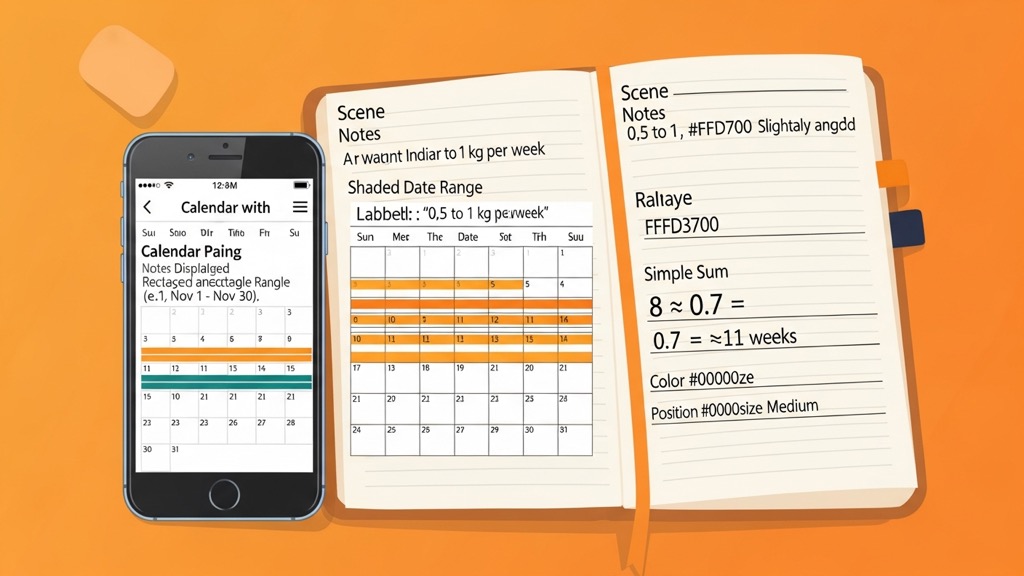
Pick a goal date by maths, not by a festival. Divide your kilos by a safe 0.5 to 1 kg a week, then add buffer weeks for plateaus, festivals and real life.
You have a wedding coming. You pick a date. 'I will lose 8 kilos by then,' you say. That date feels powerful. But a date from a wish is a trap. A date from maths is a plan. Here is how to set one that does not fail you.
A tight deadline like '10 kilos in one month' makes your body lose fat faster.
mostly falsemostly false
A deadline is just a date on a paper. Your body burns fat at its own safe speed. Go faster and you lose water and muscle, not fat. You also feel weak and hungry. The CDC says a safe rate is about 1 to 2 pounds a week. That is about 0.5 to 1 kilo a week. No date on a calendar can speed that up. A tight date only makes you quit.
Back-calculate your date from a safe rate
Do not start with the date. Start with the kilos. Say you want to lose 8 kilos. A safe rate is about 0.5 to 1 kilo a week. So 8 kilos will take you 8 to 16 weeks. That is about 2 to 4 months. Now you have an honest window. Pick the later end if your life is busy. The maths is simple. Kilos to lose, divided by your weekly rate, equals the weeks you need. Real plans run in weeks and months, not one single day.
Three ways to set your goal date
Build plateaus and real life into your date
The bottom line
A goal date from a wish will break your heart. A goal date from maths will hold. Divide your kilos by 0.5 to 1 a week. Add a buffer week for every month. Then pick a range, not a single day. Open Burnie and log your weight. Your weekly trend tells you if your date is honest. If you have a health condition, your doctor sets the pace.