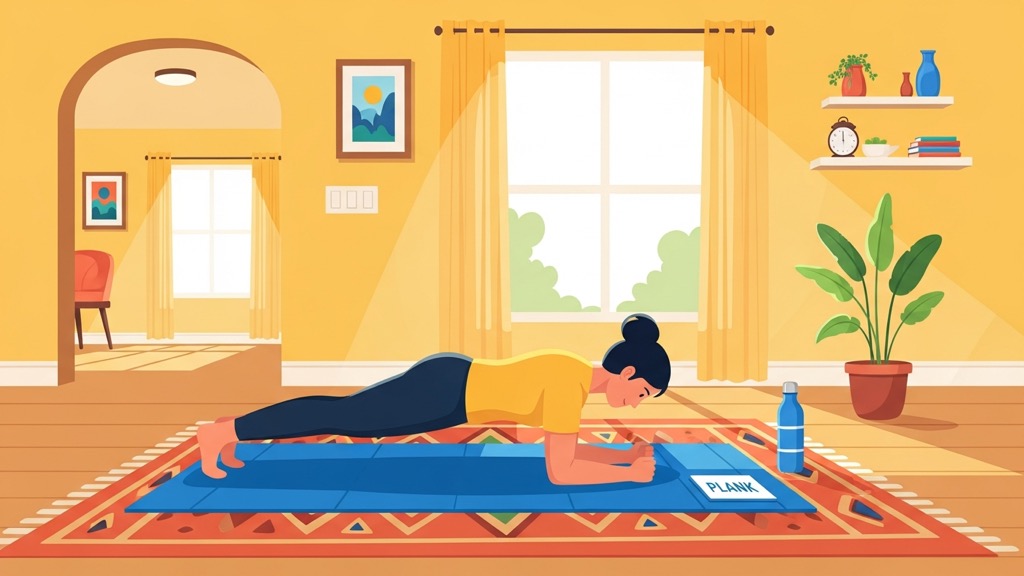
How to strengthen your core without a single crunch
Crunches hurt many necks and backs, and they only train the front of your middle. Three moves, the plank, the dead bug and the bird-dog, build your whole core, back included, without a single crunch.
You want a strong middle. So you lie down and do crunch after crunch. Soon your neck hurts. Your lower back aches. And you worked only the front muscle. Here is the good news. You do not need one crunch to build a strong core. Three quiet moves do the job better. They are kind to your back too.
Crunches are the best exercise for a strong core.
mostly falsemostly false
A crunch bends your spine forward, over and over. It mostly works just the front muscle. That is the one people call the six-pack. But your core is far bigger than that. Doctors who study the spine describe the core clearly. It is the whole band of trunk muscles around your spine and belly. This band has your side muscles, your deep belly muscle, the long back muscles, and even your hips and seat. Crunches leave most of these out. So a core built on crunches alone is not truly strong.
Three crunch-free moves that build the whole core
Why this matters for your weight loss
Here is the honest part. A plank or a bird-dog burns very few calories. It will not create your deficit by itself. In Burnie, your deficit is simple maths. It is food calories minus your BMR and your active calories. BMR is the energy your body burns at rest. So why do core moves at all? Two good reasons. First, a strong middle holds your back up. A sore back is a common reason people stop walking. And walking is where your active calories come from. Second, training these muscles can ease ongoing low back pain a little. A big review tested this in 40 trials and 2,391 people. Trunk-focused exercises helped a little more than general exercise for both pain and disability. The gain was small but real. Keep your back happy, and you keep moving. One safety rule first. If your back already hurts, talk to your doctor or a physiotherapist before you add these moves. They own your back plan. Burnie is just the notebook.
How to do the trio (and fit it in your week)
The bottom line
You do not need a single crunch. The plank, the dead bug and the bird-dog build your whole middle, front, sides, deep belly and back. And your spine stays long and safe while you do them. They burn few calories, and that is fine. Their job is to hold your back strong so you can keep walking, and walking is where your active calories live. An earlier review of five trials found core training beat general exercise for easing chronic low back pain in the short term. The small edge faded by six to twelve months. So think of these moves as a way to stay active and moving, not a cure for a bad back. If your back hurts, your doctor still leads the plan. Build the core. Protect the back. Keep your deficit going.