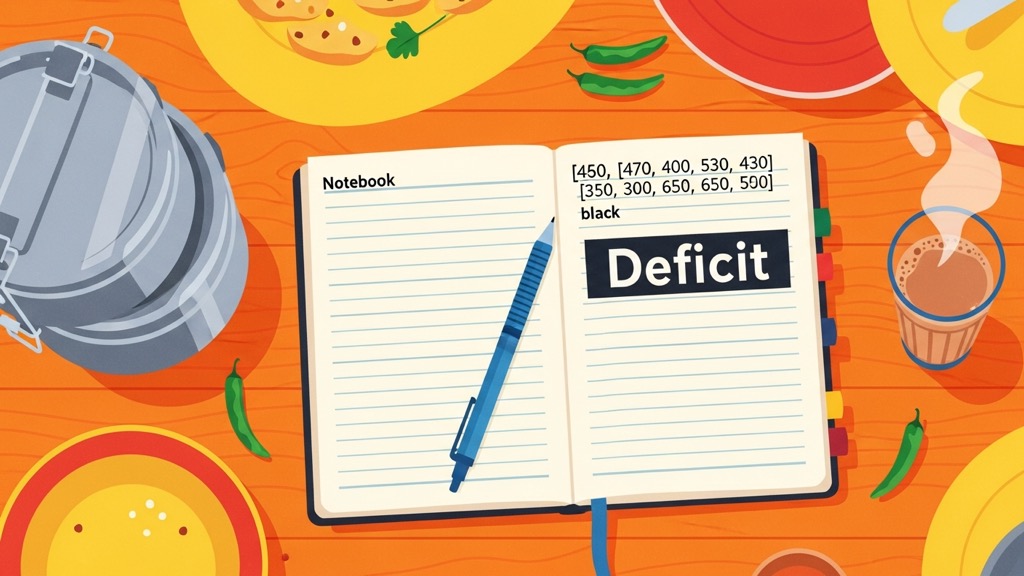
How to track your deficit with just a notebook
You do not need an app to do the maths of weight loss. Four columns in a cheap notebook capture your food, your burn, and your daily deficit, and the pen helps the numbers stick in your head.
Your phone can die. The wifi can drop. A wedding feast can leave you with no signal at all. You still want to know your numbers. Here is the good news. The maths of weight loss does not need a screen. It needs a notebook, a pen, and four columns. This short read shows you the page.
You need an app to track calories properly.
mostly falsemostly false
People lost weight with paper food diaries long before phones existed. One study gave adults a paper diary or an electronic tracker on a small device. After six months, both groups had lost the same weight. What mattered was how often they wrote, not the tool. The researchers said it plainly: pick the method that fits your life and skills. A cheap notebook fits almost every life.
The pen makes the number stick
When you type a number, your eyes glide over it. When you write it by hand, your brain works harder. One study tested students who took notes by hand and on a laptop. The hand-writers understood the big ideas better. Typing made people copy words without thinking. Writing made them choose what mattered. The same trick can help your food log. Writing 'two rotis, dal, chai' by hand teaches your head, not just your page. The number is more likely to stay with you.
The four columns that hold the whole maths
Notebook vs Burnie app vs memory
The bottom line
The maths of weight loss is simple, and it does not care where you write it. Food calories minus your burn equals your deficit. One review found that self-monitoring cut daily calories by about 182, close to one extra stuffed paratha on your plate. A notebook holds the whole sum in four columns, with no battery and no signal. Pick the page that fits your day. Then fill it in.