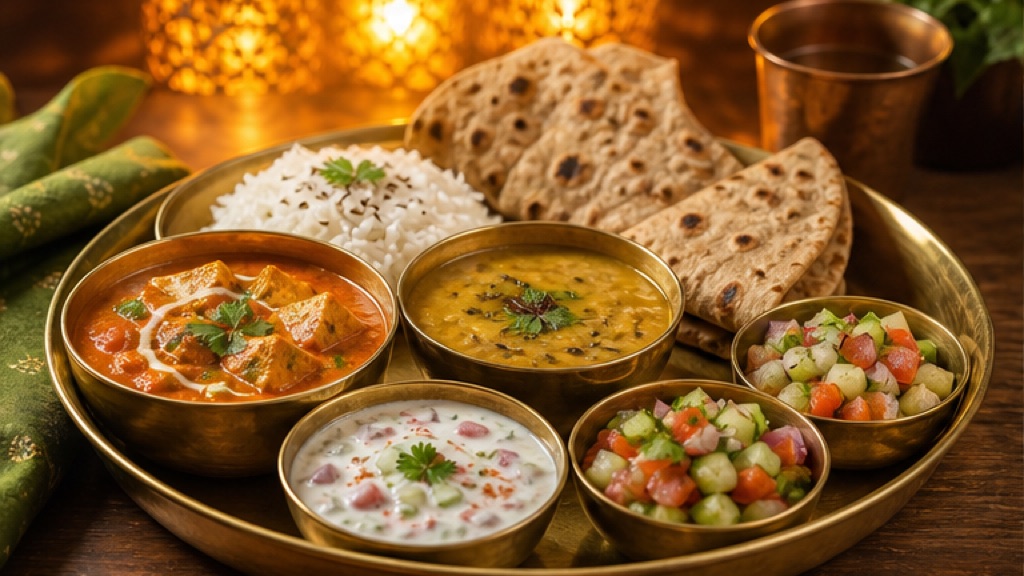
Indian restaurant calories: dishes that load you up, and lighter picks
Indian restaurant food is not fattening by nature. It is dense because restaurants add a lot of butter, cream, ghee and oil, and serve big portions. Learn which dishes load you up (dal makhani, butter chicken, biryani, butter naan) and which are lighter (tandoori, dal tadka, plain roti) so you can eat out and still keep your calorie deficit.
Eating out is one of the great joys of Indian life. The dhaba on the highway, the wedding feast, the Sunday family lunch at the AC restaurant. But if you are trying to hold a calorie deficit, the restaurant plate can quietly load you up with two or three meals worth of energy in one sitting. This is not because Indian food itself is fattening. It is because restaurants add a lot more butter, cream, ghee and oil than your home kitchen does, and they serve big portions. This article shows you, honestly, which popular dishes are the quiet calorie bombs, which are the lighter picks, and why. All dish numbers here are estimates built from the calorie value of the ingredients (cream, butter, ghee, oil, paneer, chicken, rice, wheat flour), not exact lab tests of a particular restaurant. Use them to choose smarter, not to count to the last kcal.
The baseline: the fats that make restaurant food heavy are about 900 kcal per 100 g
The reason a restaurant dal makhani feels richer than your home dal is not magic. It is added fat. The fats that Indian restaurants lean on are some of the most energy-dense foods on earth. Ghee (clarified butter) is about 900 kcal per 100 g, because it is almost pure fat. Butter is about 717 kcal per 100 g. Cooking oil (like refined soybean oil) is about 884 kcal per 100 g. Heavy cream is about 340 kcal per 100 g. Fat carries 9 kcal per gram, more than double the 4 kcal per gram of protein or carbs. So even a few extra tablespoons of ghee or cream on top of a dish can add 100-200 kcal in a few seconds, without making the plate look bigger. A restaurant cook who adds 30 g of butter (about 2 tablespoons) and 40 g of cream to a serving has already tucked in about 215 + 136 = roughly 350 extra kcal from the garnish alone, before the actual food. That is the baseline you are up against. The good news: the same dish, cooked at home with a measured spoon of oil, is far lighter.
Assumptions: Calorie density of pure cooking fats per USDA FoodData Central. A restaurant serving often adds 2-4 tablespoons (30-60 g) of these fats on top of the base food.
Vegetarian Indian restaurant food is automatically lower in calories than the non-veg dishes.
falseFalse. This is one of the most common and costly beliefs at an Indian restaurant. Vegetarian does not mean low-calorie, because the calories come from the added fat and the paneer, not from the meat. Paneer is about 299 kcal per 100 g, denser than cooked chicken at about 219 kcal per 100 g (broiler, meat and skin). So a paneer butter masala (about 600-800 kcal estimate) with two butter naans (about 600-800 kcal) can easily cross 1,400 kcal, while a tandoori chicken piece (about 270-330 kcal) with two plain rotis (about 160-240 kcal) sits around 500-600 kcal. The lighter plate is the non-veg one here. What makes a dish heavy or light is the gravy (cream and butter) and the bread (butter naan vs plain roti), not whether it has chicken or paneer. Order by the cooking method and the added fat, not by the veg or non-veg symbol on the menu.
How to order lighter at an Indian restaurant
- Choose grilled over gravied. Tandoori chicken, paneer tikka or seekh tikka are cooked in the tandoor with a light marinade and no cream. Anything called makhani, butter masala or pasanda is a cream-and-butter gravy.
- Pick dal tadka over dal makhani. Both are dal, but tadka uses a small spoon of ghee while makhani swims in butter and cream. The difference can be 100-200 kcal per bowl.
- Swap butter naan for plain roti. One butter naan is about 300-400 kcal estimate; a plain roti is about 80-120 kcal. Ask for no butter brush on top.
- More sabzi, less rice. A vegetable sabzi is mostly water and fibre; a big mound of rice is dense carbs. Share one rice between two people and load up on the dry sabzi instead.
- Ask for raita (unsweetened), not sweet lassi. A sweet lassi can be 200-300 kcal of sugar and full-fat curd; unsweetened raita is about 90-120 kcal and cools the spice.
- Ask for the gravy on the side, or request half the cream and butter. Most Indian restaurants will do this if you ask. You eat less of the calorie-dense sauce and still enjoy the dish.
- Start with a salad or a small kachumber. A plate of cucumber, tomato and onion with lemon is about 30-50 kcal and takes the edge off hunger before the heavy food lands.
- Restaurant portions are about two home portions. Split a dish with your companion, or ask the waiter to box half before you start eating. Out of sight, out of the deficit.
The bottom line
Indian restaurant food is not fattening by nature. It is dense because restaurants pour in butter, cream, ghee and oil (about 340-900 kcal per 100 g of those fats) and serve portions that are two or three home meals in one plate. The same dal, the same paneer, the same chicken cooked at home with a measured spoon of oil is far lighter. So the move is not to stop eating out; it is to choose grilled over gravied, plain over buttered, dal tadka over dal makhani, more sabzi and less rice, raita over sweet lassi, and to ask for the gravy on the side or half the cream. A paneer butter masala plate can be 1,400 kcal and a tandoori chicken plate can be 600 kcal, and only one of them is the veg one. Order by cooking method, not by the veg symbol. Log your meal in Burnie as an estimate, see your deficit for the day, and enjoy the wedding feast without blowing the whole week.