Insulin resistance: why weight feels stuck, in plain words
Insulin resistance means your cells stop listening to insulin, the hormone that moves food-sugar into your cells. It makes storing fat easier and fat loss slower, but less maida and sugar, more fibre and protein, and a short walk after meals help a lot.
If you have insulin resistance, you simply cannot lose weight.
mostly falseMostly false. It makes fat loss harder, not impossible. Your body still follows the calorie rule. Insulin resistance does push your body to store fat more easily and burn it slower, but the main medical treatment is exactly exercise and weight loss. So weight loss is the fix, not a lost cause.
Insulin is a hormone, a body messenger. When you eat roti or rice, it turns into sugar in your blood. Insulin is the key that opens your cells so sugar can get in. In insulin resistance, the cells stop listening. The sugar stays high in your blood. So your body makes even more insulin to force the sugar in. That extra insulin is what makes storing fat easier.
A sugar-and-maida breakfast that spikes insulin
Picture a quick breakfast: two small maida roti and a cup of sweet tea with two spoons of sugar. It is about 280 kcal. The calories are small. But almost all of it is refined carb with little protein or fibre. That makes blood sugar jump fast, and insulin jumps with it.
Assumptions: 2 maida roti (~30 g maida each = 60 g maida at 364 kcal/100 g = ~218 kcal) + 1 cup tea with 2 tsp sugar (~8 g sugar at 386 kcal/100 g = ~31 kcal) + a splash of milk (~30 kcal) = ~279 kcal, rounded to 280.
Swap the flour: calories barely change, protein and fibre do not
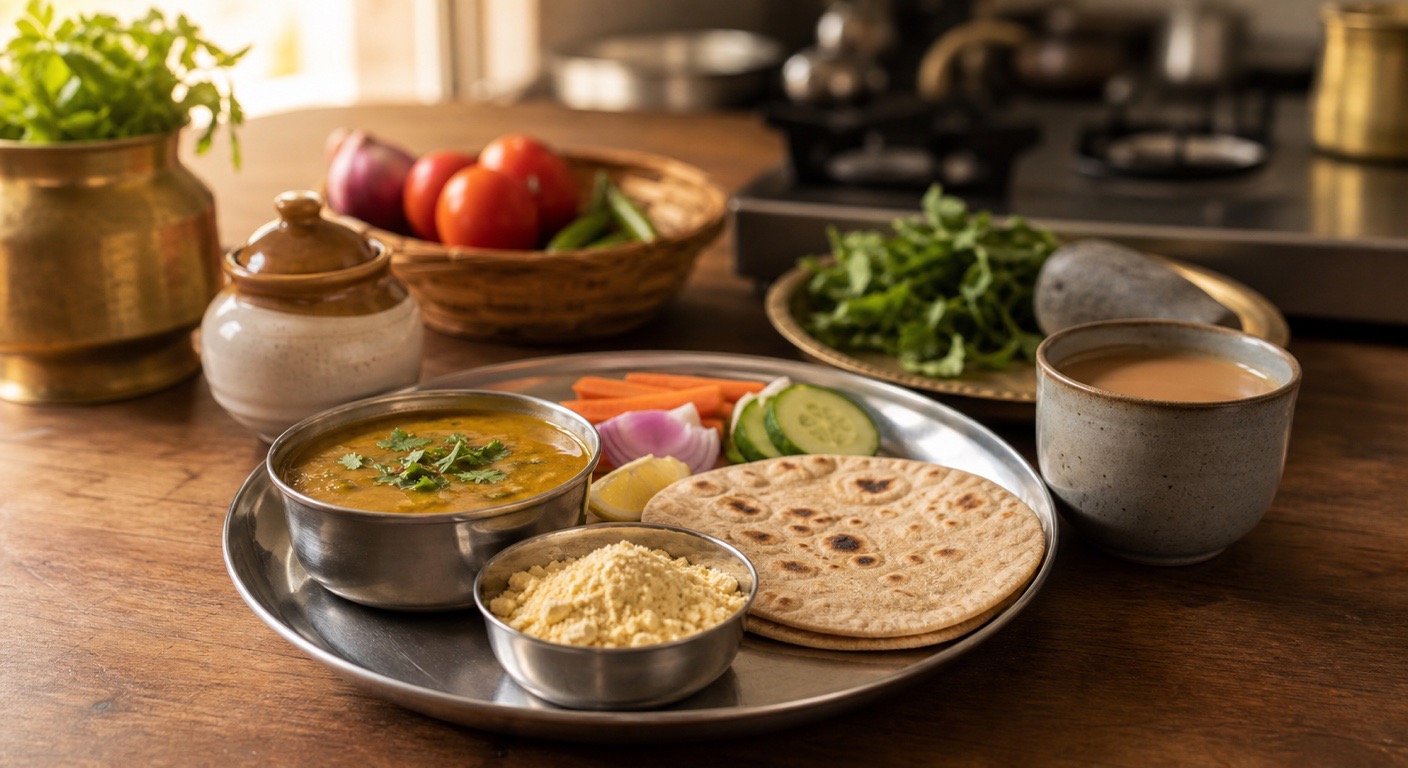
Same breakfast, kinder to insulin: besan chilla + plain tea
Make two besan chilla instead of maida roti, and drop the sugar from your tea. The calories barely drop, and that is the whole point. The win here is not fewer calories. Besan carries 22 g of protein and 11 g of fibre per 100 g, so the sugar rises slowly and your insulin does not spike as hard.
Assumptions: 2 besan chilla (~30 g besan each = 60 g besan at 387 kcal/100 g = ~232 kcal) + 1 cup plain tea with a splash of milk and no sugar (~30 kcal) = ~262 kcal.
Small tips that add up
- Take a short walk after meals. A 10-minute walk after each main meal cut the after-meal sugar spike by about 12%, and by 22% after dinner, in a study of 41 adults with type 2 diabetes.
- Sleep enough. Too little sleep has been shown to cause insulin resistance, even in healthy people, so protect your night's rest.
- Lose a little, not a lot. Losing just 5% of your body weight improves insulin sensitivity in your liver, fat and muscle at the same time, so if you weigh 80 kg, about 4 kg is enough to start.
- Do not fear all carbs. Bajra, jowar and besan are carbs too, but their protein and fibre slow the spike. The honest enemy is the refined, low-fibre kind, maida and sugar.
The bottom line
Insulin resistance is real, and it does make fat loss feel harder, your body stores fat more easily and burns it slower. But it is not a wall. The honest fixes are simple: less maida and sugar, more fibre and protein, a 10-minute walk after meals, enough sleep, and a small about-5% weight loss. Your cells start listening again.