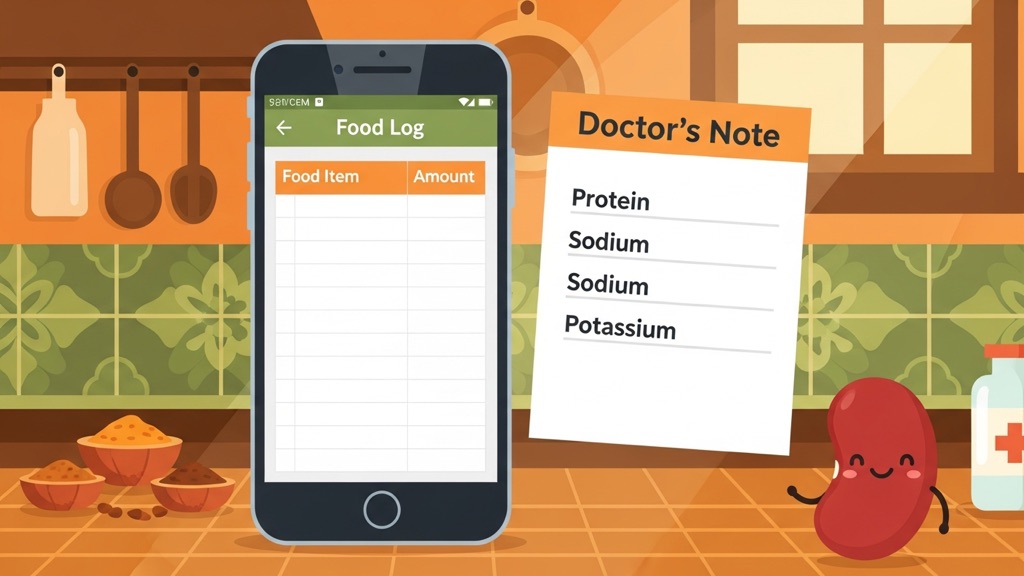
Kidney disease — when protein and sodium need a doctor's eye
When you have chronic kidney disease, the safe protein, sodium and potassium numbers for your day are NOT the generic ones. Your doctor and renal dietitian set those targets from your lab values, and Burnie becomes the notebook where you log them — not the app that picks them.
You opened Burnie to log lunch. The app shows your daily calorie budget and your deficit maths. But last week your doctor said your kidneys are not working at full strength. They gave you a paper with protein, salt and potassium numbers just for you. So now you have two sets of numbers in front of you. This short read is about which one wins. Spoiler: the doctor's wins. Burnie becomes your notebook, not your boss.
A high-protein diet is always safe when you are trying to lose weight.
it dependsit depends
For a healthy adult, more protein can help with fullness and muscle. But for chronic kidney disease (CKD), eating too much protein can make the kidneys work harder and build up waste they cannot clear. The kidney guidelines do not give one blanket number. For adults with CKD stage 3 to 5 who are stable, the KDOQI 2020 guideline suggests protein around 0.55 to 0.60 g per kg of body weight a day, or a little higher (0.6 to 0.8 g/kg) if you also have diabetes. That is set 'under close clinical supervision.' So the safe protein number is not the one from a fitness app. It is the one your doctor writes for your stage and your labs.
Kidney diets are not one number
Three nutrients move in CKD, and each target is personal. Protein: about 0.55 to 0.60 g/kg/day for stable CKD without diabetes, or 0.6 to 0.8 g/kg/day if you have diabetes — under close clinical supervision. People on dialysis get a higher target (around 1.0 to 1.2 g/kg/day), because dialysis itself loses protein. Sodium (salt): less than 2300 mg a day for CKD, and about 1500 mg a day if you also have high blood pressure. Potassium: there is no fixed number at all — the 2020 KDOQI update says potassium should be individualised based on your blood tests, not pulled from a chart. Every one of these comes from your doctor or renal dietitian after they see your labs. Burnie does not know your eGFR. Your doctor does.
Two plans in front of you — which wins?
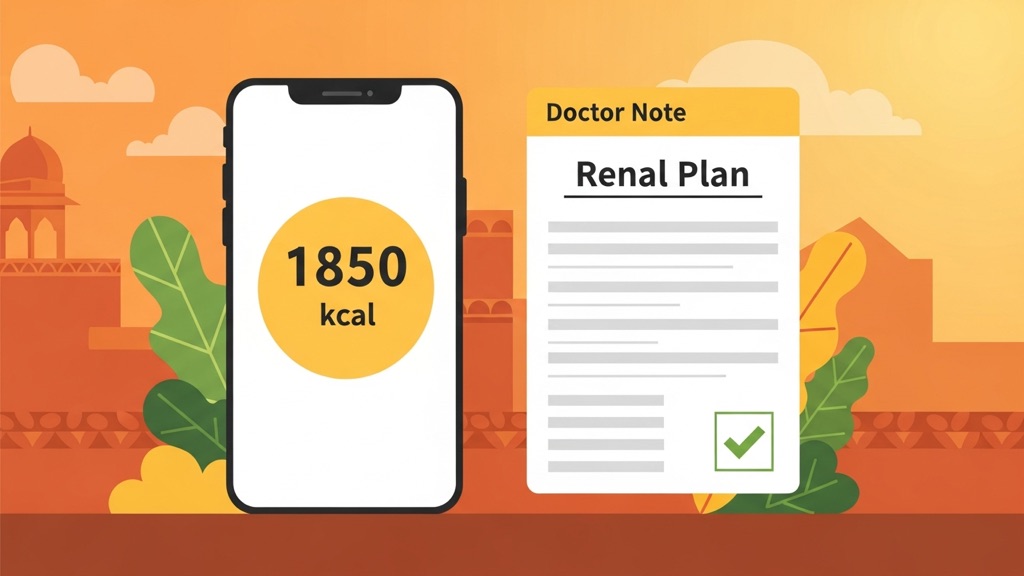
Using Burnie when you have CKD
The bottom line
In chronic kidney disease, the safe protein, sodium and potassium numbers are not generic — they are written for your stage and your labs. The KDOQI 2020 guideline and its commentary put protein near 0.55 to 0.60 g/kg/day for stable CKD (0.6 to 0.8 with diabetes), sodium under 2300 mg a day, and potassium individualised by blood test. Your doctor owns those numbers. Burnie is the notebook where you log them. Log honestly, weigh at the same time each morning, and tell your doctor about any sudden jump. That is how weight loss and kidney care share the same page.