Lemon rice or curd rice - which is lighter?
A bowl of lemon rice is about 175 kcal, while a real curd rice bowl is closer to 376 kcal, not because curd is heavy but because the curd rice bowl is bigger and uses two tablespoons of oil. Per spoon the two are nearly the same, so the tempering oil and the bowl size decide which one is lighter.
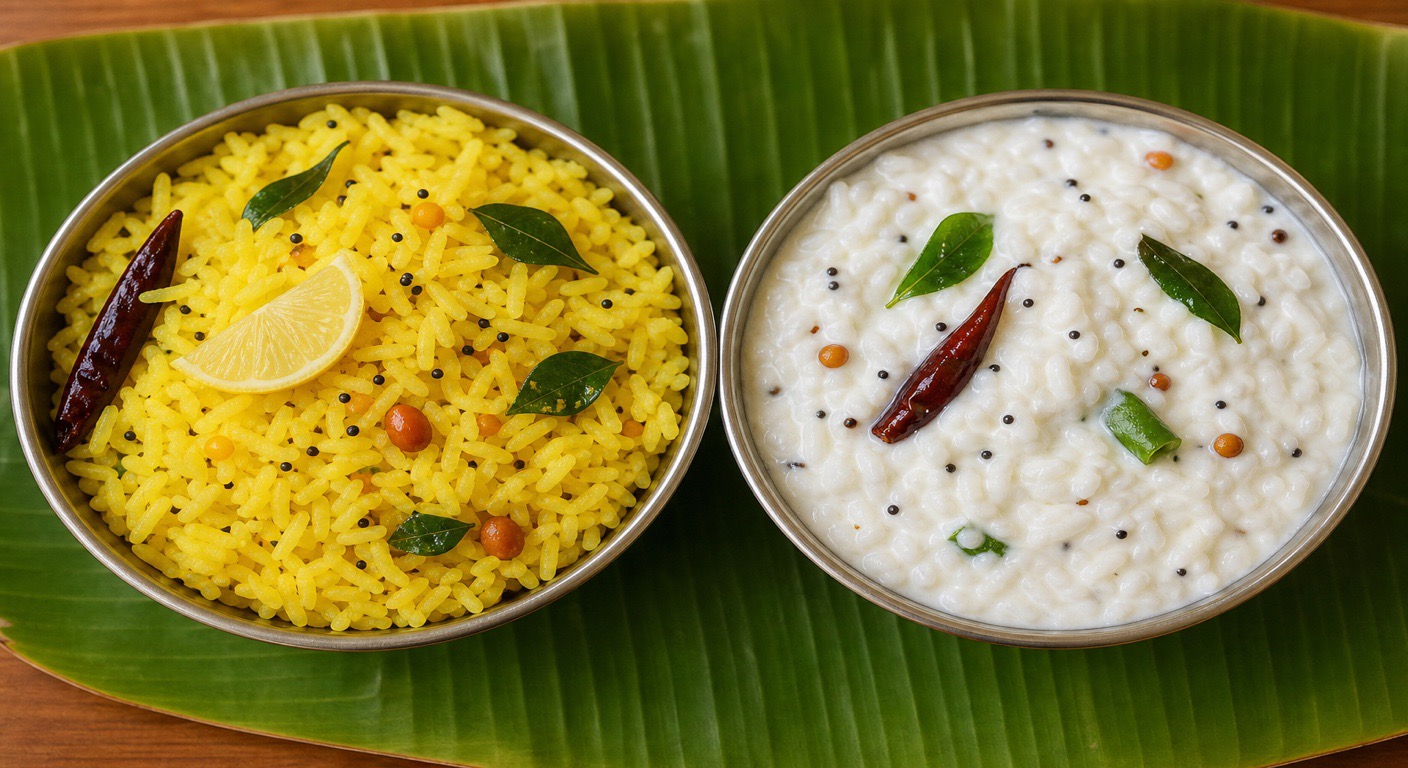
Two South Indian rice bowls, one yellow and one white. People often say curd rice is the light, cooling, diet-friendly one. The numbers tell a different story. What really decides the calories is the oil in the tempering and how big your bowl is. Let us open both bowls and see.
A real curd rice bowl: about 376 kcal
Take a normal South Indian curd rice, the kind served as a full meal bowl. One serving is about 220 g and lands near 376 kcal. That is more than two small rotis with ghee. Most of that comes from two things: a generous tempering with two tablespoons of oil, and a big scoop of full-fat curd mixed into a big bowl of rice.
Assumptions: Tarla Dalal South Indian Curd Rice recipe (3 cups cooked rice + 2 cups curd + 2 tbsp oil, yields 4 servings): published 376 kcal per 220 g serving, 18.7 g fat, 8.5 g protein. The 2 tbsp oil alone adds about 66 kcal per serving; the rest is rice plus full-fat curd.
Lemon rice vs curd rice, one bowl each
Here is the surprise. Per spoon, the two are almost the same. Lemon rice is about 175 kcal per 100 g, and curd rice is about 171 kcal per 100 g. The big gap in the table below comes from bowl size and oil, not from the rice itself.
Curd rice is the light, diet-friendly South Indian rice.
mostly falseMostly false, but it depends on the bowl. Per spoon, curd rice and lemon rice are almost the same calories, about 170-175 kcal per 100 g. The catch is that a real curd rice bowl is more than twice as big (220 g vs about 100 g) and uses twice the oil in the tempering. So one bowl of curd rice (376 kcal) is over twice one bowl of lemon rice (175 kcal). It is the portion and the oil that make it heavy, not the curd itself.
Pick the lemon rice bowl
If you want the lighter pick, choose the lemon rice. One bowl is about 175 kcal, less than half a curd rice bowl. You still get the rice and the tang, with one tablespoon of oil instead of two. Pair it with a small cup of curd on the side if you want the cooling feel without the big bowl.
Or lighten your curd rice
Love curd rice too much to skip it? Keep it, but shrink the bowl and halve the oil. Use one teaspoon of oil for the tempering instead of two tablespoons, take a smaller scoop of rice, and keep the curd. You keep the cooling, probiotic feel and drop more than 170 kcal.
Assumptions: Lighter curd rice bowl, transparent kitchen estimate: 100 g cooked white rice (130 kcal at 130 kcal/100 g) + 50 g plain whole-milk curd (31 kcal at 61 kcal/100 g) + 1 tsp oil, about 5 g (44 kcal at 884 kcal/100 g) = about 205 kcal for a ~155 g bowl. This is a kitchen estimate from verified ingredient values, not a lab measurement of a specific recipe.
Small levers for both bowls
- Use one teaspoon of oil for the tempering, not a full tablespoon. Oil is very calorie-dense, so even this small swap cuts a lot from either bowl.
- Watch the bowl size. A South Indian meal bowl can quietly hold twice as much rice as a small katori. That alone can halve the calories.
- Curd rice is more filling because of its protein. If you stay full longer with curd rice, a smaller bowl may be enough for you.
- If your curd is sour and you add milk for a flowy texture, that is fine, but skip extra ghee on top. Ghee is almost pure fat, so a little adds a lot.
- Brown rice or millet lemon rice adds fibre and is a little lighter than the white-rice version, so try it when you can.
The bottom line
Lemon rice is the lighter pick, about 175 kcal a bowl, while a real curd rice bowl is about 376 kcal. Per spoon they are nearly the same, so it is the oil in the tempering and the size of the bowl that decide. Pick lemon rice when you want light, or keep curd rice but take a smaller bowl with one teaspoon of oil.