Less sleep, more hunger — the hormone maths behind it
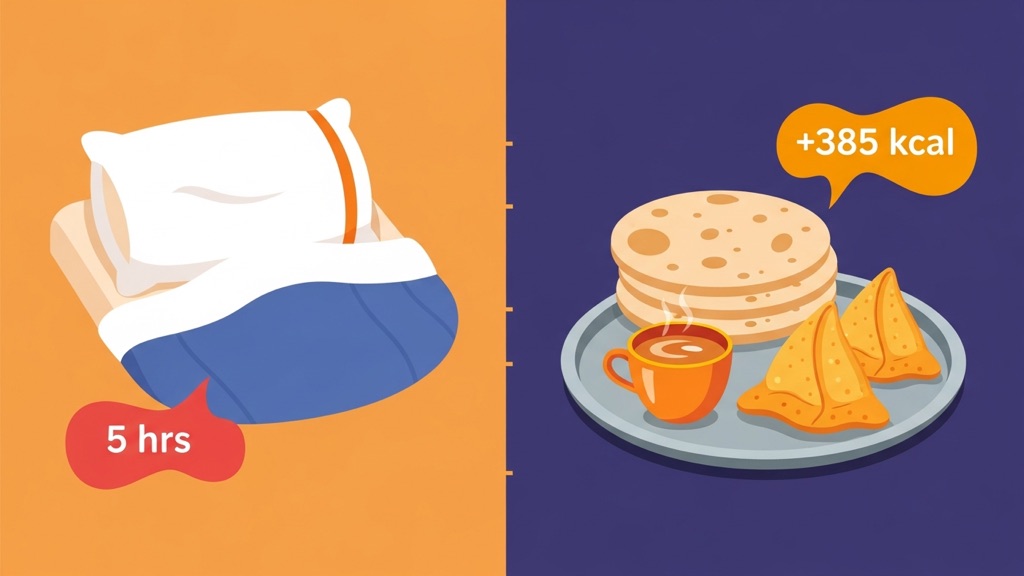
Sleep loss raises ghrelin and lowers leptin, so you log more food the next day — about 385 extra kcal. Here is how that shows up in your Burnie maths and what to do about it.
You slept five hours. By noon your food log already shows three meals. You are still hungry. You wonder if Burnie is broken. It is not. Your maths changed overnight while you were awake. Two small hormones in your body moved, and they moved your appetite with them. Burnie cannot see those hormones. But it can see what they do to your food log. This short read is the maths of why a short night costs you extra rotis the next day.
The maths of two hormones, in plain words
Your body runs two hunger signals. Ghrelin says 'eat'. Leptin says 'stop'. After a short night, ghrelin goes up and leptin goes down. In one careful study of 12 healthy young men, two nights of short sleep cut leptin by 18% and pushed ghrelin up by 28%. Hunger rose 24%. Craving for heavy, high-carb food rose 33–45%. That is not your imagination, and it is not weak willpower. The maths of your hunger literally changed. Burnie does not read these hormones. It does not need to. It sees the result on your plate.
Good night vs bad night: what shows up in your log
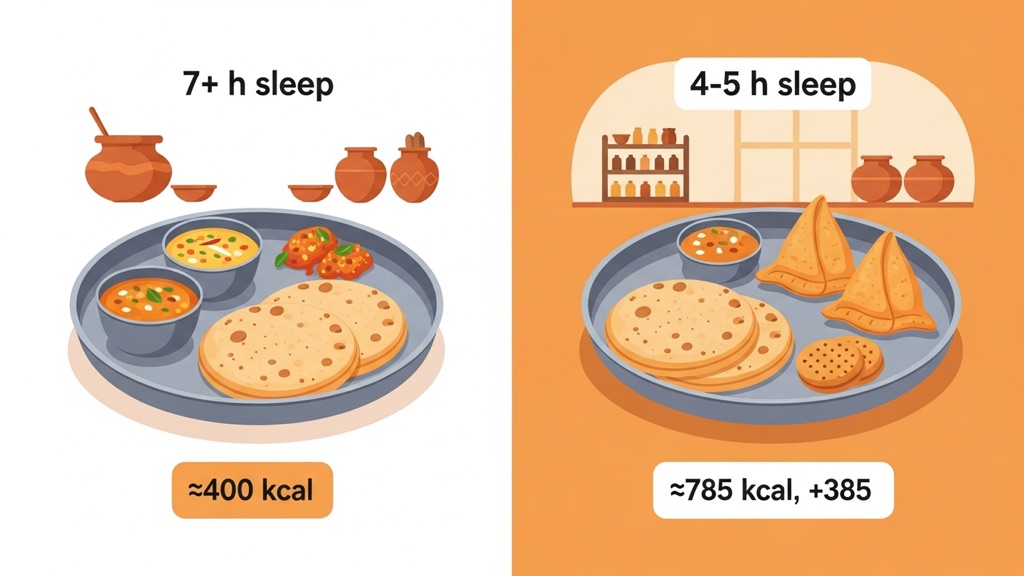
A big review of 11 sleep studies pooled the food people ate after short sleep. They ate about 385 extra kcal the next day. That is the size of a small extra dinner. They also ate more fat and less protein — so the food they reached for was heavier and sweeter. In a separate study, healthy young men chose 14% bigger portions after one sleepless night, and 16% bigger snacks after breakfast. Their hunger hormone ghrelin was 13% higher. This is what your logged numbers will look like too: bigger helpings, more biscuits, more chai-time snacks. The food log is honest. It will show you the extra.
After a bad night, you just need more willpower to keep your food log clean.
mostly falsemostly false — explained simply
Your tired body is not failing your character. It is failing your maths. After one sleepless night, healthy men chose 14% bigger portions, with 13% more of the hunger hormone ghrelin in their blood. That extra hunger is in your body, not your mind. Willpower can hold it for one meal. It cannot hold it for a whole week of short nights. The smart move is not to fight harder. It is to expect the extra hunger, log before you eat, and pre-empt it. The maths goes back to normal the day after a good night.
How to defend your Burnie maths after a bad night
The bottom line
A short night does not just make you tired. It changes the maths of your hunger. Two nights of short sleep can drop leptin 18% and raise ghrelin 28%. The day after, you eat about 385 extra kcal and choose bigger portions. That is like a free extra dinner sneaking into your Burnie log. Burnie never reads your sleep, your heart rate, or your blood pressure — sleep is yours to protect. Aim for 7 or more hours. Log your food before the first bite. The maths will tell you the truth the next morning, and good sleep keeps the maths on your side.