Log Before You Eat or After? The Timing That Actually Works
Logging food before you eat is a decision tool — the calorie number lands while you can still choose. Logging after is just an audit, and audits get abandoned. Here is the head-to-head difference and why before wins.
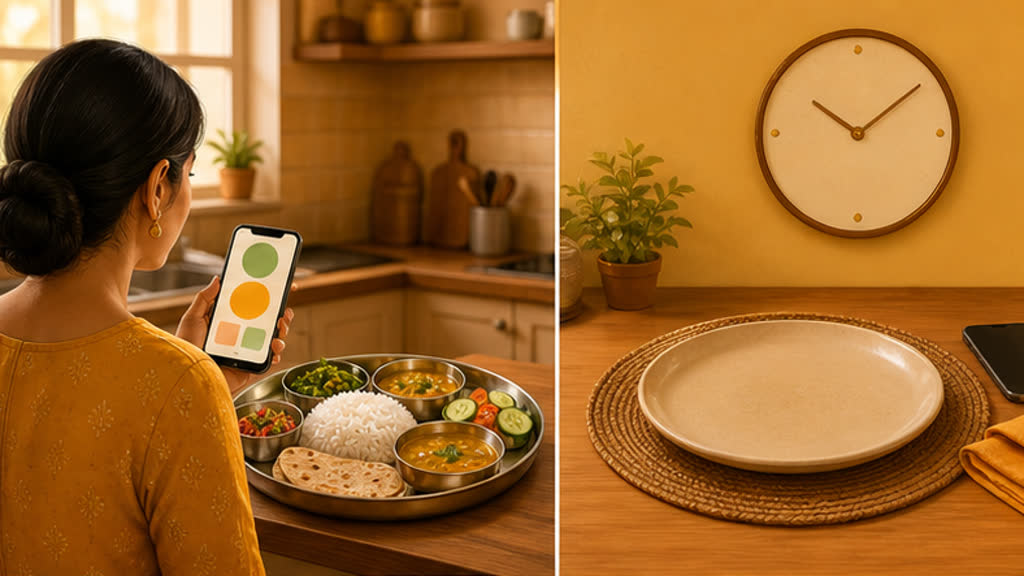
Same food. Same app. Same you. But one tiny choice changes everything: do you log the meal before you eat it, or after? Before means the calorie number shows up while you can still pick. After means it shows up when nothing can be changed. Same number, very different power.
Two ways to use the same log
When you type your roti, sabzi and dal into Burnie before the first bite, the app shows your daily deficit right then. The number lands in time to change the meal — eat less, swap the second roti, or skip the extra ghee. When you log it after, the same number lands too late. The food is already inside you. One is a decision tool. The other is an audit. Scientists call the first kind prospective self-monitoring — watching yourself in the moment, while you can still act. The after kind is retrospective — looking back at what already happened.
Before vs after: head-to-head
Logging after you eat is just as good as logging before, because the calories are the same.
mostly falseMostly false — explained simply. The calories are the same, but the power is not. A real study found that people who recorded their food within 15 minutes of eating lost more weight than people who logged in batches later. Only about one-fifth of people actually logged that promptly, and the timely loggers did better. The number is the same. The timing is what makes it useful. After-logging gives you the score after the match is over.
Make before-logging your default
The bottom line
Before is a choice. After is a scorecard. Log before you eat, and the same calorie number turns into power instead of guilt. That is why before-logging sticks and after-logging quits.