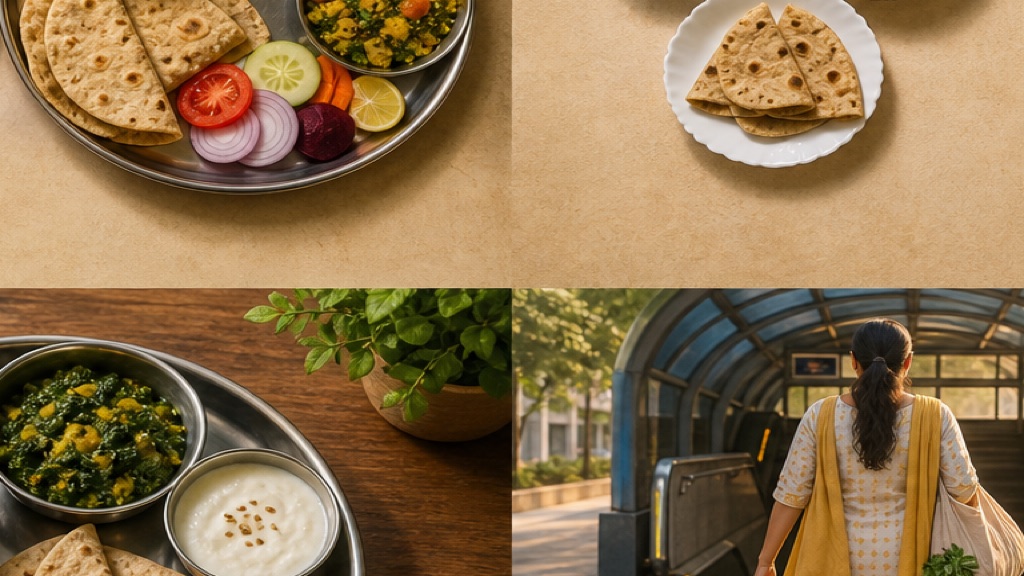
Low-Fat vs Moderate-Fat: Same Calories, More Full?
Two meals can have the same calories but fill you very differently. A little fat with protein and fibre often beats a fat-free starch pile for fullness, but more fat is not always better.
Same calories, two plates. One is fat-free rice and dal. The other has the same calories, but a little ghee on the dal. Which one keeps you full longer? Many people guess the big fat-free plate. The real answer is a surprise. This is not the 'do not cut all fat' story. That is a different article. This is the head-to-head: at the same calories, does a low-fat or a moderate-fat meal fill you more, and how much fat is the right amount?
Why equal calories can feel different
Calories tell you the energy in food. They do not tell you how full you will feel. Scientists gave people equal-calorie servings of 38 foods, then measured fullness. The result was clear: 'isoenergetic servings of different foods differ greatly in their satiating capacities.' So two meals with the same calories can fill you very differently. What predicted fullness? 'Protein, fibre, and water contents of the test foods correlated positively with SI scores.' More protein, fibre, and water meant more fullness. Fat was the odd one. In this study, 'fat content was negatively associated (r = -0.43, P < 0.01).' Fattier foods gave less fullness per calorie. Why? Fat packs about 9 calories into one tiny gram. So fatty food gives you a small portion for the same calories. Less food weight often means less fullness. This is the key to our head-to-head.
Same calories, two Indian meals
A low-fat meal always fills you more than a meal with some fat.
it dependsit depends - explained simply. When people ate equal-calorie soup by mouth, the high-fat soup 'suppressed hunger, induced fullness, and slowed gastric emptying more than the high-carbohydrate soup.' So a little fat can beat a fat-free meal for fullness. In another study, fat gave more fullness for the same stomach volume: 'the change from baseline in fullness scores was higher for the high-fat meal for any given change in stomach volume (P=0.0147).' A gut hormone called cholecystokinin, released when fat reaches your gut, helps you feel full. But this is NOT a reason to add unlimited fat. Remember the Satiety Index: fat content was negatively linked to fullness per calorie, because fat is so calorie-dense. The biggest fullness per calorie came from protein, fibre, and water. Boiled potatoes scored 323%, while the fatty croissant scored only 47%. So more fat is not always better. Extra fat means extra calories, and pure fat gives a small food portion. The win is the right amount of fat, not the most fat.
Spend your calories on the right fat
The bottom line
Same calories does not mean same fullness. A fat-free starch pile can leave you hungry sooner. A moderate-fat meal, with a little ghee or oil plus dal, vegetables, and whole grains, often fills you more for the same calories. But more fat is not always better: fat is about 9 kcal per gram, and the most fullness per calorie comes from protein, fibre, and water. In Burnie, log the whole meal, including the small fat portion. Burnie is free and shows your daily deficit from your text food logs. So spend some calories on a little fat, and the rest on protein and fibre. That is the right amount.