Meditation and the Burnie discipline — the pause before the log
A short breath or meditation before you open Burnie makes a tiny gap between the urge and the act. In that gap your food choice can change. Burnie does not read your mind or heart — the pause is your own practice, and it makes the log kinder.
You come home tired. The samosa is on the plate. Your hand moves before your mind wakes up. This is the auto-pilot bite, the one that breaks the deficit. Now try one small move first. Sit. Take three slow breaths. Then open Burnie and log. The breath is the pause. The log is the maths. Together they change the meal.
A short pause or meditation only works if you sit with closed eyes for an hour.
mostly falsemostly false
You do not need an hour. You do not need a special mat. In one study, a single short body-scan before eating changed how much unhealthy snack food people ate. People who did the brief mindfulness exercise ate about the same whether they were hungry or not. People who skipped it ate much more junk when hungry. The gap, not the length, is what matters.
A mindful gap changes the choice, not just the feeling
Many people think meditation for weight loss is about feeling calm. The real job is different. It is about putting one quiet moment between the urge and the hand. A pooled review of 32 studies found mindfulness-based interventions cut impulsive food choice and lowered energy intake. So the pause is not a trick. It is a small, tested lever that moves real food behaviour.
Three ways to meet the meal
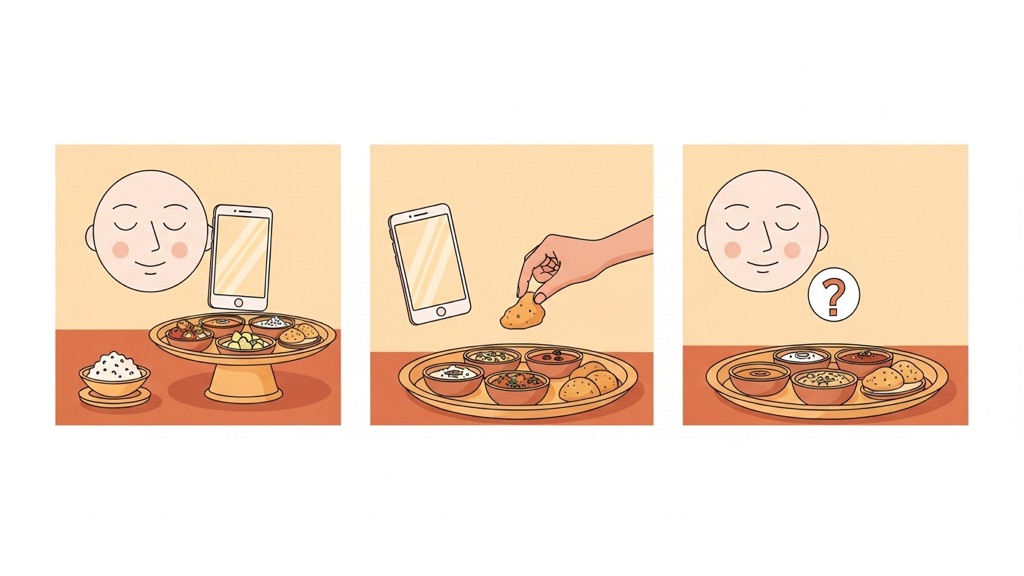
How to do the pause-then-log in real life
The bottom line
The meditation is yours. The maths is Burnie's. The magic is the order. Pause first, log next, eat last. A pooled review of 32 studies found mindfulness cut impulsive food choice and energy intake, and one short body-scan study showed hungry people who paused did not overeat the snacks. Three breaths before the log is a small move with real maths behind it.