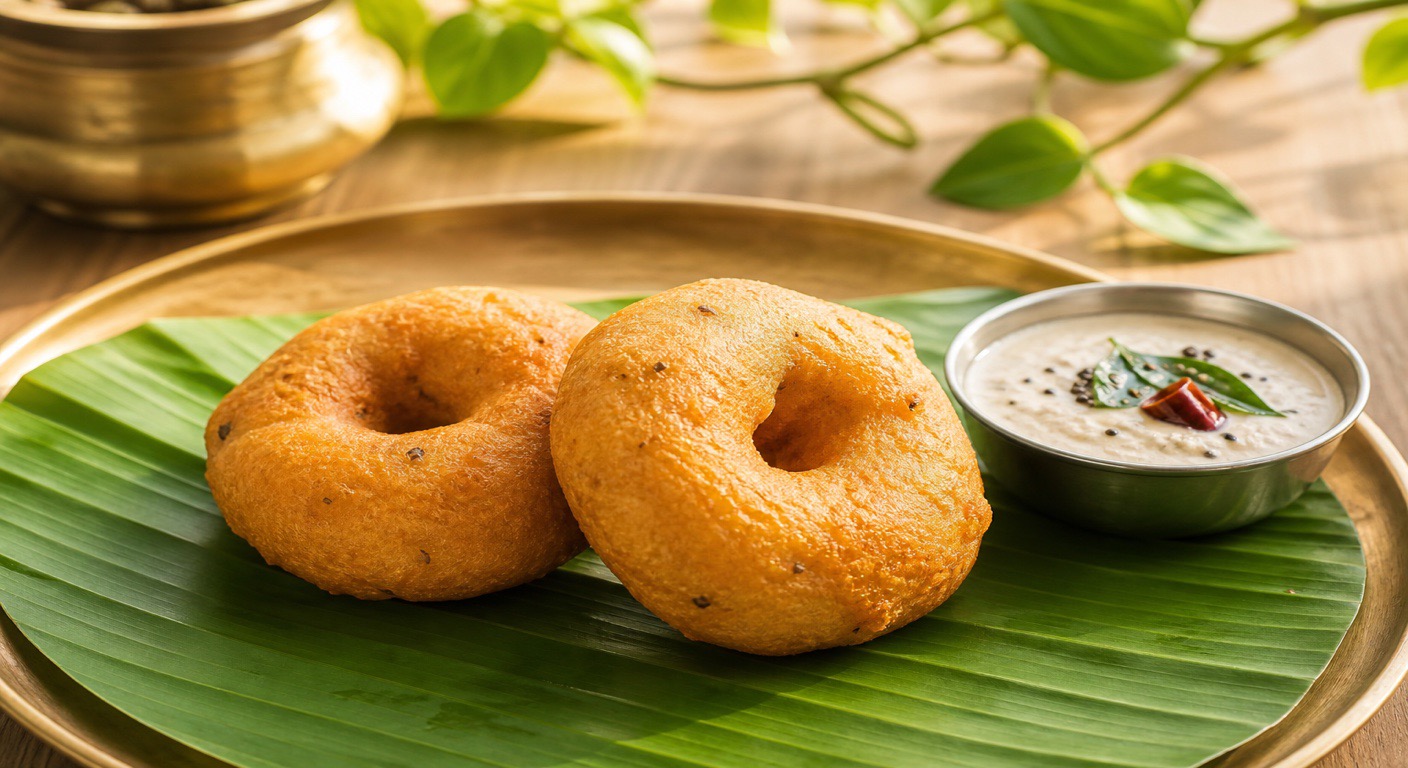
Medu vada - the fried doughnut of breakfast
Two medu vadas look small but hide about 190 kcal, and almost half of that comes from the oil they soak up in the hot kadai. Swap them for two steamed idlis and you drop to about 66 kcal with the same urad-dal-and-rice flavour you love.
That crispy medu vada with the hole in the middle looks so innocent. It is just urad dal batter, right? The trouble is what happens after the batter hits the oil. Deep-frying turns a humble lentil ring into a little oil sponge. Let's see what two vadas really cost you, and how a steamed idli keeps the same South-Indian breakfast flavour for far less.
Medu vada is healthy because it is made from urad dal, which is full of protein.
it dependsIt depends, but mostly false for weight loss. Urad dal is a good protein source, yes. But a real medu vada gets about 47 of its 97 kcal from fat, because the batter drinks up oil while frying. So nearly half the calories come from oil, not from the protein you wanted. The lentil is fine. The deep-fry is the problem.
Your usual order: two medu vadas
A standard homemade medu vada is about 97 kcal. Two of them, the way most of us eat them, comes to roughly 194 kcal. That sounds small, but remember almost half is oil. Order the bigger roadside ones and the number climbs fast.
Assumptions: One standard medu vada = 97 kcal with 5.21 g fat (Tarla Dalal South Indian recipe). Two = ~194 kcal. A larger roadside vada of about 70 g lists ~190 kcal each (NutriScan), so two large ones can reach ~380 kcal. The range reflects this size and oil-absorption difference.
Medu vada vs steamed idli, piece for piece
Swap two vadas for two steamed idlis
Same batter family, same sambar and chutney on the side. You keep the South-Indian breakfast feel and drop the deep-fry almost entirely. Two idlis fill your plate the same way two vadas do.
Assumptions: Two steamed idlis at 33 kcal each (Tarla Dalal, 35 g per idli) = ~66 kcal. Baseline two medu vadas = ~194 kcal. Saving = ~128 kcal. The sambar and chutney are not counted here, so add them the same way for both plates.
Crave the vada shape? Use an appe (paddu) pan
If you really want the vada taste and crunch, skip the deep kadai. Spoon the same urad batter into an appe pan with just a few drops of oil per cup. You get vada-like bites with a fraction of the fat.
Assumptions: Tarla Dalal's low-calorie medu vada (cooked in an appe mould, not deep-fried) is about 155 kcal for 5 small vadas, so ~31 kcal each. Two of those = ~62 kcal versus the ~194 kcal baseline of two deep-fried vadas, a saving of ~132 kcal. This is the non-fried version, so the crunch is softer than a true fried vada.
Smart ways to keep your vada habit
- Eat one vada, not two. That alone cuts about 97 kcal from the plate.
- Pair one vada with two idlis. You get the fried crunch and the steamed fill, without doubling the oil.
- Watch the chutney. Coconut chutney adds its own calories and fat; a small katori is enough.
- At home, fry hot and fast in fresh oil. A longer sit in a cool, old kadai makes the vada drink more oil.
- If you love the vada shape, the appe-pan version above gives you the same batter with almost no deep-fry.
The bottom line
Two medu vadas cost about 190 kcal, and almost half of that is frying oil, not the urad dal you wanted. Two steamed idlis give you the same South-Indian breakfast for about 66 kcal. You do not have to give up vadas. Just trade one of the two for idlis, or cook the batter in an appe pan, and you keep the flavour while letting go of most of the oil.