Vitamins and minerals: what cutting food cuts too
When you cut food very hard to lose weight, you also cut the vitamins and minerals that food carries. Indian diets are already borderline for vitamin B12, iron, vitamin D, and calcium. A very narrow weight-loss diet makes these gaps worse and can leave you tired, weak, or unwell. Here is what the science says about which deficiencies to watch, why food variety matters more than a pill, and why you should get your levels checked by a doctor before taking any supplement.
You are eating less to lose weight. That is good. But when you cut food too hard, you cut something else too: the vitamins and minerals inside that food. A smaller plate has fewer calories, true, but it also carries less iron, less vitamin B12, less calcium, less zinc. For most Indians this matters more than people think, because our everyday diet is already borderline for a few key nutrients even before the diet starts. This article is not asking you to stop your diet. It is asking you to be smart about it. Learn which vitamins and minerals drop first when food gets very low or very narrow, eat enough variety so the gaps stay small, and check your levels with a doctor before you buy any supplement bottle. That is the safe, honest way to lose weight without making your body quietly short of what it needs.
The baseline: less food often means less vitamins and minerals too
Vitamins and minerals are not stored in empty space. They come from food. So when you shrink your food a lot, you shrink them too. The risk is biggest with a very low calorie diet (around 800 to 1000 kcal a day) or a very narrow diet where you eat the same few things every day. One study put obese people on a 3-month low-calorie formula diet that was designed to give 100% of the recommended vitamins and minerals. Even then, the deficiencies did not get fixed. Vitamin C, zinc, and lycopene actually dropped further, and new calcium deficiency showed up in more than half the people. The honest lesson: even a 'complete' diet drink or plan may not cover what your body needs during real weight loss. For Indians the starting point is already weak. Our largely vegetarian food habit makes us more prone to low vitamin B12, because B12 comes mainly from animal foods. Studies in India find B12 deficiency in about 47% of adults in some cities, and up to 78% when borderline cases are counted. Iron is low in many women because of monthly blood loss. Vitamin D is low in city dwellers who stay indoors. So when you add a strict weight-loss diet on top of an already borderline diet, the gap can turn into a real shortfall, with tiredness, weakness, hair fall, or low mood.
A multivitamin pill replaces food variety on a diet, so you can eat the same few low-calorie foods daily.
mostly falseMostly false. A multivitamin can fill a gap, but it does not replace the full package of real food. Real food gives you fibre, protein, healthy fats, and thousands of plant compounds (like lycopene and beta-carotene) that a pill cannot copy. In one weight-loss study, even a formula diet that gave 100% of the recommended vitamins and minerals did not fix the deficiencies, and some got worse. In another study, people on the plant-based Ornish diet actually developed a higher risk of low vitamin B12 and zinc, even while 'dieting healthy'. So a pill is a safety net, not a substitute. The honest rule: keep a wide variety of foods on your plate, and only add a supplement after a doctor checks your levels and says you need it.
Keep your vitamins and minerals while losing weight
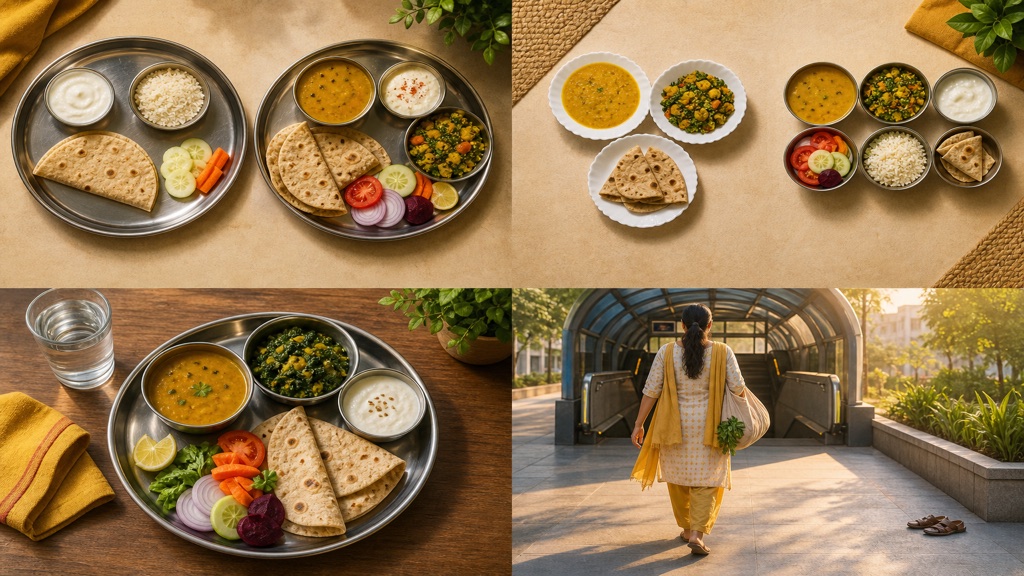
- Eat variety, not just less. A mix of dal, green leafy sabzi, curd or paneer, whole grains, nuts and seeds gives you a wider mix of vitamins and minerals than the same khichdi every day.
- Do not cut calories too low. Very low diets (under 1000 kcal) drop iron, zinc, and calcium fast. A steady, smaller deficit loses fat safely without starving your nutrients.
- Keep some animal foods if you eat them. A cup of milk, a bowl of curd, or an egg a day protects B12, calcium, and iron far better than a pill you guessed you needed.
- Get some sunlight. Ten to fifteen minutes of morning sun on arms and face helps your body make vitamin D, which is low in most city dwellers.
- Get your levels checked before any supplement. A simple blood test for B12, iron, vitamin D, and calcium tells you and your doctor what is actually low. Do not self-prescribe doses.
- If a doctor confirms a gap, fix food first, then add only what is prescribed. Supplements are meant to top up a real shortfall, not to replace meals.
The bottom line
Cutting food too hard cuts your vitamins and minerals too. Indian diets already run low on vitamin B12, iron, vitamin D, and calcium, and a very narrow weight-loss diet widens those gaps. The safe way is simple: keep a wide mix of foods, do not drop your calories too low, get a little sunlight, and ask a doctor to check your levels before you take any supplement. A pill is a safety net, not a replacement for real, varied food. Lose weight slowly, eat variety, and let your doctor, not a guess, decide what you need. That is the honest, sustainable plan.