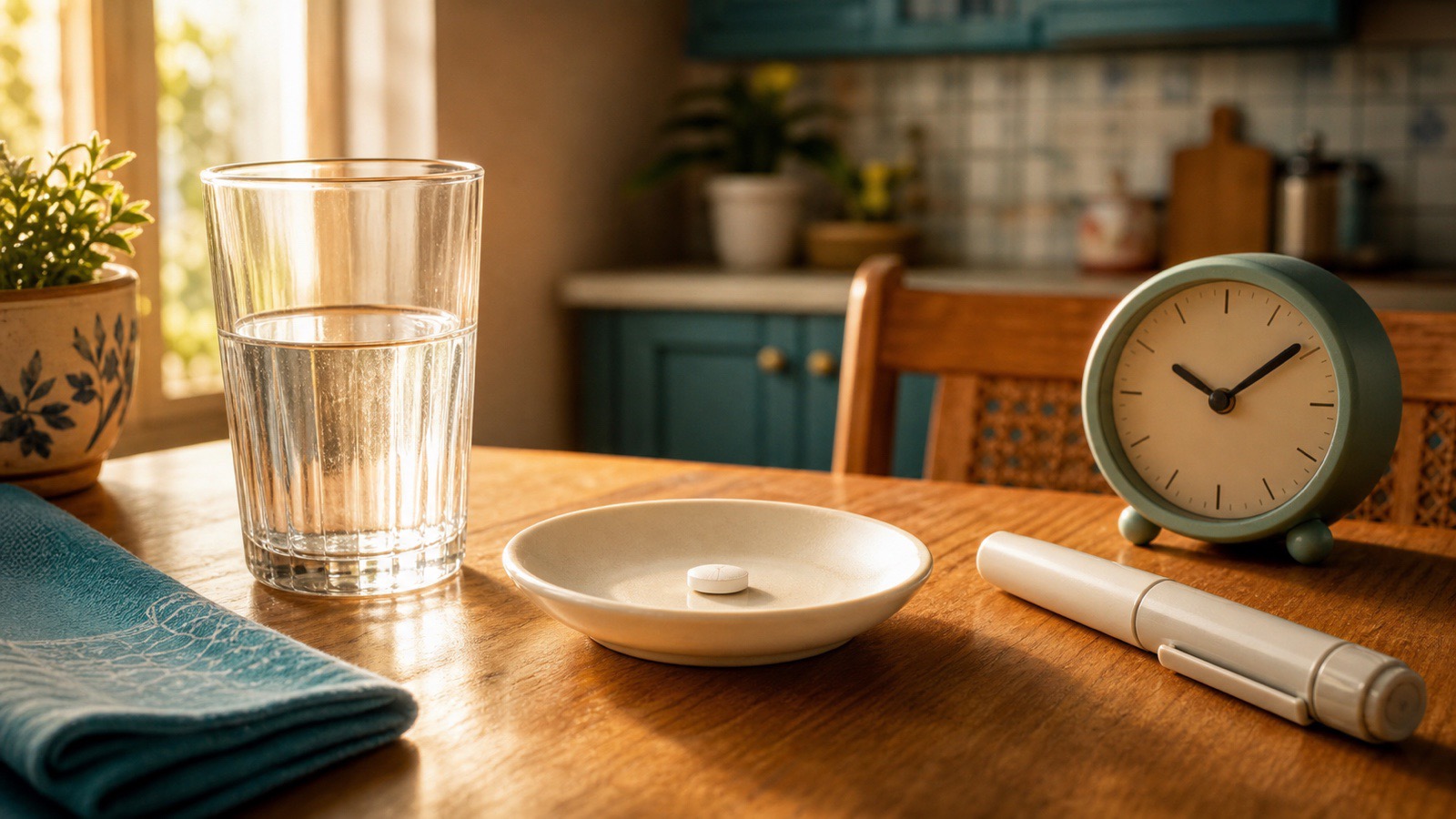
Semaglutide pill vs injection: which is right for you
The semaglutide pill (Rybelsus) and the semaglutide injection (Ozempic, Wegovy) are the same active drug in two forms. The pill is a daily tablet approved for type-2 diabetes with strict empty-stomach timing and modest weight loss. The injection is a weekly shot; the Wegovy 2.4 mg dose is approved for chronic weight management and gives bigger weight loss. This honest, India-friendly guide compares them and reminds you that your doctor decides.
Your doctor has suggested semaglutide, and you are confused about the pill versus the injection. Many Indians feel the same way. A daily tablet sounds easy, like the blood-pressure pill you already take. A weekly injection sounds scary, like a hospital thing. But here is the surprise: both forms carry the same active medicine, semaglutide, which belongs to a family called GLP-1 receptor agonists. They work on the same body signals to lower blood sugar and reduce appetite. The real differences are the dose, the timing, how much of the drug actually reaches your blood, and how much weight people tend to lose. This article walks you through those differences honestly, in plain words, so you can have a better talk with your doctor. We do not pick a side, because that is a medical decision for you and your doctor.
The baseline: same drug, two forms, different jobs
Semaglutide is a GLP-1 receptor agonist. Both the pill and the injection use this same molecule. What changes is how it gets into your body. The pill (Rybelsus) is a tablet you swallow once a day. The US FDA approved it as an adjunct to diet and exercise to improve glycemic control in adults with type 2 diabetes mellitus. It comes in 3 mg, 7 mg and 14 mg tablets, taken daily. Because stomach acid and food block its absorption, the rules are strict: you take it once daily on an empty stomach in the morning with water (up to 4 ounces, about half a small glass), then wait at least 30 minutes before eating food, drinking beverages or taking other oral medicines. Its absorption happens mainly in the stomach, and its oral bioavailability is only about 0.4% to 1%, meaning a tiny share of the swallowed drug reaches the blood. In the PIONEER 1 trial, adults with type-2 diabetes on the 14 mg daily pill lost about 2.3 to 2.6 kg more than placebo over 26 weeks, a modest but real weight loss. The injection (Ozempic and Wegovy) goes under the skin once a week, in the abdomen, thigh or upper arm. Ozempic is approved for type-2 diabetes, with a maximum recommended dosage of 2 mg once weekly, given with or without meals at any time of day. Wegovy is approved to reduce excess body weight and maintain weight reduction long term in adults and pediatric patients aged 12 years and older with obesity, with the usual maintenance dose of 2.4 mg once weekly. In the STEP 1 trial, once-weekly subcutaneous semaglutide 2.4 mg gave a mean body-weight change of -14.9% at 68 weeks, compared with -2.4% with placebo. So the injection generally reaches higher blood levels and produces more weight loss; the pill is easier for people who fear injections but demands strict timing and gives lower exposure.
The semaglutide pill is just as good as the injection for weight loss.
VerdictGenerally not true. The pill and the injection share the same active drug, but they are not equal in weight-loss results. The oral form (Rybelsus) is FDA-approved for type-2 diabetes, not for obesity. In the PIONEER 1 trial the 14 mg daily pill gave about 2.3 to 2.6 kg more weight loss than placebo over 26 weeks, which is modest. The injected obesity dose (Wegovy 2.4 mg once weekly) is FDA-approved for chronic weight management, and in the STEP 1 trial it produced a mean body-weight change of -14.9% at 68 weeks. The reason is partly absorption: the pill's oral bioavailability is only about 0.4% to 1%, so far less drug reaches the blood, and the strict empty-stomach and 30-minute wait make it easy to miss the timing. The injection sends a steady, higher dose under the skin. So if the medical goal is significant weight loss, the injected obesity dose generally works better. If the goal is blood-sugar control with a pill you can swallow, the oral form is the approved option. The choice is always doctor-led, based on your health, cost, comfort with needles, and how well you can follow the pill timing.
Practical points to discuss with your doctor
- Let your doctor choose. Semaglutide is a prescription medicine. The right form, dose and dose-building plan depend on your health, your blood sugar, your weight goal and your other medicines. Never start, switch or stop on your own.
- If you take the pill, follow the timing exactly. Take it once daily on an empty stomach in the morning with up to 4 ounces (about half a small glass) of water, then wait at least 30 minutes before food, drink, chai or any other oral medicine. Missing the timing weakens the dose.
- If you take the injection, pick one day a week and keep it. You can take it with or without meals, at any time of day. Store it as the label says and use safe needle disposal.
- Expect stomach side effects. Nausea, vomiting, diarrhoea and stomach pain are common, especially in the first weeks as the dose goes up. Tell your doctor if they are severe or do not settle.
- It is not for everyone. Do not use semaglutide if you are pregnant, planning pregnancy or breastfeeding, or if you or your family have had medullary thyroid cancer or MEN 2. It is not for type-1 diabetes or treating diabetic ketoacidosis.
- Be honest about cost and needles. In India the monthly cost and the fear of needles both matter. If a weekly pen feels hard, the daily pill may suit your life better, as long as you can manage the strict timing. If significant weight loss is the medical goal, your doctor may lean toward the injected obesity dose. Either way, food logging and daily movement still do the heavy lifting.
The bottom line
The semaglutide pill and the semaglutide injection are the same drug in two forms. The pill (Rybelsus) is a daily tablet approved for type-2 diabetes, with strict empty-stomach timing, a 30-minute wait, low absorption of about 0.4% to 1%, and modest weight loss. The injection (Ozempic for diabetes, Wegovy for chronic weight management) is a weekly shot that reaches higher blood levels and gives more weight loss, about -14.9% at 68 weeks on Wegovy 2.4 mg in the STEP 1 trial. The pill is not 'the injection in a pill with equal effect'; generally it gives less weight loss. The honest choice is doctor-led, based on your health, cost, comfort with needles, and how well you can follow the pill timing. Whatever your doctor prescribes, food logging and daily movement remain the heart of your plan, and Burnie helps you see that deficit clearly.