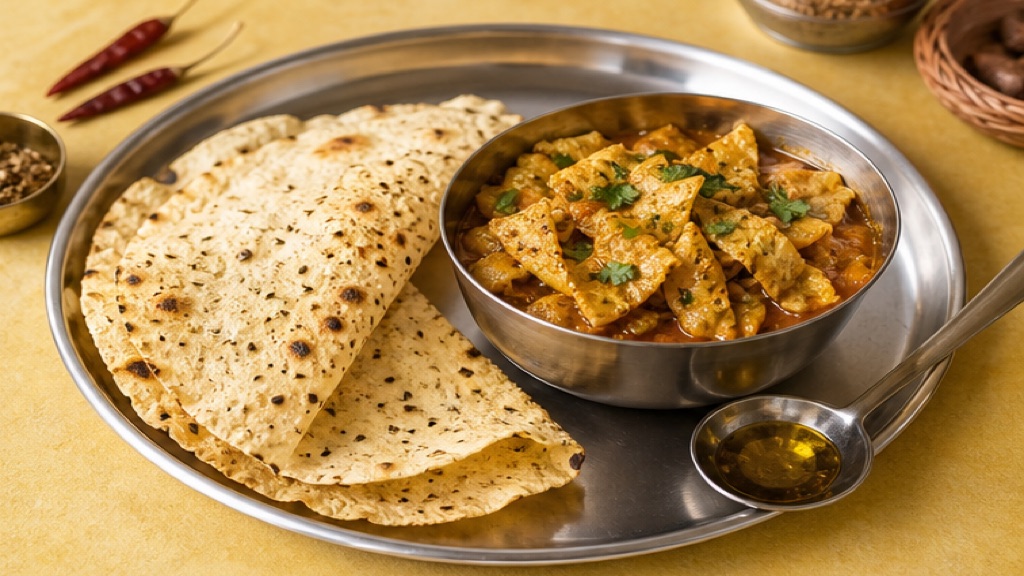
Papad ki Sabzi — When the Crunchy Side Becomes a Fried Main
Papad by itself is a light, crunchy side. But papad ki sabzi fries many papad in oil and ghee, so the dish becomes an oil-heavy main. The preparation, not the papad, changes the calories.
Papad is that crunchy side we love with dal and rice. One roasted papad is light and easy. But papad ki sabzi is different. In this Rajasthani dish, papad becomes the MAIN thing, fried in oil with spices. The light side turns into a heavy main. Let us see why that happens, honestly, with real numbers.
Papad by itself is a light side
One medium roasted papad, about 10 grams, has around 40 calories. That is a small, light snack. Roast it dry or on a flame and it stays light because almost no fat is added. The trouble is not the papad. The trouble is what we do to it next.
Roasted papad vs papad ki sabzi (same papad, very different calories)
Same papad, three different plates. The papad does not change much. What changes is the oil it soaks up and how many papad go into the bowl. Oil is about 900 calories per 100 grams, so even a few spoons of absorbed oil add a lot.
Papad is papad — same calories whether roasted or cooked as sabzi.
mostly falsemostly false — explained simply. The papad itself is similar, but frying changes the number a lot. When papad is fried, it soaks up oil. Food scientists say oil in frying works both as the heating medium AND as an ingredient that makes the product calorific. So fried papad carries far more fat than roasted papad, which adds almost none. On top of that, a sabzi uses several papad, not one, and often a ghee finish. So the dish calories come from three things: the oil absorbed, the number of papad, and the ghee. The preparation is the variable, not the papad.
Enjoy papad ki sabzi with less oil
You can keep the taste and lower the oil. Small changes add up.
The bottom line
Papad is light. Papad ki sabzi is an oil-heavy main. The calories come from the oil it soaks up, how many papad you use, and the ghee finish. So log it as the cooked dish, not as the crunchy side. Burnie is free, with no paid tier, and it estimates your meal calories from a text description — so write 'papad ki sabzi, fried in oil' for an honest number.