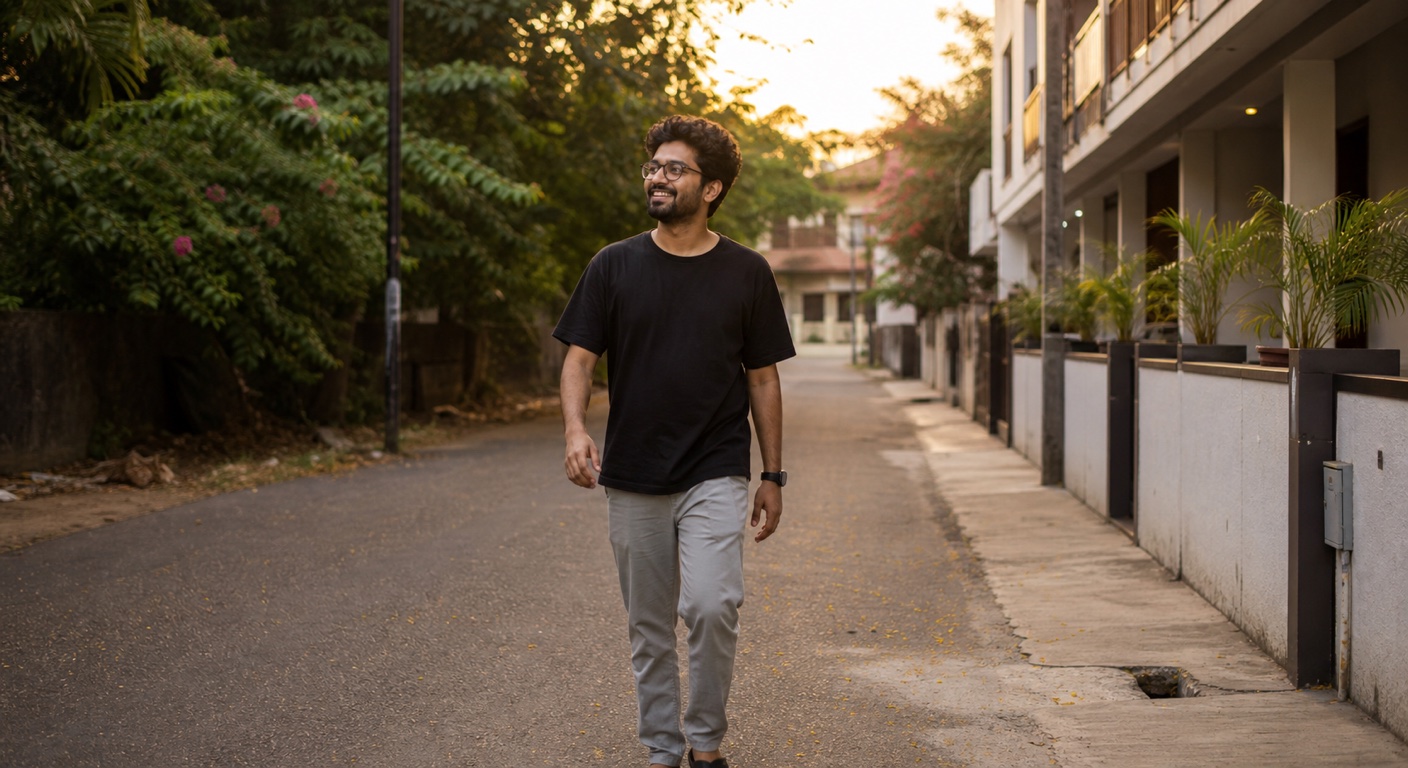
Should you really go for a walk after eating? The blood sugar truth
Grandmothers have said it for generations - walk a little after you eat. Turns out there's real science behind it, with a few twists nobody mentions.
'Khana khaake thoda walk kar lo' is one of the most common pieces of advice in Indian households, usually delivered right after dinner whether you asked for it or not. It turns out this one holds up remarkably well against the actual research - better than most food folklore. Here's the claim-by-claim breakdown of what a post-meal walk really does to your blood sugar.
"A short walk after a meal helps digestion and blood sugar."
trueTrue.
A 2023 systematic review and meta-analysis in Sports Medicine by Engeroff, Groneberg, and Wilke pooled the available trials on exercise timing around meals and found that walking after eating consistently blunted the post-meal blood sugar spike compared with staying seated, in both healthy people and those with impaired glucose tolerance. A 2025 randomized crossover study from Ritsumeikan University, published in Scientific Reports, confirmed this directly: a 10-minute walk right after a glucose drink brought the peak blood sugar reading down to about 164 mg/dL, versus 182 mg/dL when participants simply sat.
"You need a proper 30-minute walk for it to make a difference - a quick stroll doesn't do much."
mythMyth.
A 2022 meta-analysis in Sports Medicine by Buffey and colleagues looked at very short activity breaks used to interrupt sitting time - as little as 2 to 5 minutes of light walking, several of them timed around meals - and found they reduced post-meal blood glucose by an average of about 17% compared with continued sitting. You don't need gym clothes or a 30-minute slot; a couple of short strolls after eating already move the needle.
"It matters most to walk immediately after eating, not later once food has 'settled.'"
trueTrue.
Engeroff and colleagues' 2023 review found that exercise performed closer to the meal, rather than delayed, produced a bigger blunting effect on the post-meal glucose spike. The 2025 Ritsumeikan trial tested this head-to-head, comparing a 10-minute walk taken immediately after a glucose load against a 30-minute walk taken later, and found the immediate short walk was uniquely effective at cutting the peak glucose spike - suggesting timing right after eating matters as much as duration.
"Sitting quietly after a meal is basically harmless, as long as you don't lie down."
mythMyth.
Buffey and colleagues' 2022 meta-analysis, which pooled studies breaking up sitting time with brief activity around meals, found that standing alone helped only modestly (about a 9.5% reduction in post-meal glucose versus sitting), while light walking breaks were clearly the superior option of the two. Plain sitting was consistently the worst choice for post-meal blood sugar control in this body of evidence - even though it's the most common thing people actually do after an Indian meal that ends with a nap-friendly sofa nearby.
Small tips that add up
- Aim for a 10-15 minute gentle walk within about 15-30 minutes of finishing a meal - the pace can be comfortable, it doesn't need to be brisk.
- If a full walk isn't possible, even 2-5 minutes of light movement (pacing, light housework, walking to a neighbour's) meaningfully blunts the glucose spike compared with sitting.
- This habit matters most after your largest, most carb-heavy meal of the day - typically lunch or dinner with rice or roti.
- If you have diabetes or prediabetes, this is a genuinely evidence-backed add-on to medication and diet, not a replacement for either - check with your doctor before changing any treatment.
The bottom line
The honest bottom line: the classic 'walk it off' advice after meals is one of the rare pieces of food folklore that the research actually backs, and a short 10-minute stroll timed right after eating gets you most of the benefit.
Best-case recipe, computed independently: Not a literal recipe: the practical best case is a 10-minute gentle walk starting within about 15 minutes of finishing your main meal - a habit that costs nothing, needs no equipment, and has real trial data behind it.