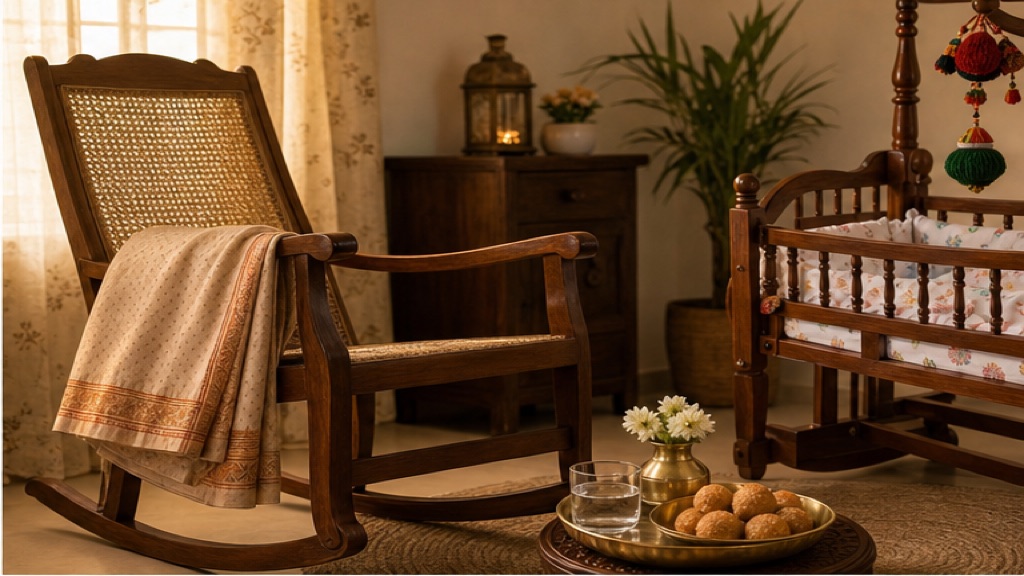
Safe weight loss after delivery: the gentle Indian path
It took nine months to grow your baby, so plan for months, not weeks, to lose the weight. Healing comes first, weight comes second. Your body already sheds 7 to 9 kg on its own in the first weeks, and if you breastfeed you need extra food, not less. This gentle, India-friendly guide explains the safe speed, why crash dieting can hurt your milk, and how traditional recovery foods fit in. Always talk to your doctor, gynaecologist, or paediatrician before you change anything after delivery.
You just had a baby. First, congratulations. And first, please be kind to yourself. Your body spent nine months growing a whole new human. That work is not undone in a few weeks. This article is for the new Indian mother who wants to lose pregnancy weight safely, without hurting her recovery or her baby's milk. The honest message: slow and steady is the safe way. Healing comes first, weight comes second. Always talk to your doctor, gynaecologist, or paediatrician before you change your food or activity after delivery. This guide shares what science and Indian common sense say together.
The baseline: slow, steady, and recovery first
It took nine months to gain this weight, so plan for months, not weeks, to lose it. The good news: your body already lets go of a lot on its own. Right after birth you lose about 5 to 6 kg from the baby, placenta, and blood loss. Then another 2 to 3 kg leaves as the extra water comes out through urine in the first weeks. This slow loss can go on for up to 6 months after delivery. If you breastfeed, your body makes about 500 to 800 ml of milk a day and uses about 700 kcal a day for it. The up to 5 kg of fat stored during pregnancy helps fuel this milk. So you need extra food, not less, while feeding. Women who exclusively breastfeed need about 500 more calories a day than before pregnancy. The safe speed of loss is about 0.5 to 1 kg (1 to 1.5 pounds) a week. Please wait until your baby is at least 2 months old and your milk supply is steady before you cut calories at all. WHO and UNICEF say babies should be exclusively breastfed for the first 6 months. Recovery, the 6-week check, healing of stitches, and pelvic floor strength all come before any weight plan.
You must lose all baby weight in 1 to 2 months, dieting hard while breastfeeding is required, and the traditional ghee-laddoo diet is a must.
falseFalse on all three. Slow and steady over months is safest, and your body keeps shedding water weight for up to 6 months after delivery. Dieting hard while breastfeeding can hurt your milk: in a study of breastfeeding women, weight loss by dieting alone reduced milk energy output in leaner mothers, while diet plus exercise did not change milk volume, composition, or infant weight. A combined diet-and-exercise plan helped women lose about 1.93 kg more than usual care, and the interventions seemed not to affect breastfeeding performance adversely. So a moderate plan is safe, but a hard crash is not. The Indian tradition of laddoos, ghee, and rich recovery foods is about nourishing a tired, healing mother with protein, iron, and calcium, not a required weight rule. Eat them in small amounts, focus on nutrients, and let recovery lead. Always check with your doctor or gynaecologist first.
Gentle, safe steps for an Indian new mother
- Get your doctor's OK first. Wait for the 6-week check. Tell your gynaecologist you want to lose weight and ask what is safe for your body and your delivery, vaginal or C-section.
- If breastfeeding, eat at least 1800 calories a day. About 500 extra calories a day supports your milk. Cutting too hard, too early, can lower your milk supply.
- Focus on protein, iron, and calcium: dal, chana, curd, paneer, eggs, fish, chicken, leafy greens, roti, and rice in balance. Indian recovery foods like panjiri, ghee laddoo, and date laddoo are fine in small amounts, they are nourishment, not a weight-loss tool.
- Drink a lot of water. Milk is mostly water and you are also losing fluid after birth. Keep a bottle near your feeding spot and sip through the day.
- Start with gentle walks of 10 to 15 minutes, and build up slowly after your doctor says yes. Walking is safe, free, and kind to a healing body. Heavy exercise, crunches, and running can wait.
- Sleep when the baby sleeps. Tiredness raises hunger and lowers mood. Rest is part of recovery, not laziness.
- Watch your mood. If you feel sad, empty, or hopeless for more than 2 weeks, or have any thoughts of harm, see your doctor right away. Postpartum depression is real, common, and treatable.
- Let family help. Accept food, housework, and baby time from your mother, mother-in-law, or partner. Support makes recovery and healthy eating easier.
The bottom line
Be kind to yourself. Your body grew a baby over nine months, and it needs months, not weeks, to recover and gently return. Healing comes first, the 6-week check, rest, and steady milk for your baby. Then a small, slow deficit with protein, iron, calcium, and short walks is the safe path. Crash dieting and heavy early exercise can hurt your milk and your recovery. The Indian tradition of laddoos and ghee is about love and nourishment, not a weight rule, so eat them in small amounts. Talk to your doctor or gynaecologist before you start, watch your mood, and let your family help. Slow and steady wins, and it keeps both you and your baby safe.