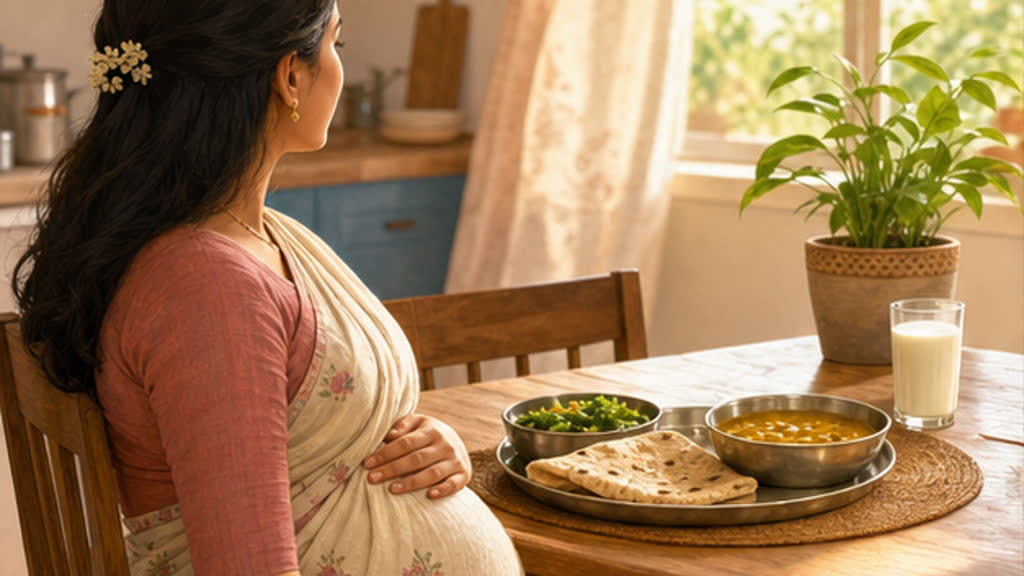
Pregnancy weight gain: how much is healthy
Gaining weight in pregnancy is normal and needed for your baby to grow. The right amount depends on your pre-pregnancy BMI. This honest guide shares the NAM/IOM weight-gain ranges as guides your doctor personalises, busts the eating-for-two myth, and is clear that pregnancy is NOT the time to lose weight. Your obstetrician or gynaecologist tracks your gain at each visit and sets the plan that is right for you.
If you are pregnant, you may be wondering how much weight gain is healthy. This is a caring, honest guide for Indian mothers-to-be and their families. The first thing to know: gaining weight in pregnancy is normal, expected, and needed for your baby and your body. Pregnancy is NOT the time to lose weight or diet to stay thin. The right amount of gain depends on your pre-pregnancy weight (your BMI), and your obstetrician or gynaecologist is the one who personalises the plan for you. This article shares the well-known NAM/IOM weight-gain ranges as a guide, busts the eating-for-two myth, and gently reminds you to talk to your doctor at every step. Nothing here is a prescription. Please talk to your obstetrician or gynaecologist about your own body.
Why weight gain in pregnancy is needed — and how much
Your body is building a baby, a placenta, extra blood, and stored energy for breastfeeding. So weight gain is not just allowed, it is needed. The well-known guides come from the National Academies of Medicine (NAM, earlier called IOM) 2009 report. For one baby (singleton pregnancy), the guides by pre-pregnancy BMI are: if you were underweight (BMI under 18.5), gain about 12.5 to 18 kg; if normal weight (BMI 18.5 to 24.9), about 11.5 to 16 kg; if overweight (BMI 25 to 29.9), about 7 to 11.5 kg; if obese (BMI 30 or more), about 5 to 9 kg. These are GUIDES, not targets for you to chase. Your doctor personalises them for your height, health, and baby. Gaining too little is linked to preterm birth and a baby born too small. Gaining too much is linked to a big baby and a higher chance of a C-section. Both too little and too much carry risks, which is why your doctor tracks your gain at each visit. Again: pregnancy is NOT for weight loss.
Eating for two means doubling your food, or you should diet to stay thin in pregnancy.
VerdictBoth are false. 'Eating for two' does not mean eating twice as much. In the first trimester you need no extra calories, and in the second and third trimesters only about 340 to 450 extra kcal a day — roughly one extra small, nutrient-rich snack, not a second full meal. The focus should be on quality (protein, iron, folate, calcium, iodine), not quantity. Dieting to stay thin in pregnancy is also false and unsafe. Pregnancy is NOT the time to lose weight. Gaining too little is linked to preterm birth and a low-birth-weight baby. The honest truth: gain is needed, but in the right amount for your pre-pregnancy BMI, and your obstetrician or gynaecologist tracks it at each visit and personalises the plan for you.
What to actually do — with your obstetrician
- Let your obstetrician or gynaecologist track your weight at each visit. That is the right place to ask questions about your gain. Do not self-target a number.
- Eat enough of the key nutrients your baby needs: protein (about 71 g a day), iron (27 mg), folate (600 micrograms), iodine (220 micrograms), and calcium. Your doctor may give you supplements — take them as advised.
- Add only a small extra snack in later trimesters: about 340 extra kcal a day in the second trimester and about 450 in the third. A bowl of dal with a roti and curd, or a handful of nuts with fruit, is enough. No double meals.
- Gentle walks are fine for many healthy pregnancies IF your doctor allows. A slow 15-20 minute walk can help. Always ask your obstetrician before any activity.
- Watch for gestational diabetes. Your doctor tests for it during pregnancy. If you feel very thirsty, very tired, or notice changes in urine, tell your doctor. Do not self-diagnose or self-treat.
- Keep food safe. Avoid raw or undercooked fish, raw eggs, unpasteurised milk and soft cheeses. Cook meat and eggs fully. Wash fruits and vegetables well. If your daily caffeine is high, the WHO says lower it to reduce the risk of pregnancy loss and low birth weight.
The bottom line
Gaining weight in pregnancy is normal, needed, and good for your baby. The right amount depends on your pre-pregnancy BMI — the NAM/IOM guides are about 12.5-18 kg if you were underweight, 11.5-16 kg if normal, 7-11.5 kg if overweight, and 5-9 kg if obese for one baby — but these are guides your obstetrician personalises for you, not numbers to chase. Pregnancy is NOT the time to lose weight or diet to stay thin, and eating for two does not mean double food, only a small extra snack in later trimesters. Eat enough protein, iron, folate, calcium, and iodine, keep food safe, watch for gestational diabetes with your doctor, and move gently only if your doctor allows. The honest, caring rule: let your obstetrician or gynaecologist track your gain and set the plan. That is the safest path for you and your baby.