The 25-30 g protein dose per meal that fills you most
There is a dose of protein per meal, about 25 to 30 g, above which the fullness hormones do not add much more. Spread that dose across breakfast, lunch and dinner instead of dumping it all at dinner, and your calorie deficit stays kinder because you stay full.
You ate a big dal at dinner and felt stuffed. Yet you woke up hungry. Why? Protein has a dose per meal. It is about 25 to 30 g. Above that dose, extra protein adds very little fullness. So spreading protein across your day beats dumping it all at dinner. This is not 'why protein fills you' - that is a different article. It is not 'cheapest protein' either - also a different article. This is the dose per meal and how to spread it. Get the dose right at each meal, and your deficit feels kinder.
The per-meal protein dose: about 25 to 30 g
Scientists tested 30 g versus 70 g of whey protein in 18 lean men. Both doses cut later eating compared to a no-protein drink. But the 70 g dose only cut about 30 kcal more than the 30 g dose. So around 30 g per meal is close to a ceiling for fullness. Above it, your gut hormones get a little extra push, but you do not feel much fuller. The fullness hormones rise with the protein dose. In one study, the high-protein meal raised GLP-1 about 20% more and PYY about 14% more than a normal-protein meal. In another, PYY and GLP-1 were both highest after a high-protein breakfast. GLP-1 and PYY are the gut hormones that tell your brain you are full. So the dose matters - but only up to that 25 to 30 g per meal. Protein is 4 kcal per gram (Atwater), so 25 g of protein is at least 100 kcal before you count the carbs and fat it rides in.
Assumptions: The ~25-30 g per-meal threshold is drawn from the Hutchison 2015 trial (30 g vs 70 g whey) and the dose-response hormone studies (Belza 2013; van der Klaauw 2013). Protein energy uses the Atwater general factor of 4.0 kcal/g.
Spread it, do not dump it at dinner
The timing matters too. In one study, men on a diet got extra protein at breakfast, lunch, or dinner. Breakfast protein gave the most fullness, and it lasted about 15 hours. Dinner protein gave almost no extra fullness at all. So a big dal at 9 pm fills you less than the same dal at 9 am. The Indian habit is to skew protein to dinner. Spread it instead.
Eat all your protein at dinner - it is the biggest meal, so it fills you most.
mostly falseMostly false. Dinner protein adds very little fullness. In the study above, the high-protein dinner scored below normal protein for fullness. And 70 g of protein at one sitting only beat 30 g by about 30 kcal of later eating. So a giant dinner dal is mostly wasted fullness. Move some of that protein to breakfast and lunch instead, and you stay fuller for the same total protein.
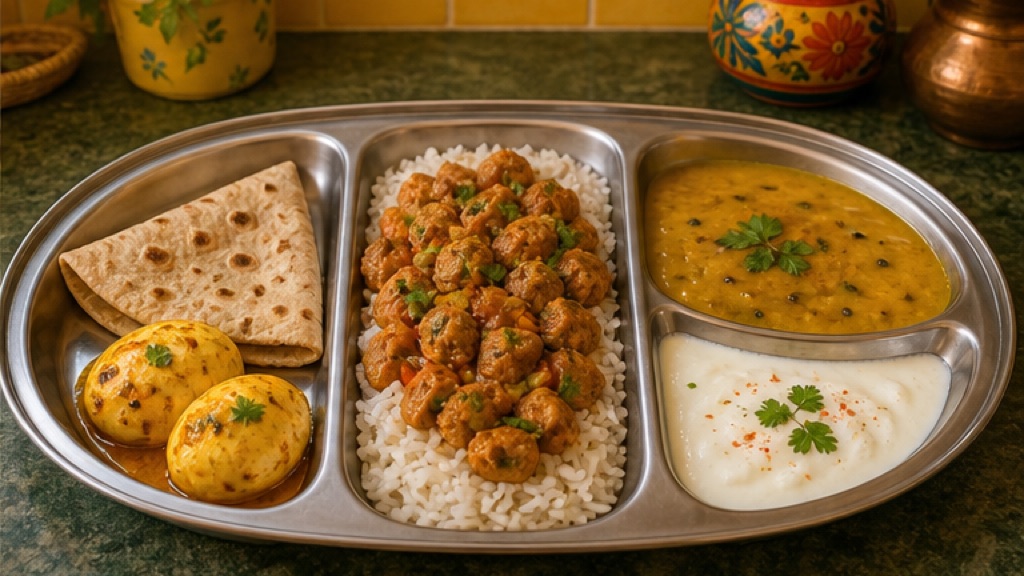
Three Indian meals that each hit about 25 g protein
Hit the dose at each meal (and log it)
The bottom line
Protein is the most filling calorie you can spend. But there is a dose - about 25 to 30 g per meal. Above it, extra protein adds little. So spread that dose across breakfast, lunch and dinner. Your food_total rises a little, but you stay full, and the deficit stays kinder. Log it in Burnie and let the dose do its work.