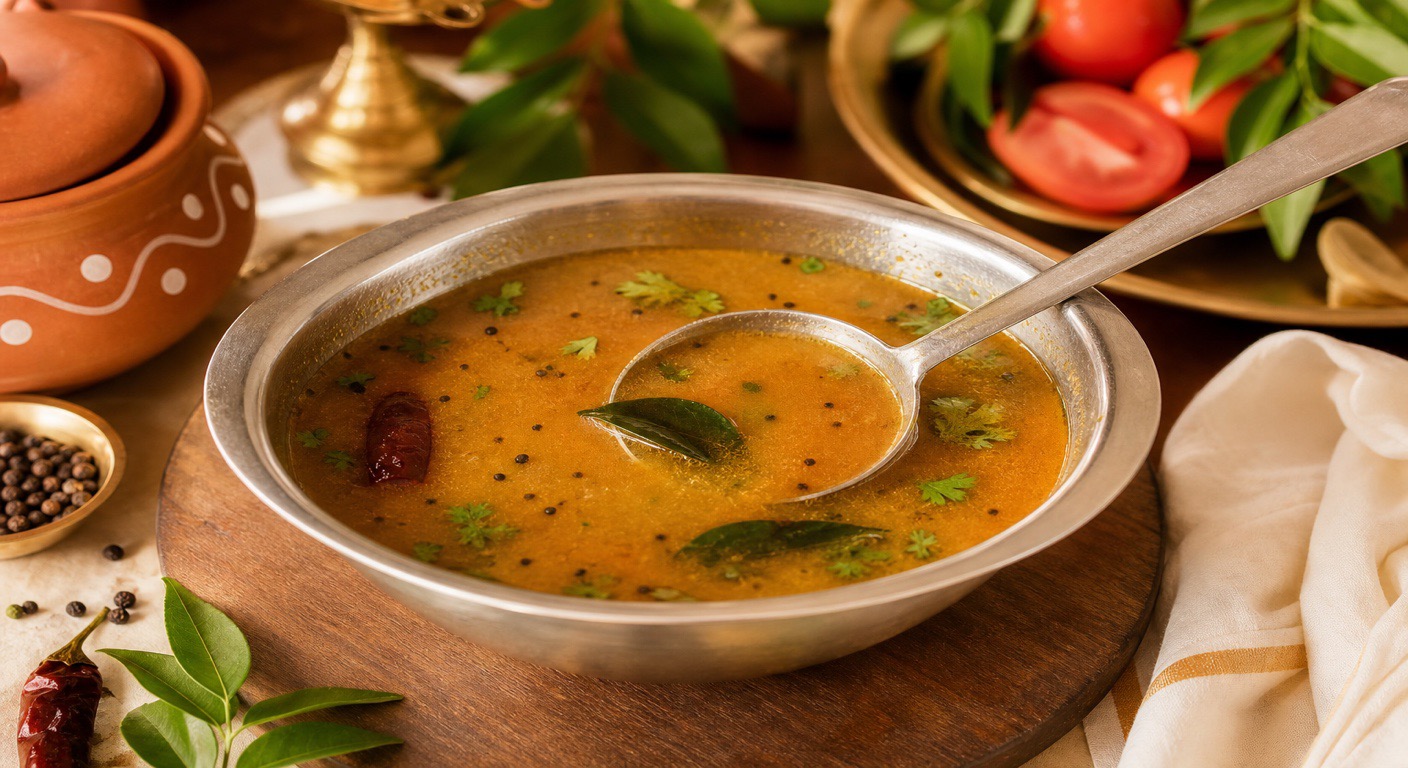
Rasam - the lightest thing on the table?
A katori of homemade rasam is just about 59 kcal - mostly tangy tamarind-tomato water with a tiny tadka of oil. That is far lighter than a katori of sambar, and sipping it before your meal can help you feel full sooner and eat less.
Rasam is that thin, tangy, peppery soup from South India. It is mostly water, a little tamarind and tomato, and a tiny splash of oil for the tadka. People sip it like a drink or pour it over rice. But is it really the lightest thing on your thali? Let us check the real numbers.
Rasam is the lightest thing on the South Indian table.
mostly trueMostly true. One katori of homemade rasam is about 59 kcal with just 1.5 g of fat - far below a katori of sambar at about 143 kcal. Rasam uses very little dal and mostly tamarind-tomato water. That 1.5 g of fat is almost entirely the tadka - a teaspoon of oil or ghee for the whole pot, at about 884 to 897 kcal per 100 g. The only things lighter on your plate are plain water or buttermilk.
Your usual starter: a katori of sambar
At a South Indian meal, the default starter is a katori of sambar - thick, dal-heavy, with vegetables. A homemade katori comes to about 143 kcal, with 5.4 g of fat and a good 5.3 g of protein from the toor dal. It is healthy, but it is not light.
Assumptions: Tarla Dalal's South Indian Homemade Sambar (serves 6) reports 143 kcal per serving with 5.4 g fat, 5.3 g protein, 18.4 g carbs, made with 3/4 cup toor dal plus drumsticks, doodhi and potato. Cooked toor dal itself is about 114 kcal per 100 g with 7.2 g protein, so the dal is what pushes sambar well above rasam. Restaurant-style sambar runs higher at about 175 kcal due to extra coconut oil and dal; the lighter idli-sambar version is about 122 kcal per 234 g serving. The range 120-175 covers these real recipe figures.
One katori, four South Indian starters
Swap your sambar starter for rasam
If you usually begin with a katori of sambar, try a katori of rasam instead. You still get that warm, tangy, spicy start to the meal - but you save about 84 kcal, and you leave more room for the rest of your thali.
A katori of rasam before your meal helps you eat less.
mostly trueMostly true, with a caveat. In a real study, sipping a low-calorie, broth-based soup before lunch cut people's total meal intake by about 20 percent - around 134 kcal - without leaving them hungrier. Rasam fits that bill perfectly: it is hot, watery and low in calories, so it fills your stomach with volume before the heavier food arrives. The caveat is that the study used western soups, not rasam, so treat the 134 kcal as a rough guide, not a promise.
Keep your rasam light
- The tadka is most of rasam's tiny fat - one teaspoon of oil or ghee for the whole pot is plenty. Extra ghee tastes great but adds calories quickly.
- Rasam itself is feather-light - the rice you eat with it is not. Watch the rice and any second helpings, not the rasam.
- A low-salt rasam is even lighter than the regular one - a good pick if you watch your blood pressure too.
- Sip rasam slowly before your main course. Hot, watery foods take time to drink, and that little pause helps fullness set in before you fill your plate.
The bottom line
Yes, rasam really is the lightest thing on the table - about 59 kcal a katori, less than half a katori of sambar. Sip a small katori before your meal and you may feel full sooner and eat a little less, just like the soup-before-meal research shows. Just remember the rice and second helpings matter far more than the rasam itself.