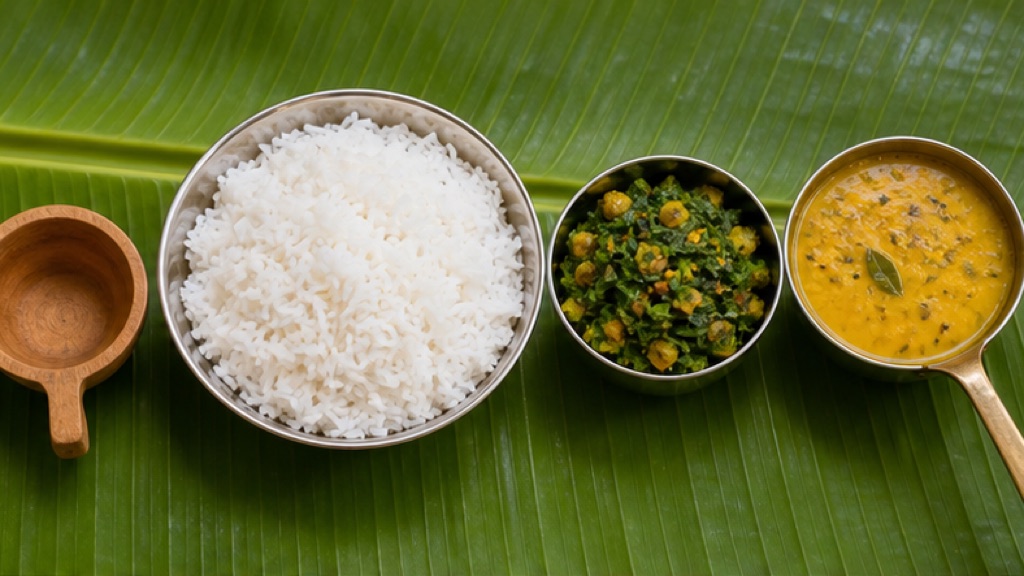
Rice portion control: the katori is your real unit
A katori of cooked white rice is about 150g and 200 kcal, and most Indian plates pile 2-3 katori, so rice alone gives 400-600 kcal. The simple lever is one katori rice with double sabzi or dal, which keeps you full and saves about 400 kcal a meal. This guide shows the katori maths, the dry-to-cooked weight trick, and why the rice variety barely matters next to the katori size.
Rice is the heart of the Indian plate, and that is fine. Rice is not the enemy. The problem is the size of the katori. Most of us eat rice the way our elders taught us: a mountain of it, with a little dal and sabzi on the side. But the katori, not the rice brand, is what decides your calories. This article tells you honestly what one katori of cooked rice costs in calories, how dry rice turns into cooked rice (the water trick that changes weight but not calories), and the one swap that saves about 400 kcal a meal without leaving you hungry. The short answer: eat one katori of rice, not three, and fill the rest of the plate with sabzi, dal and salad. That is the whole plan.
The baseline: 1 katori cooked white rice is about 200 kcal
A standard steel katori of cooked white rice holds about 150g. Cooked white rice carries about 130 kcal for each 100g, so one katori is about 195-200 kcal. A US measuring cup of cooked rice (about 158g) is about 205 kcal, which is close enough to think of as one big katori. The key number to remember: about 130 kcal per 100g cooked, about 200 kcal per katori or cup. Now look at a typical Indian lunch or dinner plate. People commonly pile 2 to 3 katori of rice, which is 400-600 kcal from rice alone, before any dal, sabzi, ghee or curd. That rice mountain is the single biggest calorie line on the plate, and it is the easiest one to cut.
Assumptions: 1 standard steel katori = about 150g cooked white rice. Cooked white rice = 130 kcal/100g. No added ghee or oil, which would add more. A heaped katori or a restaurant portion can run higher.
Small-grain rice like Sona Masuri has fewer calories than basmati, so it is better for a calorie deficit.
falseFalse. All cooked white rice is close to 120-130 kcal per 100g. Cooked basmati is about 121 kcal per 100g, standard cooked white rice is about 130 kcal per 100g, and Sona Masuri sits in the same band. The difference between varieties is tiny, about 5-10 kcal per 100g, and it is dwarfed by the katori size. Three katori of Sona Masuri still costs about 540-600 kcal, while one katori of basmati is about 180 kcal. The grain does not decide your deficit, the katori does. Pick the rice you enjoy, measure the katori, and put the energy into sabzi and dal.
The dry-to-cooked weight trick: water adds weight, not calories
When you cook rice it soaks up water and triples in weight, but the calories stay fixed by the dry rice you started with. About 100g of dry rice turns into about 300g of cooked rice, and both amounts carry about the same total calories (about 360 kcal). This is why cooked rice is only about 130 kcal per 100g while dry rice is about 360 kcal per 100g: the cooked rice is puffed up with water, so each 100g is mostly water. The practical lesson: weigh your rice in one state and read the label for that same state. If you weigh cooked rice on the plate, use the 130 kcal/100g cooked number. If you weigh dry rice in the kitchen before cooking, use the dry number and remember it will triple on the plate. Mixing the two states is the most common logging mistake and it throws your calorie count off by about 230 kcal per 100g.
Assumptions: Plain white rice cooked in water, no oil or ghee. Dry-to-cooked weight ratio is about 1 part dry to 3 parts cooked by weight. Variation of about 10% depending on soaking, rinsing and water amount.
Make the katori your habit
- Use one steel katori to serve rice, and stick to one katori per meal. A katori is honest because you can see it. A heaped plate is not.
- Use the fist guide. One katori of cooked rice is about the size of your closed fist. If the rice on your plate is bigger than your fist, it is more than one katori.
- Fill the plate first with sabzi, dal and salad, then add the rice. By the time you sit down, the rice is the side, not the mountain.
- Double the sabzi or dal, not the rice. Volume goes up, fullness goes up, but rice calories drop by about 400 kcal when you go from 3 katori to 1.
- Weigh rice in one state only. If you log cooked rice, use 130 kcal per 100g. If you log dry rice, use about 360 kcal per 100g and remember it triples when cooked.
- Watch the ghee. One teaspoon of ghee on rice or dal is about 45 kcal. Tasty, but it adds up fast on top of the rice.
- Leftover rice trick: cool cooked rice in the fridge before reheating. It forms resistant starch that is gentler on blood sugar, though the calories stay about the same.
The bottom line
Rice is fine. The katori is the problem. One katori of cooked white rice is about 150g and about 200 kcal, and cooked rice is about 130 kcal per 100g. A typical Indian plate of 2-3 katori of rice means 400-600 kcal from rice alone, before any dal, sabzi or ghee. The single best lever is to drop to one katori of rice and double the sabzi or dal: same full plate, same fullness, about 400 kcal saved per meal. The rice variety barely matters, all cooked white rice is about 120-130 kcal per 100g, so pick the one you like and measure the katori. Remember that dry rice triples in weight when cooked but the calories stay fixed, so weigh in one state and log in the same state. Log your food in Burnie, see your deficit, and let the katori, not the brand, do the work.