
Self-compassion in the data — reading your log without shame
Your Burnie log is data, not a judge. Shame after a big number makes you quit logging; self-compassion — the kind words you would give a friend — keeps you logging, and the science says that is what actually moves the scale.
You open Burnie in the morning. You see yesterday's number. It is big. Two extra rotis at dinner. A samosa at tea. The first thought is sharp. "I was bad." Then the next thought: "What is the point of logging?" This short read is about one small switch inside your own head. The number is not a judge. It is just data. Read it kindly, and you keep logging. Read it with shame, and you stop. The kind reader loses more weight.
If I beat myself up over a big log number, I will eat better tomorrow.
mostly falsemostly false — explained simply
It feels true. It is not. When people are harsh with themselves after a slip, they usually do not try harder. They hide from the data. They stop opening the app. They quit logging. The big dinner turns into a lost week. Research found the opposite of what shame promises. In four tests, people who treated themselves kindly after a failure were the ones who actually worked harder to fix it. They spent more time studying for a hard test after failing it. They wanted to change the weakness more, not less. Kindness did not make them lazy. It made them stay in the game.
The science: kind people do more healthy things
A big pooled study looked at 29,588 people from 94 research papers. People who were kinder to themselves did more health-promoting things. The link was positive, about r = .26. Eating, sleep, danger-avoidance, overall health behaviour — all moved in the same direction. A second study of 3,252 people across 15 samples found the same pattern. People high in self-compassion ate better, moved more, slept better, and managed stress better. The size of the link was about r = .25. So the science is clear. Self-compassion is not letting yourself off the hook. It is the soil where healthy habits grow.
Three ways to read the same log number
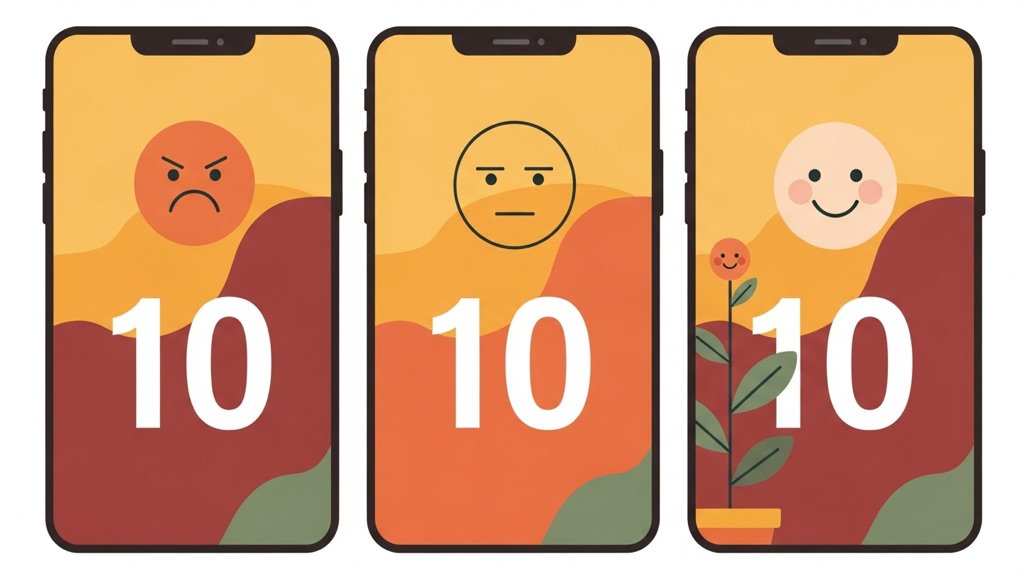
How to read your log without shame
The bottom line
Your log is not your judge. It is your notebook. People who read it kindly keep logging. People who keep logging move the scale. In a study of 29,588 people, self-compassion was linked to more healthy behaviours, not fewer. So the next time you see a big number in Burnie, do not flinch. Read it. Breathe. Say something kind. Then log the next meal. The kind reader wins.