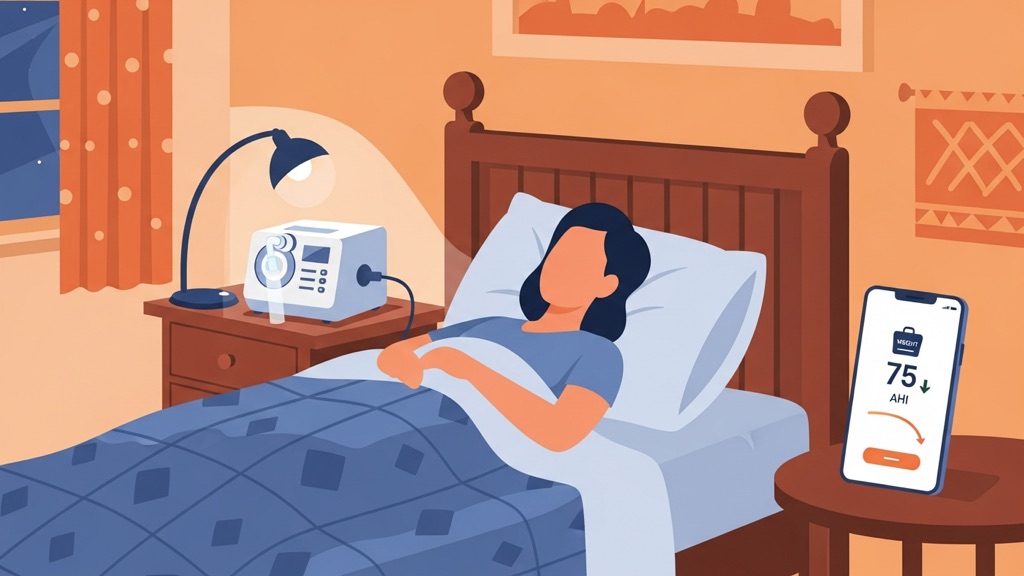
Sleep apnea, weight, and the number that improves first
If you have sleep apnea and extra weight, the first number that moves when you lose a few kilos is your AHI, the count of breathing pauses at night. Burnie logs your food and weight; your doctor reads the AHI. You work on it together.
Your doctor says you have sleep apnea. They also say your weight is part of it. So now you have two things on your mind: the machine at night (CPAP), and the kilos on the scale. This short read is about how they help each other, and which number moves first when the weight starts to drop. Your doctor owns the sleep plan. Burnie is just the notebook where you log the food and the weight.
You have to pick: use the CPAP machine, OR lose weight. You cannot do both.
mostly falsemostly false — explained simply
This is a common fear, and it is wrong. The American Academy of Sleep Medicine is clear on two things at the same time. First, start the conversation about weight loss early, right when sleep apnea is found. Second, do not delay CPAP while you work on weight. In plain words: use the machine tonight, and let the weight loss help over the months. They are a team, not a choice. One fixes the airway now. The other loosens the airway for good.
The number that improves first is your AHI
AHI means apnea-hypopnea index. In plain words, it is how many times per hour your breathing partly or fully stops in the night. Doctors split OSA into mild (5 to 14.9), moderate (15 to 29.9), and severe (30 or more events per hour). When you lose weight, this is the first sleep number that drops. A big review of 27 studies found that a 10% drop in BMI came with about a 36% drop in AHI. So if your AHI is 30 and you lose a tenth of your body weight, your AHI may fall by roughly a third. That is a real, measurable change, and it usually shows up before you feel 'cured'.
Three ways your sleep apnea plan can look
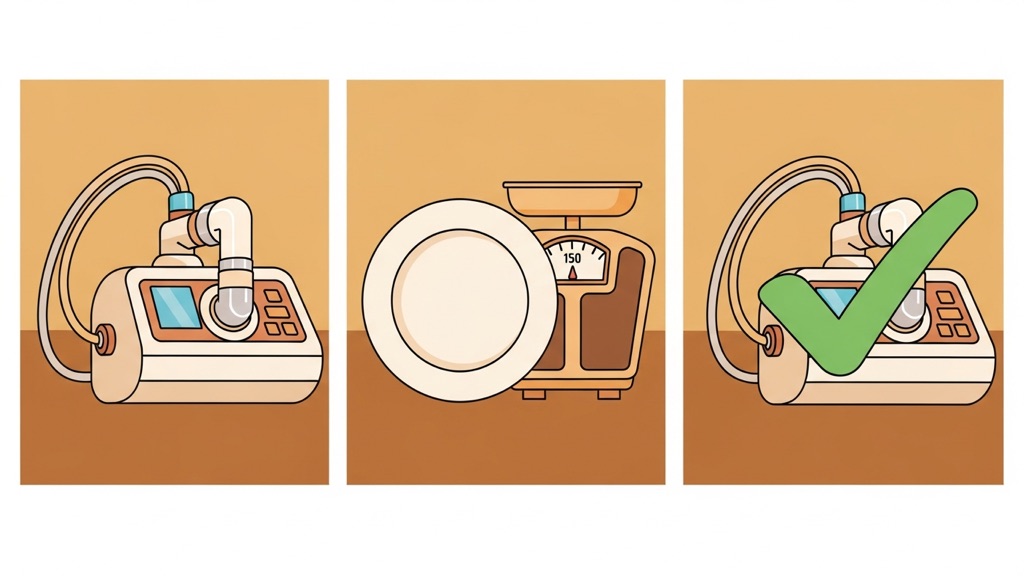
Even a tenth of your body weight matters
You do not need to reach some magic thin size to help your sleep. In one randomised study of 264 adults with type 2 diabetes and sleep apnea, the people in the weight loss group lost about 10.8 kg in a year. Their AHI fell by about 9.7 events per hour more than the comparison group. The people who lost 10 kg or more saw the biggest drop. About three times more of them had their sleep apnea go into remission than people who did not lose weight. Modest kilos, real results.
Logging + co-managing with your doctor
The bottom line
Sleep apnea is one of the few conditions where modest weight loss shows up fast in a number your doctor measures: the AHI. About a 10% drop in body weight lines up with roughly a 36% drop in AHI. Use the CPAP tonight. Log your food and weight in Burnie through the week. Let your doctor read the AHI and adjust the plan. That is the team, and you are the one doing the daily work.