Sleep — the number you do not log that moves every other number
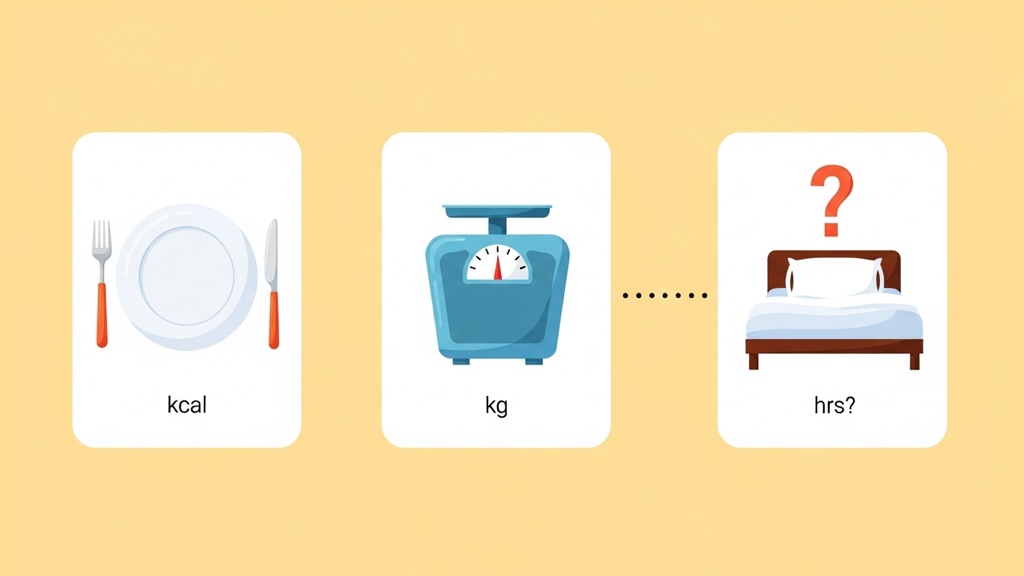
Burnie logs your food and your weight, but it never reads your sleep — and sleep is the hidden number that moves both. Poor sleep quietly raises your hunger, changes what kind of weight you lose, and shifts every logged number the next day.
Open Burnie and you will see two numbers you logged: your food calories and your weight. There is one big number it never asks you for. That number is sleep. Burnie does not read your sleep. It never has. It also never reads your heart rate, your blood pressure, or where you go. But the sleep number does not stay quiet. It moves your hunger. It moves the scale. It even changes what kind of weight you lose — fat or muscle. This short read is about the one number you do not log, and why it still moves every number you do.
If my food log is perfect, my sleep does not matter for weight.
mostly falsemostly false — explained simply
It is true that calories run the maths. If you eat less than you burn, you lose. But sleep changes how hungry you feel the next day, and it changes what your body lets go of. In one big review of over 197,000 adults, short sleepers were about 45% more likely to become obese than normal sleepers. So even with a tidy food log, the unlogged sleep number is pushing from behind. You can hold the line for a few days. Doing it for months on poor sleep is much harder.
The number you never log: about 7 hours or more
The American Academy of Sleep Medicine says adults should sleep 7 or more hours per night on a regular basis. Sleeping 6 or fewer hours is not enough to sustain health. Burnie will not track this for you — it is the one line you fill in yourself, in your own head. The honest part: 7 hours is not a magic switch that melts fat. It is the floor. Below the floor, the hunger hormone ghrelin rises, the fullness hormone leptin drops, and you reach for an extra roti or two without meaning to. Above the floor, the maths you do in Burnie finally behaves the way the numbers say it should.
Your logged numbers vs the unlogged one
Poor sleep only makes you eat more — it does not change what you lose.
mostly falsemostly false — explained simply
This one surprises people. In a careful study, adults on the same diet were asked to sleep either 8.5 hours or 5.5 hours a night. They ate the same calories. The sleep-short group lost 55% less fat than the well-rested group. Their body held on to fat and let go of lean mass instead. So sleep does not just add hunger. It changes the kind of weight you lose on the exact same food log. The number you do not log changes what your logged deficit actually buys you.
How to protect the number Burnie does not log
The bottom line
Burnie logs two numbers for you — food and weight. It will never log the third, because sleep is yours. But it is the lever underneath both. Aim for 7 or more hours. One careful study showed poor sleep cut fat loss by 55% on the exact same diet. A big review of over 197,000 adults linked short sleep to a 45% higher chance of obesity. Protect the number Burnie does not log, and the numbers it does will quietly behave better.