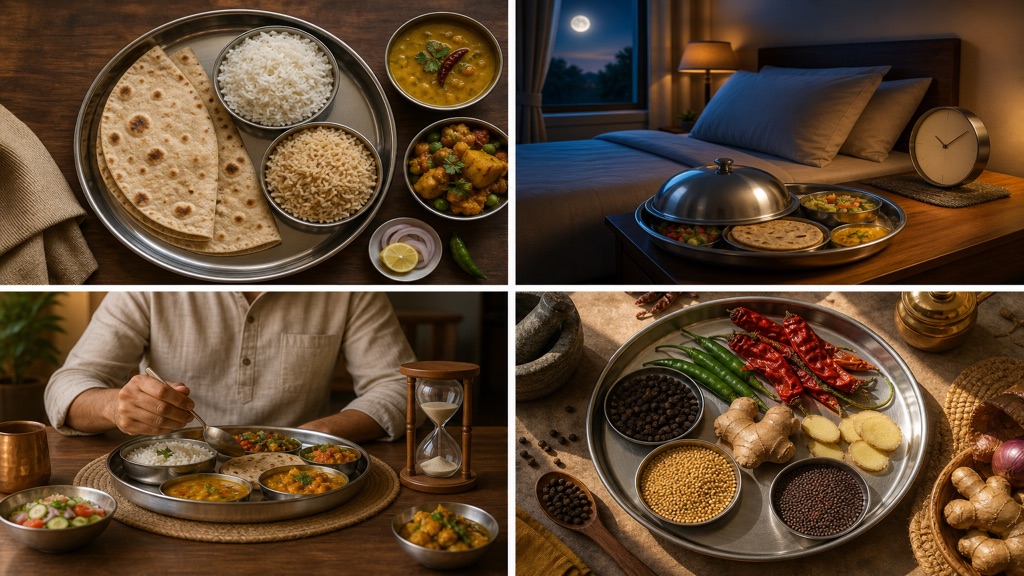
Eat Slowly for 20 Minutes: Let Fullness Catch Up
Eating slowly for about 20 minutes gives your gut time to send fullness signals before you overeat. Put the spoon down between bites, chew well, and log the meal first so you stop at satisfied, not stuffed.
This is not the "eating fast makes you eat more" story (that is a different article). That one tells you why. This one tells you HOW. How to actually eat slowly, and why the 20-minute mark is the real lever. Your gut sends fullness signals that build over the first 20 to 30 minutes of a meal. If you rush, those signals arrive after you have already overeaten. If you stretch the meal to about 20 minutes, the signals land while you are still at the table. You stop at satisfied, not stuffed. That small gap is your deficit, protected.
Why 20 minutes is the magic window
Fullness is not one switch. It is a team of gut hormones that rise after food reaches your intestines. GLP-1, a key one, is "released rapidly within minutes of a meal." Another signal, Apo A-IV, reaches its peak "within 15 min of a meal" and then stays high for about 30 more minutes. So the first 20 to 30 minutes of a meal is exactly when these signals are building and reaching your brain. That is why slow-eating trials stretch meals to about 24 to 26 minutes, not 6. The 20-minute mark is not a magic switch. It is the practical window the science and the trials both point to. Eat for about 20 minutes, and you give the signals time to arrive.
Slow meal vs fast meal: what the trials measured
The trick is just to chew more times, no matter how long the meal takes.
it dependsIt depends, explained simply. Chewing matters, but only because it stretches the meal toward that 20-minute window. Chewing fast for 5 minutes will not help. The real lever is time, because the satiety hormones rise over the first 20 to 30 minutes. So chew well AND keep the meal going for about 20 minutes. The trials that worked used both: small bites, putting the spoon down between bites, and chewing each bite 20 to 30 times, until the meal lasted about 26 minutes.
How to actually eat slowly for 20 minutes
The bottom line
Eat slowly for about 20 minutes so your gut fullness signals arrive before you overeat. Log the meal in Burnie first, use a small spoon, put it down between bites, chew 20 to 30 times, sip water, pause halfway, and set a 20-minute timer. You stop at satisfied. The deficit you wanted stays yours. Burnie is free, and it never reads your heart rate, sleep, blood pressure, or location, it only counts the calories you type and the active calories your phone reports.