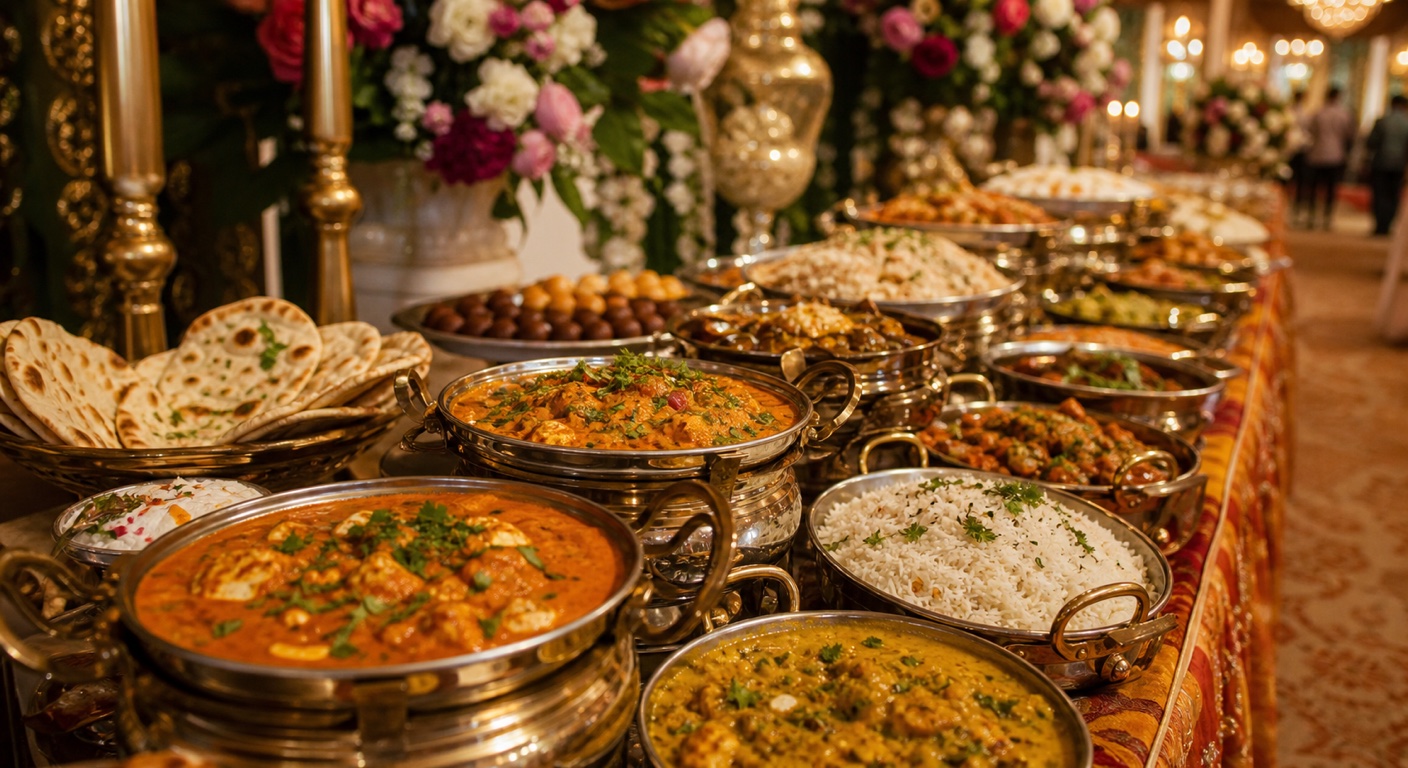
Surviving the shaadi buffet - what actually works, and what backfires
Skip lunch to 'save room', pile a big first plate because everything's right there, tell yourself one wedding won't matter - the wedding-season playbook feels logical. Here's what the evidence on compensatory eating and buffet psychology says actually happens.
Indian wedding and celebration buffets are a genre of their own - multiple live counters, an enormous spread, and real social pressure to fill (and refill) your plate as a mark of enjoying the occasion. The common survival strategies - skip meals earlier in the day, trust that a buffet naturally regulates itself, treat one big day as harmless - all sound reasonable. Some of them have a real kernel of truth in the research. Others don't hold up at all once you look at how buffets, variety and 'big day' eating actually behave. Here's the honest version, claim by claim.
"Skip meals earlier in the day to save up calories for the wedding buffet at night."
partly truePartly true - but the buffet itself is what usually erases the saving.
There's a real basis for half of this plan: skipping a single meal like breakfast does not reliably trigger full compensatory overeating later on. A meta-analysis of randomised controlled trials found people assigned to skip breakfast ended up with meaningfully lower total daily calorie intake than those assigned to eat it - on average about 260 kcal/day less - with no evidence they 'made it up' at lunch and dinner. So skipping a meal, on its own, often does leave more calories available for later in a simple accounting sense. Where the plan falls apart is the buffet itself: a landmark study found people ate about a third more food when offered several different dishes in one sitting versus repeated helpings of one dish, purely because each new flavour renews appetite - and a major review of 61 portion-size studies found bigger spreads and larger servingware reliably push people to eat more, regardless of how hungry they started out. A skipped lunch can hand you a small calorie credit; a large, varied buffet is built - by its sheer scale and variety - to make you spend far more than that credit is worth.
"A buffet lets you build your own plate, so it naturally regulates your portions better than a fixed meal would."
mythMyth.
The evidence points the other way. The same variety-effect research shows that offering more dishes side by side - exactly what a buffet spread does - increases total intake, because each new flavour resets your interest in eating even after you'd have stopped with just one dish. And the Cochrane review of 61 portion-size studies found that larger serving vessels and bigger available quantities consistently raise how much people take and eat, which describes a wedding buffet's chafing dishes and stacked trays almost exactly. Choosing your own combination doesn't add a self-regulating brake to the meal - if anything, more choice and more visible variety are the specific ingredients known to push intake up, not down.
"It's just one wedding - one big day of eating won't matter, it'll balance out over the following weeks."
mythMyth.
A prospective study that weighed 195 adults across a Western holiday season found an average weight gain of 0.37 kg over the November-January period - and, crucially, that gain was not lost in the following months (participants lost essentially nothing, -0.07 kg, from January to March). Across the full autumn-to-spring period, the net retained gain was 0.48 kg, which the researchers concluded 'appears likely to contribute to the increase in body weight that frequently occurs during adulthood.' A single wedding is one data point, but Indian wedding season often means several such 'big days' clustered within a few weeks - functioning much like a compressed holiday season. The evidence suggests these occasions don't reliably erase themselves afterward; small amounts tend to stick.
"Switching to a smaller plate at the buffet will keep your portions in check."
partly truePartly true at home, weak at an actual buffet.
A controlled study gave overweight/obese women either a small (19.5 cm) or large (26.5 cm) diameter plate at a free-choice buffet lunch and found no meaningful difference in what they ate - 3,975 kJ with the small plate versus 3,901 kJ with the large one - concluding that plate diameter alone did not significantly change intake when people were hungry and the food was appealing. A broader systematic review and meta-analysis of dishware-size experiments similarly found the overall evidence for plate size reducing consumption is inconsistent once you look across all the trials, not the reliable trick it's often presented as. The smaller-plate strategy can still help in contexts where portions are pre-plated and not refillable, but at a live, all-you-can-return-to buffet, plate size by itself is a weak lever - the number of trips you make and what you choose on each one matter far more.
Small tips that add up
- Eat a normal-sized meal earlier in the day rather than skipping outright - the 'save calories for later' plan only pays off if the buffet doesn't erase the saving, and arriving reasonably full (not starving) helps you serve deliberately rather than reactively.
- Walk the entire spread once before serving anything, so your first plate reflects an actual choice rather than 'whatever counter was closest' - this doesn't cancel the variety effect, but it stops it from compounding across five separate impulsive plates.
- Use a normal-sized plate and count your trips - two considered, full plates beats an oversized first plate followed by two 'small' refills.
- Treat the wedding as one day, not a template for the whole wedding season - it's the repetition of big buffet days across several weeks, not any single one, that tends to show up as gradual weight gain afterward.
The bottom line
Neither the 'skip meals to save room' plan nor the assumption that a buffet - or a single big day - naturally balances itself out holds up well under real evidence. Skipping one meal doesn't reliably backfire on its own, but a buffet's scale and variety are specifically what make people eat well beyond any earlier saving, and data from real holiday seasons shows these 'big days' tend to leave a small amount of weight behind rather than reliably disappearing on their own.
Best-case recipe, computed independently: Eat a real, normal meal earlier in the day rather than skipping it, walk the whole spread once before serving, fill a normal-sized plate deliberately, and cap the meal at one considered refill rather than a running series of small top-ups.