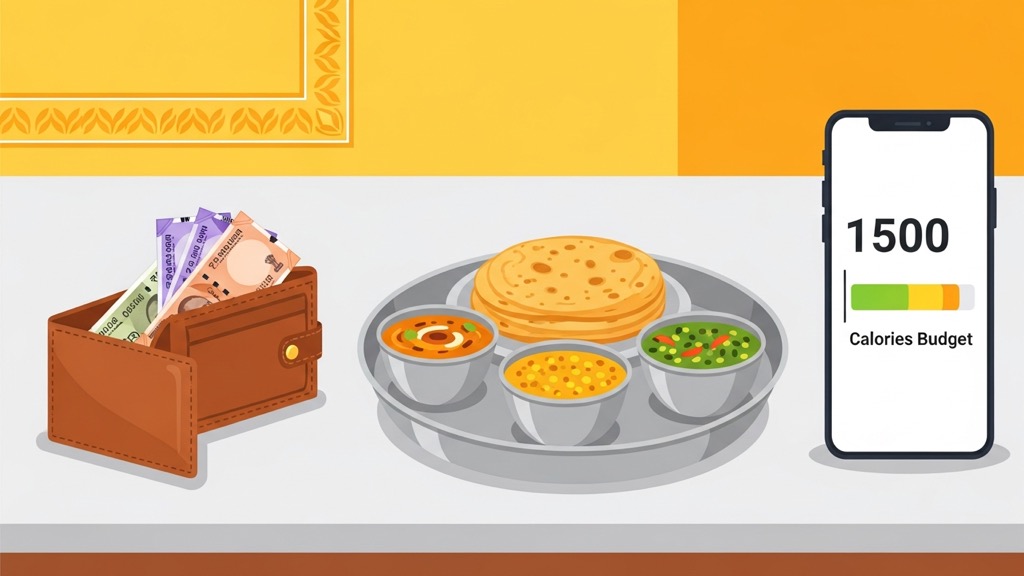
Treat your calorie deficit like your monthly budget
Your calorie deficit works like your monthly money budget. Calories in are your income, calories burned are your spending, and the leftover is fat lost, not cash.
You have done this with money. You get paid. You pay the rent and the light bill. You pay the milkman. What is left is what you can spend. Calories work the same way. Food is your income. Burning is your spending. The leftover is not cash. It is fat lost. This read shows how to run your deficit like a household budget.
Your calorie exchange rate
Here is the honest maths. Old lab work said about 3,500 kcal of deficit drops roughly 1 pound (0.45 kg) of body weight. That rule is rough, not exact. Modern work shows real weight loss is a little slower. Your body adapts. Try this rough guide. A 500 kcal daily deficit banks about 3,500 kcal a week. That is close to half a kilo of fat. Save that every week, and the kilos stack up. Burnie is FREE, so this maths costs you nothing but honesty.
Money budget vs calorie budget
I can overspend calories today and pay them back tomorrow, like a loan.
it dependsit depends
In theory, yes. Your body counts energy over days and weeks, not just one day. Eat 300 kcal extra today. Then eat 300 kcal less tomorrow. The week can still balance. But real life is not a spreadsheet. The payback almost never happens. People who blow the budget one day usually stay big the next day too. Your hunger does not roll over like cash. So treat your daily number as a soft cap. It is not a loan you can repay. Bank the saving today, today.
Steal these four habits from money budgeters
The bottom line
Run your deficit like a household budget. Steady saving beats feast-and-famine every time. Plan the week, log every day, and read the weekly total. Burnie is FREE, so the number is just maths, not a bill. Your 'Remaining' is budget left, not a limit someone set on you. Bank a small deficit each day, and let your body do the saving. One last thing before you start. Talk to your doctor or a dietitian first, especially if you have diabetes, are pregnant, breastfeeding, or have ever had an eating disorder. They can help you pick a safe calorie number for your body.