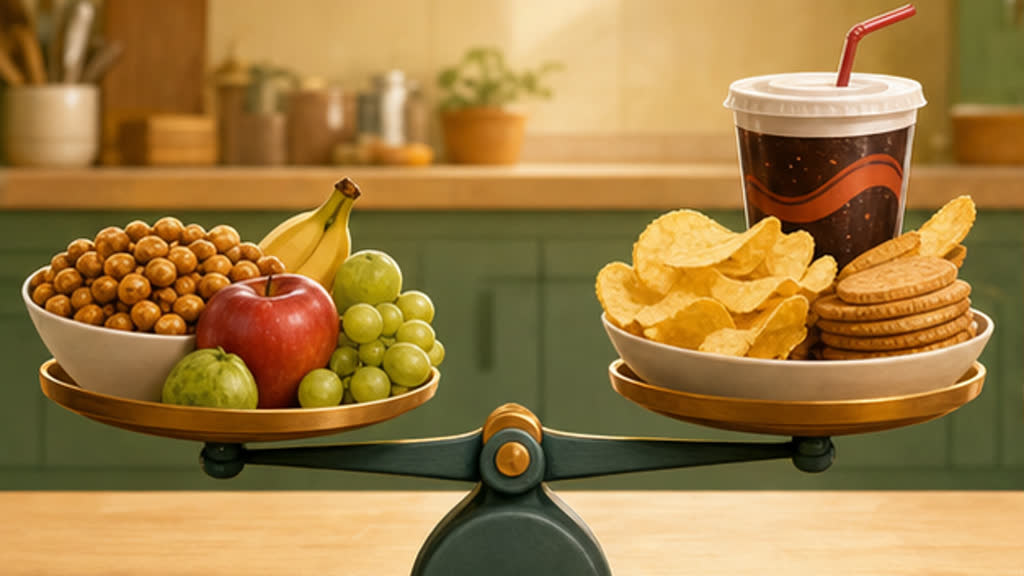
Ultra-processed foods are built to beat your fullness
Some packaged foods are engineered so you eat past full and never feel it. Burnie's text log shows the calorie cost the taste was made to hide. The deficit still decides weight, so log them, see the cost, and choose more fullness per calorie.
You can eat 1,000 calories of chips and still want more. But 1,000 calories of dal and roti feel like a lot. Why? It is not weak willpower. Some foods are built that way on purpose. This is not a general "junk food is bad" lecture. It is about the NOVA class of foods engineered to beat your fullness signal. And the Burnie answer is simple: log them, see the cost, then decide.
What does ultra-processed mean?
Scientists sort foods by how much they are processed. This system is called NOVA. Group 1 is whole or lightly changed foods, like fruit, dal, and fresh vegetables. Group 4 is "ultra-processed." These are factory formulations, not home cooking. Chips, namkeen, biscuits, soft drinks, packaged sweets, and instant noodles fit here. They are made to be very tasty and to last long on a shelf. That taste is designed, not accidental.
Hyperpalatable = made to eat past full
Some foods mix fat, sugar, and salt in a way your brain loves. Each part alone is fine. Together they boost the reward more than any single part. Scientists call this "hyperpalatable." Examples are fat plus salt (like chips or bacon), fat plus sugar (like cake or biscuits), and carbs plus salt (like crackers or namkeen). These combos are made to be eaten fast and past fullness. Your "I am full" brakes do not fire the way they do with whole food.
Ultra-processed foods make you overeat because your body just can't tell they are high in calories.
it dependsIt depends — explained simply. The foods do not break your calorie counter. A deficit still governs weight. If you eat ultra-processed food but stay in a deficit, you still lose weight. The real trick is intake. In a controlled study, people ate about 508 more calories per day on an ultra-processed diet, without feeling hungrier. They gained about 0.9 kg in two weeks. The unprocessed group lost 0.9 kg. The meals were matched for nutrients. The difference came from eating more, faster, past fullness. So the foods are not magic. They are just very good at making you eat more before you feel full.
Same fullness, very different cost
Here is the Burnie-method test. Pick a snack you love. Log it as text in Burnie. The AI meal estimate shows the calories. Now compare it to a less-processed snack at a similar weight. The less-processed one gives more protein and fibre, so you feel full longer per calorie. You do not have to ban the chips. Just see what they cost.
How to budget them with Burnie
The bottom line
Ultra-processed foods are built to beat your fullness, not your maths. The deficit still governs weight, so you never have to ban them. Log them in Burnie, see the real cost, and pick the snack that gives more fullness per calorie more often. That is the whole method.