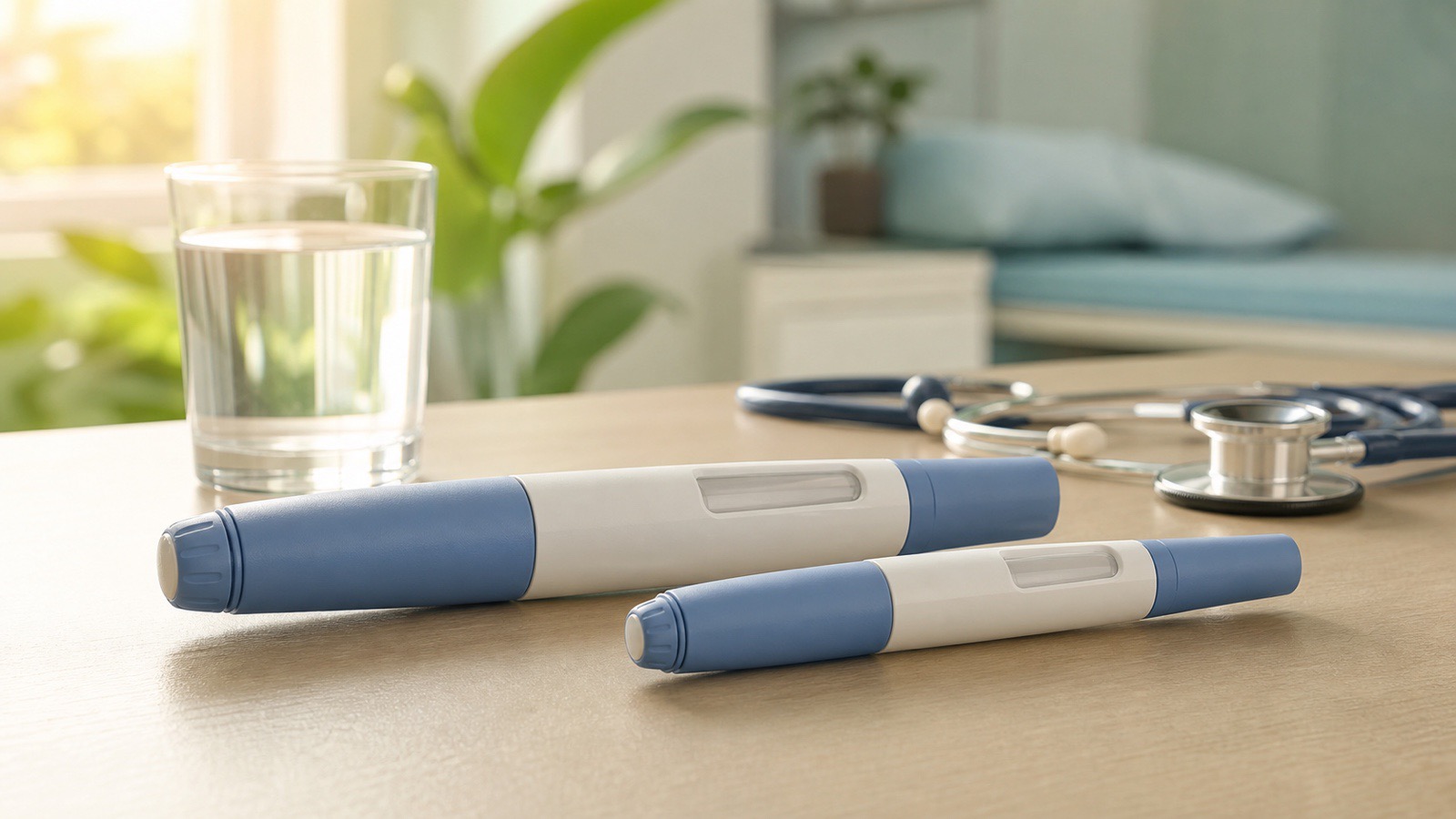
Wegovy vs Ozempic: same drug, different use, different dose
Wegovy and Ozempic are the same molecule, semaglutide, a weekly GLP-1 injection. The difference is not the drug. Ozempic is FDA-approved for type-2 diabetes plus heart-risk reduction in T2D with heart disease, and its max dose is 1 mg. Wegovy is FDA-approved for weight management plus heart-risk reduction in adults with obesity or overweight, and it goes up to 2.4 mg. Same drug, same risks, different approved use and different dose. Here is an honest, India-specific explainer.
You saw Wegovy in the news. You saw Ozempic in the news. Your cousin says one is for diabetes and the other is for weight. Your pharmacy friend says they are actually the same thing. You are confused. That confusion is fair, and this article clears it honestly. The short answer: Wegovy and Ozempic are the same drug molecule, semaglutide, given as a weekly under-the-skin injection. They are not different medicines. What is different is the approved use written on the label, and the maximum dose. Ozempic is approved for type-2 diabetes (and heart-risk reduction in people who have both diabetes and heart disease). Wegovy is approved for weight management (and heart-risk reduction in adults with obesity or overweight plus heart disease). Same drug, different label, different dose. This is a medical topic, so talk to your doctor before any decision. This article does not prescribe anything.
Both are semaglutide; the difference is the approved use and the dose
Semaglutide is a GLP-1 receptor agonist. It copies a gut hormone that makes you feel full, slows your stomach, and helps control blood sugar. Both Wegovy and Ozempic contain semaglutide. The US FDA labels spell out the difference clearly. The Ozempic label says it is used 'as an adjunct to diet and exercise to improve glycemic control in adults with type 2 diabetes mellitus', and also 'to reduce the risk of major adverse cardiovascular events in adults with type 2 diabetes mellitus and established cardiovascular disease'. Its label also states: 'The maximum recommended dosage is 1 mg once weekly.' The Wegovy label is different. It is used 'to reduce excess body weight and maintain weight reduction long term in: Adults and pediatric patients aged 12 years and older with obesity', and also 'To reduce the risk of major adverse cardiovascular (CV) events (CV death, non-fatal myocardial infarction, or non-fatal stroke) in adults with established CV disease and either obesity or overweight.' Wegovy's maintenance dose is 2.4 mg once weekly. So the molecule is the same. The approved use is different, and the max dose is different. Because it is the same molecule, the safety warnings are the same too. Both labels carry the same boxed warning: 'In rodents, semaglutide causes thyroid C-cell tumors'. Both are contraindicated in people with personal or family history of medullary thyroid carcinoma (MTC) or Multiple Endocrine Neoplasia syndrome type 2 (MEN 2). The most common side effects for both are the same stomach issues: 'nausea, vomiting, diarrhea, abdominal pain and constipation'. Rare but serious risks include pancreatitis, gallbladder problems, and kidney injury.
Wegovy and Ozempic are different drugs, and Ozempic is the cheap weight-loss hack.
falseFalse. Wegovy and Ozempic are the same drug molecule, semaglutide, made by the same company. They are not different medicines. What differs is the approved use on the label and the maximum dose: Ozempic is approved for type-2 diabetes (max 1 mg), Wegovy is approved for weight management (up to 2.4 mg). Using Ozempic for weight is an off-label choice that a doctor may make for your specific situation, not a do-it-yourself hack. The dose matters because Wegovy's 2.4 mg weight-management trials, like STEP 1, used the higher dose: '2.4 mg of semaglutide once weekly plus lifestyle intervention was associated with sustained, clinically relevant reduction in body weight', with '-14.9% in the semaglutide group as compared with -2.4% with placebo'. You cannot just 'take Ozempic for weight' on your own. The risks are the same molecule risks, the dose must be titrated by a doctor, and self-sourcing injection medicines is dangerous.
What to actually do in India
- Talk to your doctor first. They choose Ozempic or Wegovy based on your condition (diabetes vs weight) and the approved dose, not on internet advice.
- Do not self-source injection medicines. Semaglutide pens are prescription-only in India. Buying them without a prescription is unsafe and illegal.
- Do not use Ozempic for weight on your own. Off-label use is a doctor's decision after weighing your risks, not a DIY hack.
- Know the red flags. Stop and call your doctor if you get severe stomach pain (possible pancreatitis), repeated vomiting with dehydration, or a lump in your neck. Both drugs share these rare but serious risks.
- Tell your doctor if you are pregnant, planning pregnancy, or breastfeeding. The Ozempic label says to 'Discontinue OZEMPIC in women at least 2 months before a planned pregnancy due to the long washout period for semaglutide'. The same applies to Wegovy.
- Tell your family history. Both drugs are contraindicated with personal or family history of medullary thyroid carcinoma (MTC) or Multiple Endocrine Neoplasia syndrome type 2 (MEN 2).
- Expect the dose to go up slowly. Both labels titrate over weeks to reduce stomach side effects. Never jump to the max dose yourself.
- Wegovy's higher 2.4 mg dose is for weight management under medical supervision. It is not 'more Ozempic'; it is a different approved dose for a different approved use.
The bottom line
Wegovy and Ozempic are not different drugs. They are the same molecule, semaglutide, a weekly GLP-1 injection. The real difference is the approved use written on the label and the maximum dose: Ozempic is approved for type-2 diabetes (plus heart-risk reduction in T2D with heart disease) and goes up to 1 mg; Wegovy is approved for weight management (plus heart-risk reduction in adults with obesity or overweight) and goes up to 2.4 mg. Same molecule means same risks: the same thyroid C-cell boxed warning, the same MTC and MEN 2 contraindication, the same stomach side effects, and the same 'not for pregnancy' rule. In India, Ozempic was approved by CDSCO in September 2025 for type-2 diabetes in 0.25, 0.5 and 1 mg pens; Wegovy is the weight-management brand and its availability is emerging. Using Ozempic for weight is an off-label doctor decision, not a cheap DIY hack. Do not self-source, do not self-dose, and talk to your doctor about which approved use and dose fits your condition. Burnie logs your food and shows your deficit; your doctor decides your medicine. That is the honest, whole picture.