Why you weigh more after the gym (and it is not muscle)
You finish a hard workout, step on the scale, and the number has gone UP by half a kilo or more. It feels scary and unfair, but it cannot be fat or new muscle. It is water you drank, water pulled in by refilling sugar stores, and water sent to fix sore muscles.
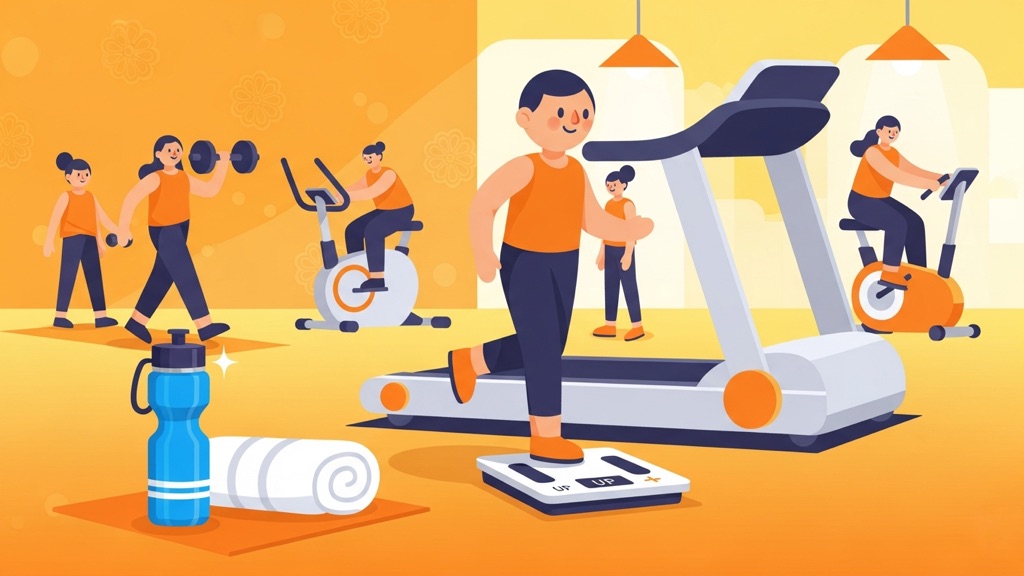
Riya finishes 45 minutes on the treadmill. She feels proud. She wipes her face, drinks two glasses of water, and steps on the gym scale before driving home. The number has jumped up by almost 1 kg since morning. Her heart sinks. She thinks, "I worked so hard, and I gained weight?" This short read is for Riya, and for you. That scary up-number after a workout is almost never fat. And it is definitely not new muscle. It is water, wearing three different costumes.
The maths says it cannot be fat
Here is the honest maths. To gain just 1 kg of real fat, you would need to eat about 7,700 extra calories on top of what you burn. That is like eating 28 extra rotis with ghee in a single evening, on top of your normal food. A 45-minute brisk walk burns only about 200 to 280 calories. That is barely one roti. So even if you ate three rotis right after, you could not build 1 kg of fat in an evening. The maths is bigger than the scare. If the scale jumps 1 kg in three hours, it is not fat. Fat takes days of over-eating to arrive.
The scale went up because I built muscle in the workout.
mostly falsemostly false
Muscle does weigh more than fat for the same space. But muscle does not grow in 45 minutes. Real muscle is built slowly, over weeks and months of regular training and good food. What you see on the scale right after a gym session is not new muscle. It is water. Your muscles store sugar (called glycogen) for quick energy. One gram of that sugar holds three to four grams of water with it. After a workout, your muscles grab sugar from your next meal and refill their stores. Each refill pulls water in too. That is the up-number on the scale. It is water that came in to do a job, not muscle that grew in minutes.
What the post-gym scale jump really is (and is not)
The sore-muscle water stays a few days
If your legs ache the day after squats, that is DOMS (delayed onset muscle soreness). It is a sign your muscles are being repaired. That repair job needs water. The soreness and the swelling usually peak between 24 and 72 hours after the workout. By five to seven days, they are mostly gone. So if the scale stays up for two or three days after leg day, that is repair water, not fat. The maths is still working. The scale just needs a few days to catch up. Your jeans will tell the truth before your scale does.
How to weigh yourself so the gym does not fool you
The bottom line
When the scale goes up right after the gym, the maths says it is not fat (you would need about 7,700 extra calories for 1 kg, like 28 extra rotis) and it is not new muscle (muscle takes weeks). It is water you drank, water pulled in by refilling your muscle sugar stores, and water sent in to repair sore muscles. Most of it is gone in 2 to 3 days. So skip the post-workout scale. Weigh once a week, in the morning, and log it in Burnie. Your down-trend is still alive. The maths just needs a few days to show it.